Posts Tagged ‘God’

two-commandments

You cannot love God without first obeying the Truth and knowing Him.

“In Him you also, when you had heard the word of truth, the gospel of your salvation, and had believed in Him, were marked with the seal of the promised Holy Spirit; this is the pledge of our inheritance toward redemption as God’s own people, to the praise of His glory.” Ephesians 1:13-14 (NRSV)

“He said to him, “‘You shall love the Lord your God with all your heart, and with all your soul, and with all your mind.’ This is the greatest and first commandment. And a second is like it: ‘You shall love your neighbor as yourself.’ On these two commandments hang all the law and the prophets.” Matthew 22:37-40 (NRSV)

“When the Spirit of truth comes, He will guide you into all the truth; for He will not speak on His own, but will speak whatever He hears, and He will declare to you the things that are to come. He will glorify me, because He will take what is mine and declare it to you.” John 16:13-14 (NRSV)

It is absurd to say you love God without loving the Truth. If you are not engaging your mind in your pursuit of knowing God you are not really loving God. You are not really obeying the greatest commandment.

Socialmediaicons-500x281

Social Media – A Tool for Ministry

For atleast the past 10 years, I have discovered and now believe that Social Media is a powerful tool for ministry. Posting on social media sites has allowed me to be salt and light to a lost and dying world by reaching those people who may never visit a community of faith.

“You are the salt of the earth, but if salt has lost its taste, how shall its saltiness be restored? It is no longer good for anything except to be thrown out and trampled under people’s feet. “You are the light of the world. A city set on a hill cannot be hidden. Nor do people light a lamp and put it under a basket, but on a stand, and it gives light to all in the house. In the same way, let your light shine before others, so that they may see your good works and give glory to your Father who is in heaven.” ~ Matthew 5:13-16 (ESV)

social-media

Through the use of social media many people can be touched with the Gospel. Social media is an influential tool.

Let’s take for example how I use my Twitter account. I post short Gospel messages each day with a link to The Story.

The Story is an online booklet containing content and design that was created for the believer and unbeliever, to clearly present the Gospel of Jesus. ViewTheStory.com, the online version, was setup for churches, ministires, and individuals to embed on their website. Spread The Truth ministries created the online version specifically for churches, but anyone can use it as a tool to share the Good News.

Each day I post on my Twitter feed anywhere from 8-10 little messages with links to The Story. Each day I check my dashboard at ViewTheStory.com to see how many visits and views were made to the online booklet. So far since September of 2012, there have been 3,247 all time views, and 2,988 all time unique visitors to the link sponsored by Symphony Ministries. Last month a total of 731 people visited and viewed The Story, the Good News of Jesus Christ. I am amazed at the response, and have prayed that of the three thousand people who visited The Story that many of them received salvation through faith in Jesus Christ.

There are other social media or media outlets that I use to spread the Gospel message. I have learned many things in this Communication in Ministry course related to communicating the Gospel. The main thing I have learned is that when we give a clear, concise, honest, presentation of the Gospel message, it will help the listener or viewer to respond to God’s call to salvation. For that, I am very thankful.


Kerygma

The Kerygma – Part Two

The Kerygma

To review, kerygma is the Greek word κήρυγμα kérugma, translated proclamation or preaching. The Kergyma is proclaiming the Gospel of Jesus Christ in spoken words, or even proclaimed in the celebration of the Lord’s Supper. It is the proclamation of Jesus redemptive work. It is the proclamation God’s story of the history of redemption from the beginning of creation. Proclamation was usually followed by teaching and instruction in the elements of the faith, or the reading of a Creed. What Jesus did and taught in His ministry was included within the basic proclamation.

Here is a summary of the ancient kerygma:

  1. The Age of Fulfillment has dawned, the “latter days” foretold by the prophets.
  2. This has taken place through the birth, life, ministry, death, and resurrection of Jesus the Messiah.
  3. By virtue of the resurrection, and His ascension into heaven, Jesus has been exalted at the right hand of God as King of Kings – the Messianic head of the new Israel.
  4. The Holy Spirit in the Church is the sign of Jesus’ present power and glory.
  5. The Messianic Age will reach its consummation in the return of Jesus.
  6. An appeal is made for repentance for the forgiveness of sins, the gift of the Holy Spirit, and salvation.

Jesus the Messiah, of course, was the center of this ancient kerygma. The cross, the resurrection, and His ascension to the right hand of Majesty are crucial to the kerygmatic preaching of Messiah Jesus.

Kerygmatic preaching is not a technique that can simply be learned by articulate spokespersons, it is a relationship that must be received, experienced, and thereby announced.

There are eight kerygmatic sermons given by the Apostles in Luke’s letter to Theophilus, the Acts of the Apostles. They are found in the following passages:

1) Acts 2:14-36

2) Acts 3:12-26

3) Acts 4:8-12

4) Acts 5:29-32

5) Acts 10: 34-43

6) Acts 13:16-41

7) Acts 14:15-17

8) Acts 17: 22-31

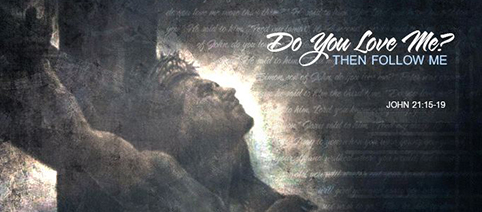
doyouloveme

“I’m very fond of You, Jesus…”

“When they had finished breakfast, Jesus said to Simon Peter, “Simon, son of John, do you love me more than these?” He said to him, “Yes, Lord; you know that I love you.” He said to him, “Feed my lambs.” He said to him a second time, “Simon, son of John, do you love me?” He said to him, “Yes, Lord; you know that I love you.” He said to him, “Tend my sheep.” He said to him the third time, “Simon, son of John, do you love me?” Peter was grieved because he said to him the third time, “Do you love me?” and he said to him, “Lord, you know everything; you know that I love you.” Jesus said to him, “Feed my sheep. Truly, truly, I say to you, when you were young, you used to dress yourself and walk wherever you wanted, but when you are old, you will stretch out your hands, and another will dress you and carry you where you do not want to go.” (This he said to show by what kind of death he was to glorify God.) And after saying this he said to him, “Follow me.” ~ John 21:15-19 (ESV)

Jesus uses the word ἀγαπάω agapaō translated “love” which means “to love dearly” in verses 15 & 16. Jesus challenges Peter’s answers. Now, in verse 17 Jesus uses a different word. Knowing Peter would grieve and be offended at the being asked a third time, He says, “Simon, son of Jonas, are you fond of me?” φιλέω phileō, which means “to love affectionately as a friend.”

Noting this, observe what word Peter uses in response to Jesus. In verse 15 Peter says literally, “you know that I am fond of you.” Φιλέω phileō.  Again in verse 16, Peter says the same thing, “O Lord, you know that I am fond of you.” Φιλέω phileō. The third time Jesus asks Peter, he responds, “O Lord, you know all things, you know that I am fond of you!” Φιλέω phileō.

The reason Jesus asks Peter three times is to determine if he really loved Jesus above all else. Jesus asked Peter, “Simon, son of John, do you love me more than these?” Jesus wanted Peter to understand the difference in what He expected from him, and where Peter was in his heart.

Being a disciple is to love God with all your heart, soul, mind and strength, and your neighbor as yourself – and also to love God above even your neighbor to the point where you would give your life for His sake (vs. 18-19).

grief

A Grief Observed by C. S. Lewis

The short book entitled “A Grief Observed” by C.S. Lewis relates how the author joined the human race when his wife and spirited poet, Joy Gresham, died of cancer. Lewis, the Oxford professor whose Christian apologetics make it seem like he’s got an answer for everything, experienced crushing doubt for the first time during her illness and after his wife’s tragic death. A Grief Observed contains meaningful reflections on that period: “Your bid–for God or no God, for a good God or the Cosmic Sadist, for eternal life or nonentity–will not be serious if nothing much is staked on it. And you will never discover how serious it was until the stakes are raised horribly high,” Lewis writes. “Nothing will shake a man–or at any rate a man like me–out of his merely verbal thinking and his merely notional beliefs. He has to be knocked silly before he comes to his senses. Only torture will bring out the truth. Only under torture does he discover it himself.”

This is the book that inspired the film Shadowlands but it is more wrenching, more revelatory, and more real than the movie. It is a beautiful and unflinchingly honest record of how even a stalwart believer can lose all sense of meaning in the universe, and how he can gradually regain his bearings.

Although this book is non-fiction it is written like the author of so many famous books of fiction can write.  Yet, from a very personal standpoint, Lewis comes to grips with the reality of terminal illness.  It is always from the viewpoint of “this can’t be happening to me!”  He goes through stages of denial, first of the illness itself, and second of the untimely death of his wife.  Sharing his feelings with her son was very hard for Lewis.  Lewis and Joy’s son Douglas became very close.  The relationship started because he enjoyed reading Lewis’ classics.  Douglas truly admired and respected Lewis. Lewis was always the professor and statesman, and always had that stiff upper lip of the Englishman.  But when it came down to facing his feelings, Lewis was the first to really get in touch with them.  His wife, Joy, helped him get through the times of unknowing before she died.  Lewis and Douglas grew very fond of each other and mourned the loss of Joy together, arm in arm.

JoyJack

Joy was very warm and caring toward him during her therapy and temporary recovery.  She insisted on spending as much time with Lewis as possible.  They basically did everything together.  What is really touching about this story is what became of their marriage, and the reason why they married in the first place.

From the first meeting of Lewis, Joy Gresham, and her son Douglas, the beginning of their lasting friendship, through the courtship that took many years, A Grief Observed blends the two worlds or cultures of American values and those of the British.  The book brings you into the heart of Lewis like no other book he had written.  When you finish this book, your heart will be warmed and your mind will rest assured of the possibility of loving someone so deeply as to suffer more than the one who is sick.

I would recommend this book to anyone who is going through the illness of a loved one, especially if he or she has been diagnosed as terminal.

EarthDay

The first part of the Nicene Creed states, “We believe in one God, Father Almighty, Creator of heaven and earth and of all things visible and invisible.”

Today is Earth Day, all over the world, and here in Minnesota. God has given humanity the responsibility to care for this earth. Have we done so? I don’t think we have. With the rise of technology and the knowledge of how to turn rock into steel, we have come to pollute our air and waterways.

From the orthodox Christian point of view, life is eucharistic. The word “eucharist” means thanksgiving. It is used as the definition of the Sacrament where we receive the body and blood of our Lord Jesus Christ. But in viewing life and the creation, we must see it all as a Eucharistic celebration. The celebration is the outcome of being responsible for our earth and all of its contents.

This life we live, and this earth we live on, was a life of communion with God. When Adam and Eve sinned, we lost the earth as a means of communion with God. The earth before the fall of humanity was filled with the Divine Presence of God. Since then, and now, the earth appears void of the Divine Presence.

The Holy Scriptures tell us that in God “we live, move, and have our being.” That includes the earth! When we purposely destroy rain forests that disrupt the ecology; when we purposely shoot pollutants into the air creating holes in the O-Zone layer, we go against the sacramental meaning of our relationship to this planet. God gave humanity everything it needed to survive. God gave us fruit, vegetables, and plants to eat from. But then, after the fall, and after the great flood of Noah’s time, God allowed us to eat meat. This isn’t a plug for being vegetarian, but humanity was vegetarian in the beginning. The killing of an animal is opposed to the understanding of our relationship with the earth and all of creation that God inherently gave us.

Fr. Alexander Schmemann wrote in his book entitled Holy Week: A Liturgical Explanation for the Days of Holy Week, “…world and food, once they are deprived of their initial sacramental meaning as means of communion with God; once they are not received for God’s sake, and filled with hunger and thirst for God; once, in other words, God is no longer their real “content,” can give no life, satisfy no hunger, for they have no life in themselves.” This is what has become of humanity. Nothing satisfies, so we go for more. Nothing gives life, so we think we can create it. Our hunger and thirst is not for food or that which satisfies, but it is a hunger and thirst for union and communion with God.

As we celebrate “Earth Day” today, let us look to God as our source, as our satisfaction, and the One who fills our hunger and quenches our thirst. For nothing is more important to the earth today, than our coming back to what was once sanctified; what was once transformed into a world of thanksgiving and adoration of God our Creator. Let us yearn and repent toward a more perfect eucharistic life, that is filled with God, and watch it become again a Divine and immortal life that He has given to all humanity especially to those who believe in Him.

God bless you!

Westminster

The Westminster Creed

I believe man’s chief end is to glorify God, and to enjoy Him forever;
I believe God is a Spirit, infinite, eternal, and unchangeable in His being,
wisdom, power, holiness, justice, goodness, and truth;

I believe there is but one true and living God;
that there are three persons in the Godhead:
the Father, the Son, and the Holy Ghost;
and that these three are one God,
the same in substance, equal in power and glory;

I believe God has foreordained whatever comes to pass;
that God made all things of nothing,
by the word of His power, in the space of six days, and all very good;
and that God preserves and governs all His creatures and all their actions.

I believe our first parents, though created in knowledge, righteousness, and holiness,
sinned against God, by eating the forbidden fruit;
and that their fall brought mankind into an estate of sin and misery;

I believe God determined, out of His mere good pleasure,
to deliver His elect out of the estate of sin and misery,
and to bring them into an estate of salvation by a Redeemer;
I believe the only Redeemer of God’s elect is the Lord Jesus Christ,
Who, being the eternal Son of God, became man,
and so was, and continues to be,
God and man in two distinct natures, and one person, forever;

I believe Christ, as our Redeemer,
executes the office of a prophet, of a priest, and of a king.

I believe Christ as our Redeemer underwent the miseries of this life,
the wrath of God, the cursed death of the cross, and burial;
He rose again from the dead on the third day, ascended up into heaven,
sits at the right hand of God, the Father,
and is coming to judge the world at the last day.

I believe we are made partakers of the redemption purchased by Christ,
by the effectual application of it to us by his Holy Spirit;

I believe God requires of us faith in Jesus Christ,
and repentance unto life to escape the wrath and curse of God due to us for sin;

I believe by His free grace we are effectually called, justified, and sanctified,
and gathered into the visible church, out of which there is no ordinary possibility of salvation;

I believe that we also are given in this life such accompanying benefits
as assurance of God’s love, peace of conscience, joy in the Holy Ghost,
increase of grace, and perseverance therein to the end;
that at death, we are made perfect in holiness, and immediately pass into glory;
and our bodies, being still united in Christ, rest in their graves, till the resurrection;
and at the resurrection, we shall be raised up in glory,
we shall openly be acknowledged and acquitted in the day of judgment,
and made perfectly blessed in the full enjoying of God to all eternity.

~ adapted from the 17th century Westminster Shorter Catechism

ThePowerofGod672x378_lg

Thoughts after Resurrection Sunday: Jesus Christ, the Power of God

Remember how the Roman Governor of Judea, Pontius Pilate approved a military guard for a cemetery plot and how they took pains to seal the stone to permanently close the tomb of Jesus? That was Pilate’s final word to Jesus, whom he had interrogated earlier that day. During that trial, Pilate and Jesus touched the third rail of worldly politics: Power. Pilate denied that power must be based on truth. Power was his to wield as he decided.

Jesus insisted on the primacy of Truth and that there was only one Power in the world: God’s. All other power was either delegated or allowed until the time of judgment, which rested in the hands of no magistrate, no emperor, no Supreme Court, but in God Almighty. Pilate had no power over Jesus that had not been given to him. And Pilate had no power over the Tomb-although he thought otherwise.

Those wielding power may mistakenly forget about the primacy of truth. When Jesus was questioned by Caiaphas about his teachings, he said, “Why do you ask me? Ask those who have heard me, what I said to them; they know what I said.” A soldier struck Jesus with his hand, saying, “Is that how you answer the High Priest?” The soldier used power, trying to coerce Jesus, who had noted that truth could be found in the testimony of others about him.
Jesus refused to give in, saying, “If I have spoken wrongly, bear witness to the wrong, but if I have spoken rightly, why do you strike me?” What could the soldier say in response? We are not told. Did Jesus’ penetrating presence and words pierce the soldier’s conscience?

When a truth is spoken to the consciences of those in power, one or the other must give way. Power must yield or truth must be silenced. Classic examples of this confrontation are the peaceful civil rights protests in the U.S. Power at first may seem to win the day-the state may whip, beat, imprison protesters and “restore order” and silence. But if the protesters speak truth to a power that is built on falsehood, they have the power of truth behind them. In the case of civil rights, the broader national conscience had to face the racism for what it was.

Many were willing to suffer to confront racism. In history, the state often does not back down and attempts to silence those who are dissident. It may even knowingly punish the innocent, as did Pilate.

In our current cultural crisis, those who speak truth to power about human life in the womb, the nature of marriage, and religious conscience are often targeted for silencing. Yet we, unlike the state, cannot use coercion in this conflict. Yes, there is power to be had in speaking the truth, just not in the way worldly men prefer to use it, like James and John who wanted to sit on thrones with Jesus. The power of Christians only comes through the Cross, through the willingness to suffer for the truth-and live according to it.

The power that raised Jesus was not meant as an assault on the guarding soldiers. They and the sealed stone were not the point. God did not unseal a tombstone to prove that he could empty a tomb. No, Jesus was raised because of a divine truth about the Incarnate Son of God: “It was not possible for him to be held by death.” (Acts 2:24)
Power comes and goes. Truth is truth and stands forever. It cannot remain suppressed. Even the stones will cry out. Yes, stones, and even tombstones. “Suffered under Pontius Pilate” was never the end of the story.

The Gospel truth is that Jesus’ Name is above every name, to which every knee will bow, even Pilate’s.

~  James M. Kushiner, Executive Director, The Fellowship of St. James

TheStory_Cover

View the Story


Washstain

Blessed are those who wash their robes, so that they may have the right to the tree of life and that they may enter the city by the gates. ~ Revelation 22:14 (ESV)

Remember the stain…

I remember the stain
at times it doesn’t seem right
to recall what marred my walk in the light
it cannot be removed
so much of life reviewed
in my minds eye

I remember the stain
i cannot clean it
even the rushing tide
sweeping away foot prints over and again
cannot remove it

I remember the stain
of idolatry, rebellion, and caustic choices
trying to reign over me
why do I remember?

I remember the stain
even though i can still see it
has been washed in blood deep red
where my Father sees me white as snow
where no stain is left to judge me rightly
where no bondage there to bind me tightly
where freedom rings so very brightly
at the dawn of His appearing
He remembers no stain at me leering

I remember the stain
maybe at my minds random recollection
to remind once more my souls misdirection
at one time I knew not
the Deliverer from before
to grasp again His winsome words
Nor do I condemn you, go and sin no more…

Narcissism, Social Media, and the Church

A definition of narcissism: The inordinate fascination with oneself; excessive self-love; vanity.

“The true destination for most of our online endeavors really are the new media equivalent of the biblical statues that were presented as deities. These digital shrines {idols} that we create to ourselves.” ~ from Confessions of a Narcissist, by Mitch Joel

Social-Media-Make-Us-Narcissistic


“Woe to you, teachers of the law and Pharisees, you hypocrites! You clean the outside of the cup and dish, but inside they are full of greed and self-indulgence.” Matthew 23:25 (NIV)

“He will render to each one according to his works: to those who by patience in well-doing seek for glory and honor and immortality, he will give eternal life; but for those who are self-seeking and do not obey the truth, but obey unrighteousness, there will be wrath and fury.” Romans 2:6-8 (ESV)

“You have lived on the earth in luxury and in self-indulgence. You have fattened your hearts in a day of slaughter.” James 5:5 (ESV)

“Love is patient, love is kind. It does not envy, it does not boast, it is not proud. It does not dishonor others, it is not self-seeking, it is not easily angered, it keeps no record of wrongs.” 1 Corinthians 13:4-5 (NIV)

“What kind of impact could Christians have if we were more interested in helping a world in pain than in how good we look  to our digital friends? How can we {the church} redeem our online presence without becoming weird, obnoxious or confrontational?” (Shraeder & Hendricks, pp. 170-171)

References:

Schrader, T., Hendricks, K. (Eds.). (2011). Outspoken: conversations on church communication. Los Angeles, CA.   Center for Church Communication.

Does Social Media Make Us Narcissistic? Retrieved from: http://brandongaille.com/does-social-media-make-us-     narcissistic/