Posts Tagged ‘sin’

grief

A Grief Observed by C. S. Lewis

The short book entitled “A Grief Observed” by C.S. Lewis relates how the author joined the human race when his wife and spirited poet, Joy Gresham, died of cancer. Lewis, the Oxford professor whose Christian apologetics make it seem like he’s got an answer for everything, experienced crushing doubt for the first time during her illness and after his wife’s tragic death. A Grief Observed contains meaningful reflections on that period: “Your bid–for God or no God, for a good God or the Cosmic Sadist, for eternal life or nonentity–will not be serious if nothing much is staked on it. And you will never discover how serious it was until the stakes are raised horribly high,” Lewis writes. “Nothing will shake a man–or at any rate a man like me–out of his merely verbal thinking and his merely notional beliefs. He has to be knocked silly before he comes to his senses. Only torture will bring out the truth. Only under torture does he discover it himself.”

This is the book that inspired the film Shadowlands but it is more wrenching, more revelatory, and more real than the movie. It is a beautiful and unflinchingly honest record of how even a stalwart believer can lose all sense of meaning in the universe, and how he can gradually regain his bearings.

Although this book is non-fiction it is written like the author of so many famous books of fiction can write.  Yet, from a very personal standpoint, Lewis comes to grips with the reality of terminal illness.  It is always from the viewpoint of “this can’t be happening to me!”  He goes through stages of denial, first of the illness itself, and second of the untimely death of his wife.  Sharing his feelings with her son was very hard for Lewis.  Lewis and Joy’s son Douglas became very close.  The relationship started because he enjoyed reading Lewis’ classics.  Douglas truly admired and respected Lewis. Lewis was always the professor and statesman, and always had that stiff upper lip of the Englishman.  But when it came down to facing his feelings, Lewis was the first to really get in touch with them.  His wife, Joy, helped him get through the times of unknowing before she died.  Lewis and Douglas grew very fond of each other and mourned the loss of Joy together, arm in arm.

JoyJack

Joy was very warm and caring toward him during her therapy and temporary recovery.  She insisted on spending as much time with Lewis as possible.  They basically did everything together.  What is really touching about this story is what became of their marriage, and the reason why they married in the first place.

From the first meeting of Lewis, Joy Gresham, and her son Douglas, the beginning of their lasting friendship, through the courtship that took many years, A Grief Observed blends the two worlds or cultures of American values and those of the British.  The book brings you into the heart of Lewis like no other book he had written.  When you finish this book, your heart will be warmed and your mind will rest assured of the possibility of loving someone so deeply as to suffer more than the one who is sick.

I would recommend this book to anyone who is going through the illness of a loved one, especially if he or she has been diagnosed as terminal.

Kerygma

Kerygma

What is kerygma and what does it mean?

During the last seven weeks of the Communication in Ministry course I am taking, we are concentrating on preaching or delivering sermons or messages to our congregations.  We are studying structuring sermons, how to select our passages and how to interpret the biblical passage. We are learning how to relate the interpretation of the biblical passage to our “audience.” We are learning all the ways and means to creating a great sermon.

This brings me to the word kerygma. Dictionary.com gives the definition of kerygma as “the preaching of the gospel of Christ, especially in the manner of the early church, and the content or message of such preaching.”

Kerygma is the Greek word κήρυγμα kérugma, translated proclamation or preaching. Kergyma is the preaching of the Gospel of Jesus Christ in spoken words, or even viewed in the celebration of the Lord’s Supper. It is the proclamation of Jesus redemptive work. Proclamation was usually followed by teaching and instruction in the elements of the faith, or the reading of a Creed. What Jesus did and taught in His ministry was included within the basic proclamation. Ok, so lets break this definition down. 

1. Kerygma is the preaching of the Gospel.

2. Kerygma is preaching in the manner of the early church.

3. Kerygma has to do with the content or message of what is being preached.

What is the Gospel? It is the Good News of the life, ministry, death, resurrection, and ascension of Jesus Christ. The Gospel includes the facts of Jesus’ incarnation as the Word. It includes the fact that Jesus is the Son of God. It includes the fact that Jesus was begotten of the Father and not a creature that the Father made. Jesus is in the Father as the Father is in Him. It includes the fact that salvation from sin, sickness, death, and the devil is only through Jesus the Messiah. It includes the fact that we are made right with God, declared righteous because of the righteousness of Jesus the Messiah. The Gospel is Good News!

2. What was the manner of preaching in the early church? The book of Acts clearly demonstrates that the early church preached the Gospel focusing on Jesus Christ; on repentance, faith, baptism and the forgiveness of sins, especially that salvation is through Jesus alone. The early church preached Jesus’ death, burial, resurrection, and His ascension to the right hand of the Father, and the gift of the Holy Spirit. The reason is that the Apostles were witnesses to the life, ministry, death, burial, resurrection and ascension of Jesus Christ. The early church preached what they heard from Jesus, the Apostles, and what they witnessed – it is the Gospel.

3. What is the content or message of what was being preached by the early church? When looking into the book of Acts we see:

  • All of the messages mention the doctrine of God.
  • All of the messages mention Jesus the Messiah.
  • Seven messages mention Jesus’ death.
  • Seven messages mention His resurrection.
  • Four messages declare that Jesus is now exalted in heaven at the right hand of the Father.
  • Four messages mention the giving of the Holy Spirit.
  • Seven message mention the forgiveness of sins.
  • Five messages mention repentance.
  • Three messages mention the need for faith.
  • Five messages mention Scripture.
  • None of the messages use the word Kingdom, because the Kingdom of God was brought to the earth in Jesus the Messiah.

Therefore, the content or the message preached by the early church included everything mentioned above. The church today must preach the Gospel like the early church. The early church preached the Gospel within the context of her audience, whether Jew or Gentile, or whether it was in Palestine or Athens, Rome or Crete. The kerygma was the same. They preached and taught the Gospel. The early church preached and taught the Gospel as it was given to them by the Apostles. The kerygma is the Apostolic Gospel message. The Church should be preaching the Gospel the same way the Apostles preached it: in the wisdom and power of God.

St. Paul gives an example of the kerygma:

“For I delivered to you as of first importance what I also received: that Christ died for our sins in accordance with the Scriptures, that He was buried, that He was raised on the third day in accordance with the Scriptures, and that He appeared to Cephas, then to the twelve. Then He appeared to more than five hundred brothers at one time, most of whom are still alive, though some have fallen asleep. Then He appeared to James, then to all the apostles. Last of all, as to one untimely born, He appeared also to me.” 1 Corinthians 15:3-8 (ESV)

In conclusion, based upon the Four Gospels and Acts, there are seven elements to the ancient kerygma of the Church:

1. God loves you and seeks after you.
2. Sin will destroy you.
3. Jesus Christ died to save you.
4. Repent and believe the Gospel.
5. Be Baptized – receive the Holy Spirit.
6. Abide in Christ and His Body the Church.
7. Go make disciples.

Lastly, there are four elements (Acts 2:42) to living the Christian life revolving around the kerygma:

1. The Apostles’ Teaching – The Church steadfastly went on in the study of ancient Scripture and the sacred teachings of the Faith given them by the Apostles.
2. The Fellowship – They were daily interacting within Christ’s Body the Church, frequently gathering for worship, and other gatherings as the Body of Christ.
3. The Breaking of the Bread – This is another way of saying that they faithfully received Holy Communion, the Lord’s Supper, or the Eucharist and, by extension, all the Sacraments.
4. The Prayers – Using forms of prayers, in both the personal and community contexts.

Westminster

The Westminster Creed

I believe man’s chief end is to glorify God, and to enjoy Him forever;
I believe God is a Spirit, infinite, eternal, and unchangeable in His being,
wisdom, power, holiness, justice, goodness, and truth;

I believe there is but one true and living God;
that there are three persons in the Godhead:
the Father, the Son, and the Holy Ghost;
and that these three are one God,
the same in substance, equal in power and glory;

I believe God has foreordained whatever comes to pass;
that God made all things of nothing,
by the word of His power, in the space of six days, and all very good;
and that God preserves and governs all His creatures and all their actions.

I believe our first parents, though created in knowledge, righteousness, and holiness,
sinned against God, by eating the forbidden fruit;
and that their fall brought mankind into an estate of sin and misery;

I believe God determined, out of His mere good pleasure,
to deliver His elect out of the estate of sin and misery,
and to bring them into an estate of salvation by a Redeemer;
I believe the only Redeemer of God’s elect is the Lord Jesus Christ,
Who, being the eternal Son of God, became man,
and so was, and continues to be,
God and man in two distinct natures, and one person, forever;

I believe Christ, as our Redeemer,
executes the office of a prophet, of a priest, and of a king.

I believe Christ as our Redeemer underwent the miseries of this life,
the wrath of God, the cursed death of the cross, and burial;
He rose again from the dead on the third day, ascended up into heaven,
sits at the right hand of God, the Father,
and is coming to judge the world at the last day.

I believe we are made partakers of the redemption purchased by Christ,
by the effectual application of it to us by his Holy Spirit;

I believe God requires of us faith in Jesus Christ,
and repentance unto life to escape the wrath and curse of God due to us for sin;

I believe by His free grace we are effectually called, justified, and sanctified,
and gathered into the visible church, out of which there is no ordinary possibility of salvation;

I believe that we also are given in this life such accompanying benefits
as assurance of God’s love, peace of conscience, joy in the Holy Ghost,
increase of grace, and perseverance therein to the end;
that at death, we are made perfect in holiness, and immediately pass into glory;
and our bodies, being still united in Christ, rest in their graves, till the resurrection;
and at the resurrection, we shall be raised up in glory,
we shall openly be acknowledged and acquitted in the day of judgment,
and made perfectly blessed in the full enjoying of God to all eternity.

~ adapted from the 17th century Westminster Shorter Catechism

Washstain

Blessed are those who wash their robes, so that they may have the right to the tree of life and that they may enter the city by the gates. ~ Revelation 22:14 (ESV)

Remember the stain…

I remember the stain
at times it doesn’t seem right
to recall what marred my walk in the light
it cannot be removed
so much of life reviewed
in my minds eye

I remember the stain
i cannot clean it
even the rushing tide
sweeping away foot prints over and again
cannot remove it

I remember the stain
of idolatry, rebellion, and caustic choices
trying to reign over me
why do I remember?

I remember the stain
even though i can still see it
has been washed in blood deep red
where my Father sees me white as snow
where no stain is left to judge me rightly
where no bondage there to bind me tightly
where freedom rings so very brightly
at the dawn of His appearing
He remembers no stain at me leering

I remember the stain
maybe at my minds random recollection
to remind once more my souls misdirection
at one time I knew not
the Deliverer from before
to grasp again His winsome words
Nor do I condemn you, go and sin no more…

Narcissism, Social Media, and the Church

A definition of narcissism: The inordinate fascination with oneself; excessive self-love; vanity.

“The true destination for most of our online endeavors really are the new media equivalent of the biblical statues that were presented as deities. These digital shrines {idols} that we create to ourselves.” ~ from Confessions of a Narcissist, by Mitch Joel

Social-Media-Make-Us-Narcissistic


“Woe to you, teachers of the law and Pharisees, you hypocrites! You clean the outside of the cup and dish, but inside they are full of greed and self-indulgence.” Matthew 23:25 (NIV)

“He will render to each one according to his works: to those who by patience in well-doing seek for glory and honor and immortality, he will give eternal life; but for those who are self-seeking and do not obey the truth, but obey unrighteousness, there will be wrath and fury.” Romans 2:6-8 (ESV)

“You have lived on the earth in luxury and in self-indulgence. You have fattened your hearts in a day of slaughter.” James 5:5 (ESV)

“Love is patient, love is kind. It does not envy, it does not boast, it is not proud. It does not dishonor others, it is not self-seeking, it is not easily angered, it keeps no record of wrongs.” 1 Corinthians 13:4-5 (NIV)

“What kind of impact could Christians have if we were more interested in helping a world in pain than in how good we look  to our digital friends? How can we {the church} redeem our online presence without becoming weird, obnoxious or confrontational?” (Shraeder & Hendricks, pp. 170-171)

References:

Schrader, T., Hendricks, K. (Eds.). (2011). Outspoken: conversations on church communication. Los Angeles, CA.   Center for Church Communication.

Does Social Media Make Us Narcissistic? Retrieved from: http://brandongaille.com/does-social-media-make-us-     narcissistic/


pastoralcare

“And I will give you pastors according to mine heart, which shall feed you with knowledge and understanding.”
Jeremiah 3:15 (KJV)

From this it is evident that there are five main tasks required in the pastoral office and true care of souls:

First: to lead to Christ our Lord and into His communion those who are still estranged from Him, whether through carnal excess or false worship.

Secondly: to restore those who had once been brought to Christ and into His church but have been drawn away again through the affairs of the flesh or false doctrine.

Thirdly: to assist in the true reformation of those who while remaining in the church of Christ have grievously fallen and sinned.

Fourthly: to re-establish in true Christian strength and health those who, while persevering in the fellowship of Christ and not doing anything particularly or grossly wrong, have become somewhat feeble and sick in the Christian life.

Fifthly: to protect from all offense and falling away and continually encourage in all good things those who stay within the flock and in Christ’s sheep-pen without grievously sinning or becoming weak and sick in their Christian walk.

~ from Concerning the True Care of Souls by Martin Bucer (1538) (p. 70)

{May this ever be my prayer, oh Lord my God}

*Note: Caring elders/pastors must seek the lost, bring back the wandering, restore the fallen, strengthen the weak, and encourage the strong. The Gospel brings salvation, healing, and deliverance.

media-press

Evaluating Media Forms in Ministry

I subscribe to a magazine called “Salvo.” It is a publication of The Fellowship of St. James (http://www.fsj.org), Salvo is dedicated to debunking the cultural myths that have undercut human dignity, all but destroyed the notions of virtue and morality, and slowly eroded our appetite for transcendence. It also seeks to promote the Christian worldview. (http://www.salvomag.com)

That being said, I came to the “Book Blip” page, where a book review entitled “Trust Me, I’m Lying: Confessions of a Media Manipulator” was given by Ryan Holiday. This is the review he wrote:

Trust Me, I’m Lying: Confessions of a Media Manipulator is a fast-moving, straight-talking mea culpa (which means “through my fault” and is an acknowledgement of having done wrong) from a marketer, media strategist, and apparent “first defector” from the “unreality” of the blogosphere — a nebulous entity whose very business model “rests on exploiting the difference between perception and reality.” Simultaneously fascinating and disturbing, Trust Me, I’m Lying: Confessions of a Media Manipulator exposes the modus operandi of the internet news “racket” and educates readers in how to be more media-savvy.” (Salvo Magazine, Issue 32, Spring 2015, p. 6)

I share this with you all to establish a thought. The thought is, is the Church, which uses a variety of media forms in ministry actually telling the truth about their ministry? Is what is being marketed, or expressed the exact true representation of what the inquirer will actually find upon visiting the church? What is the intent and purpose of the church’s use of that media form? What is the desired goal from the use of a specific media form?

Here is another thought. I remember one year, receiving in the mail an invitation to go to a local resort hotel, have fun at its water park, and then come Sunday, enjoy the various zoo animals on display after the church service was over. What was the goal of this mailer? I think it was an attraction attention getter for those people with families, who, if so moved, would come to this local evangelical church. Did this church say anything that was untrue? No. They did exactly what they said they would. All you had to do was show the card you got in the mail, and you could play at the water park until you passed out. Then, the pièce de résistance was the various zoo animals on display after the church service. There was free hot dogs, popcorn, and soda for all. What was the intent of all of this engaging marketing? To get people to come to their church. I am sure hundreds went to the resort for a free water park fling, and yet out of the hundreds maybe 1-2% actually visited the church. More than likely those 1-2% were just there for the zoo animals. Instead of sending a card with the Gospel message on it, or a teaser with the answer for all the world’s problems, they spent thousands of dollars on a marketing campaign. Was it the right or wrong way to get people to church?

In our text book OutSpoken, we are told that we should be good stewards regarding how we use the various media forms at the church’s disposal. The goal or intent of using varying media forms, from my understanding, is obedience to the command to GO, make disciples of all nations, baptizing them, and teaching them everything Jesus had commanded the apostles.

When it is our turn to take advantage of the various media forms, which method or means are we going to use, and for what purpose, really?

ted-logo

Talking about TED

As the Communication in Ministry course glides midway in its third week, I remember the theme is, “what role do you believe story plays in ministry communication and how might you build stories into your ministry’s communication strategy?” The emphasis is storytelling.

The chapter we are reading in our text, Outspoken, by Shraeder & Hendricks, pp. 90-115 is entitled “Words and Stories.”

Everyone has a story. There is a story about just about everything. There are stories about food, drinks, cars, trucks, and M&M’s. I’m on the path toward a degree in Christian Ministry, and there is a story behind that, but I’m not going to tell it right now. Teased yet?

I get emails from a source called churchjobs.tv and at the bottom of the email there are some links to different resources. One of the links was to an article about TED. A gentleman named Todd Rhoades wrote an article asking the question, “What if our sermons were like TED talks?” Here’s the link: http://toddrhoades.com/what-if-your-sermon-was-like-a-ted-talk

Todd got the idea to blog out this question from another gentleman by the name of Eric Dye. Here’s his link:  http://bit.ly/1D7GKX0  “If Sermons were like TED talks”

Have you ever watched a TED talk on YouTube? I have. I have watched several, and honestly they were all very interesting.

What is TED? TED is a nonprofit devoted to spreading ideas, usually in the form of short, powerful talks (18 minutes or less). TED began in 1984 as a conference where Technology, Entertainment and Design converged, and today covers almost all topics — from science to business to global issues — in more than 100 languages. Meanwhile, independently run TEDx events help share ideas in communities around the world. http://www.ted.com/

TED is a platform for ideas worth spreading. TED today shares ideas from a broad spectrum. Meanwhile, independent TEDx events help share ideas in communities around the world. http://www.ted.com/about/our-organization

Think about the rules of a TED talk:

  1. No talk can exceed 18 minutes in length.
  2. Speakers must tell a story or argue for an idea. They may not use the TED stage to sell products, promote themselves or businesses. Every talk’s content must be original and give credit where appropriate. Speakers cannot plagiarize or impersonate other persons, living or dead.
  3. Speakers must be able to confirm the claims presented in every talk.

What about this? Can we truly expound the Word of God in 18 minutes? I know there are many ways to preach or proclaim the Word of God, by topic, by subject, by Bible book, etc. Can you say everything about a passage of Scripture in 18 minutes? You may well be able to tell a story in 18 minutes, however, would we truly be feeding our flock on a diet of short bread? Should we feed growing disciples of Christ only the milk of the Word? What about the solid food of the Word? Check out what St. Paul has to say about it, “For though by this time you ought to be teachers, you need someone to teach you again the basic elements of the oracles of God. You need milk, not solid food; for everyone who lives on milk, being still an infant, is unskilled in the word of righteousness. But solid food is for the mature, for those whose faculties have been trained by practice to distinguish good from evil.” Hebrews 5:12-14 (NRSV)

Ok, don’t get me wrong, I believe in short stories. There are a lot of great short stories in literature. Maybe it would be good every now and then to give a short story, or short sermon, or a short message to get our point across. Maybe our message could best be told condensed or in a more concise manner?

Matthew 28:11-15 tells a short story of how the Roman soldiers were given money to keep their mouths shut about the resurrection of Jesus Christ. However, the short story had an ending that said, “So they took the money and did as they were directed. And this story is still told among the Jews to this day.” Matthew 28:15 (NRSV) The short story ended up being a story that is now told through the Scriptures, and we live in 2015 AD. Matthew was written at least in 60 AD. So, a short story can have lasting effects. Does this still give credence to an 18 minute sermon, homily, message, or word from the Lord? Well, I must admit it, yes. How could it be accomplished? I think the 18 minute sermon would have to be a story.

What about the Gospel story? Here is an example of short story. The Gospel in a little more than four (4) minutes:

For I am not ashamed of the gospel, for it is the power of God for salvation to everyone who believes, to the Jew first and also to the Greek. Romans 1:16 (ESV)

The Story (Symphony Ministries).

Lent2

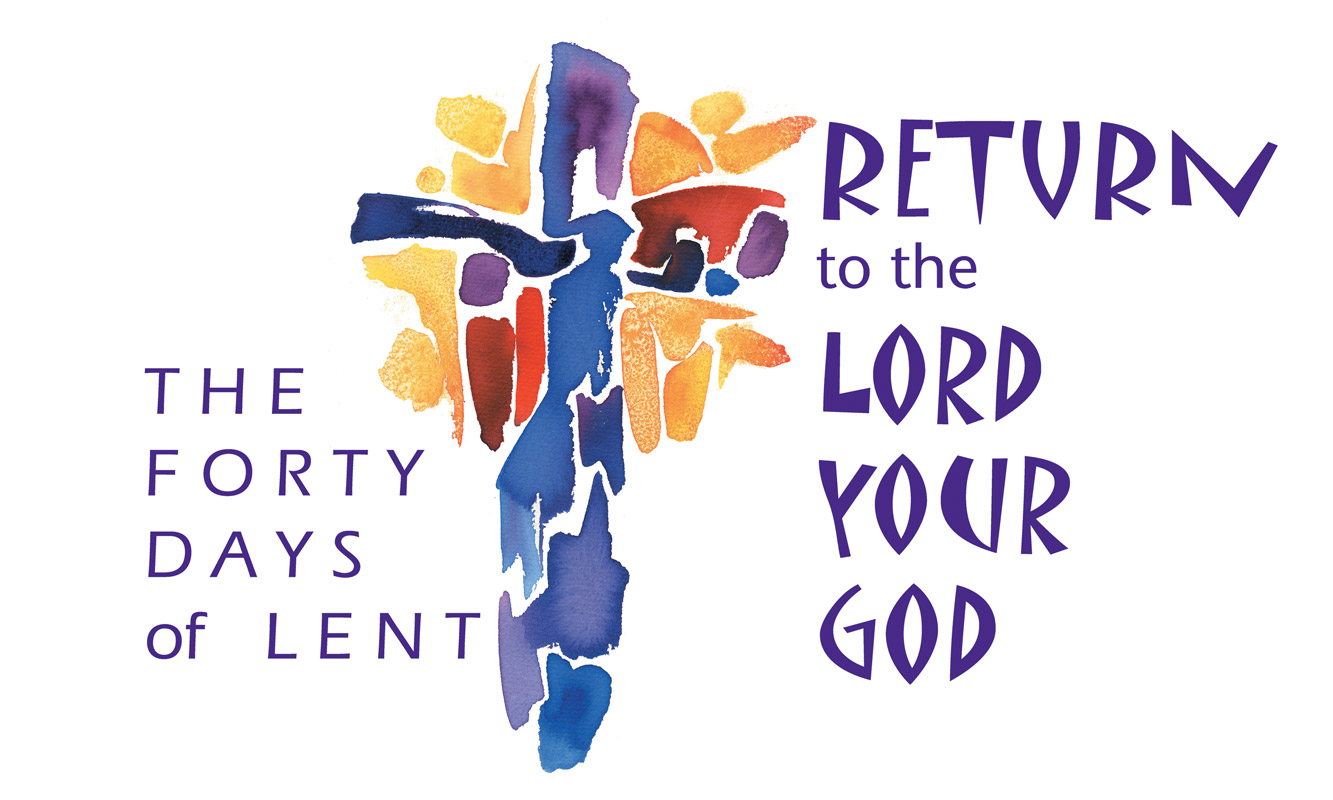
Lent

How should I prepare myself for Pascha?

“Examine yourselves, to see whether you are in the faith. Test yourselves. Or do you not realize this about yourselves, that Jesus Christ is in you?—unless indeed you fail to meet the test!”  2 Corinthians 13:5 (ESV)

What is Lent?

Lent is a season of forty weekdays and six Sundays for the church to journey with Christ to Holy Week and Pascha. It is an opportunity for of self-examination, repentance, purgation, and spiritual renewal.

Why may we struggle with Lent?

  1. Thanksgiving and Christmas are so ensconced in secular American culture that a period of preparation during Advent makes sense to us. Most Christians are attracted to this season as a way to rise above the materialism and commercialization of Christmas.
  2. Pascha is so foreign to secular American culture that a period of preparation during Lent just seems weird, threatening, out of place.

I. Lent seems like a dark, foreboding ritualism to some Christians – candles, ashes, fasting, prayer, works, and pilgrimage. Haven’t we been saved from empty, meaningless religion?

  1. Perhaps we struggle with Lent in the same way we struggle with the Psalms of lament, which make up two-thirds of the Psalter. Grieving over our lives (i.e. Lenten repentance and Psalms of lamentation) is foreign from our American way of living and our spiritual experience. We often subconsciously screen out what is dark, awkward, and uncomfortable.
  2. We need a season to prepare for Pascha. Most people think of Pascha as a weekend event, and the main preparation is the purchase of new clothes and a carefully planned Pascha egg hunt. However, Pascha is a forty-day season of feasting and celebration in response to the resurrection and new creation. If we prepare for a wedding, an anniversary, a birthday, a graduation, a vacation, an athletic competition, or any other special occasion in our lives, how much more do we need to prepare for Pascha? The forty days of Lent gets us ready for the forty days of Pascha.

The journey to Paschal joy

  1. Lent is a spiritual journey and its destination is Pascha, “the Feast of feasts.”
  2. Pascha celebrates the death of Death, the annihilation of Hell, the beginning of new and everlasting life.
  3. Pascha celebrates Christ’s resurrection as something that happened to him, is happening, and will happen to us.
  4. God has granted us the gift of new life. The resurrection alters our attitude toward everything, including death. In his death, Christ changed the nature of death from the inside out, transforming the tragedy of tragedies into ultimate victory. “O death, where is thy sting?” God made us partakers of Christ’s resurrection.
  5. We live as if Christ never came, never died, never rose again from the dead, is not the Lord of the world, and will not come again to judge the living and the dead.
  6. This is the real sin, the sin of all sins, the bottomless sadness, and tragedy of our Christian life.
  7. We may acknowledge and confess our various sins, yet we fail to refer our life to that new life which Christ revealed and gave to us. We continually lose and betray the “new life” we received as a gift from God.
  8. We are weak. We forget, we get busy; we become immersed in our daily preoccupations. We focus our material possessions – on what we have or what we do not have. We focus on our experiences – on where we are or where we want to go. We think only of ourselves. We live as if Christ did not rise from the dead, as if that unique event in human history has no meaning for us, as if we will not also rise from the dead. We fail to live constantly by “faith, hope, and love.” We fail to “seek first the Kingdom of God and his righteousness.”
  9. Through our failure and sin, our life becomes “old” again – petty, dark, meaningless – a meaningless journey to a meaningless end.

II. Lent is a journey of repentance and return to Pascha.

  1. Lent helps us recover the vision and taste of that new Pascha life which we so easily lose and betray.
  2. The aim of Lent is precisely the remembrance of Christ, a longing for a relationship with God that has been lost. Lent offers the time and place for lamentation of our alienation and the recovery of relationship with God.
  3. The mood of Lent is “bright sadness.” The darkness of Lent allows the flame of the Holy Spirit to burn within our hearts until we are led to the mysterious and radiant brilliance of the resurrection.

Lent begins on Ash Wednesday

  1. The Service (Book of Common Prayer, 264-269)
  2. Prayer and invitation to repentance, both now and over the season of Lent
  3. Imposition of ashes
  4. Psalm 51: the prayer of the penitent
  5. Litany of penitence: a template for self-examination and confession during Lent
  6. The peace and Eucharist: Christ saves us from narcissistic self-absorption knowing that Good Friday means forgiveness and Pascha means joy.
  1. Why ashes?
  2. A sign of our Adamic identity, is that we are “of the earth”

“Then the Lord God formed a man from the dust of the ground and breathed into his nostrils the breath of life, and the man became a living being.” (Genesis 2:7)

  1. A sign of our finitude, brokenness, and mortality

“Dust you are and to dust you shall return.” (Genesis 3:19)

“Abraham said, ‘I am nothing but dust and ashes.’” (Genesis 18)

  1. A sign of mourning and lamentation, often because of our or another’s rebellion and alienation from God

“But David continued up the Mount of Olives, weeping as he went; his head was covered and he was barefoot. All the people with him covered their heads too and were weeping as they went up…When David arrived at the summit, where people used to worship God, Hushai the Arkite was there to meet him, his robe torn and dust on his head.” (2 Samuel 15:32-34)

“On the twenty-fourth day of the same month, the Israelites gathered together, fasting, and wearing sackcloth and putting dust on their heads.” (Nehemiah 9:1)

“Therefore, I despise myself and repent in dust and ashes.” (Job 42:6)

“When Mordecai learned of all that had been done, he tore his clothes, put on sackcloth and ashes, and went out into the city, wailing loudly and bitterly… In every province to which the edict and order of the king came, there was great mourning among the Jews, with fasting, weeping, and wailing. Many lay in sackcloth and ashes.” (Esther 4:1-3)

  1. In the third century, the church began the custom of burning the branches used on Palm Sunday, saving the ashes for the following year, and marking notorious and penitent sinners, such as robbers and murderers, with these ashes. Out of sympathy and solidarity, family and friends of these “marked” persons began using the ashes also, which is consistent with the gospel message that all of us are in need of God’s grace and in need of repentance and restoration.
  2. A Christian vision of the world
  3. Dualism – The radical separation between matter and spirit, profane and sacred, earthly and heavenly.
  4. Sacramentalism – The whole creation is of a piece; physical elements signify deep spiritual realities (i.e. water, bread, and wine; also oil, candles, ashes, palm branches, laying on hands, rings, etc.). We do damage to ourselves, to Jesus, and to the Bible when we try to separate the physical and spiritual, the human and divine, the earthy and the heavenly.

Repent

“Repent, and believe the good news.” (Mark 1:15)

  1. Repent: change, turn your life around, move in another direction.
  2. The first of Martin Luther’s 95 theses was, “Our Lord and Master Jesus Christ, when He said Poenitentiam agite (Repent ye!), willed that the whole life of believers should be repentance.”

III. Repentance is the beginning and continuation of a truly Christian life. Repentance, especially focused during Lent, is a long and sustained spiritual effort.

  1. Lent reminds us (in the words of the Heidelberg Catechism, question and answer #88) that two things are involved in genuine repentance: “the dying of the old self and the coming to life of the new.” New life with Christ involves a daily surrendering of the old life.
  2. “It is not easy, indeed, to reject a petty ideal of life made up of daily cares, of search for material goods, security, and pleasure, for an ideal of life in which nothing short of perfection is the goal: ‘be ye perfect as your Father in heaven is perfect.’ This world through all its ‘media’ says: be happy, take it easy, and follow the broad way. Christ in the Gospel says: choose the narrow way, fight and suffer, for this is the road to the only genuine happiness. In addition, unless the Church helps, how can we make that awful choice, how can we repent and return to the glorious promise given us each year at Pascha? This is where Great Lent comes in. This is the help extended to us by the Church, the school of repentance, which alone will make it possible to receive Pascha not as a mere permission to eat, to drink, and to relax, but indeed as the end of the ‘old’ in us, as our entrance into the ‘new.’” (Alexander Schmemann, Great Lent: Journey to Pascha)

Turn from sin toward Jesus via remembering your baptism

“Live in your baptism.” (Martin Luther)

  1. Listen to the Father’s voice in baptism: “You are my child whom I love; with you I am well pleased.” (Matthew 3)
  2. Review the baptismal vows and prayers before God (Book of Common Prayer, 302-307)

IV. Remember the practice of baptism in the early church

  1. The baptized turned their backs on the west (the symbolic direction of the evil one and sin), saying, “I renounce the devil and all his works,” and spitting in the face of Satan as a sign of ending that relationship.
  2. The main purpose of Lent was to prepare the catechumen (the newly converted Christian) for baptism, which was performed during the Pascha liturgy. Even though we are baptized, what we constantly lose and betray is precisely that which we received at baptism. Therefore, Lent and Pascha is our return every year to our own baptism, our identity in Christ, our death in him, our life in him. Pascha is the rediscovery and the recovery by us of what we were made through our own baptismal death and resurrection.

Turn from sin toward Jesus

  1. Remember that life with God is a loving, engaging, and demanding relationship. Sanctification (becoming increasingly righteous like God) is a subtle and gradual process rather than dramatic and instant moment.
  2. In the Sermon on the Mount, Jesus addresses the three primary acts of Jewish piety: fasting, – prayer, and almsgiving. He did not reject these practices, but sought to correct and deepen them. Jesus promoted an embodied, lived out piety in order to establish, maintain, repair, and transform our relationship with God, neighbor, and self. Be sure to meditate on Matthew 6:1-18 before Lent.

Fasting: turning away from self

  1. A commemoration of the wilderness experiences of Israel and Jesus and a spiritual reminder that “People do not live on bread alone, but on every word that comes from the mouth of God” (Deuteronomy 8:3; Matthew 4:4).
  2. A reminder that your body is holy and belongs to God – made by the Father, redeemed by the Son, and filled by the Holy Spirit. “Do you not know that your bodies are temples of the Holy Spirit, who is in you, whom you have received from God? You are not your own; you were bought at a price. Therefore honor God with your bodies.” (1 Corinthians 6:19-20)

V. We are a psychosomatic unity. Our souls affect our bodies; our bodies affect our souls (i.e. kneeling, folding, or lifting hands, bowing head, etc.).

  1. To what are we saying “no”?
  2. Food – Saying no to my hunger that is often disproportionate to my hunger for God; saying no to what I enjoy in order to enjoy God more; anticipating the Eucharist (i.e. single day fast, multi-day fast, or extended fast – sweets, meat, caffeine, alcohol, etc.).
  3. Time – Saying no to my busyness, distraction, and noise in order to have extended solitude and silence or time to listen to God through is Word or his people (i.e. limit your extracurricular

Activities and commitments, take a true Sabbath).

  1. Money – Saying no to my greed, my urge to acquire, accumulate, hoard, compare (i.e. no advertising, no new purchases for myself, pursue extravagant generosity).
  2. Words – Saying no to my pride, envy, jealousy, anger, dishonesty, my insecure ego that needs more power, attention, pity, gratitude, approval (i.e. not defending myself, not dominating conversation or talking about myself, not gossiping or slandering, using my tongue, my lips, my words to encourage and affirm).
  3. Sex – Saying no to lust, my unfulfilled desires for pleasure (i.e. look people in the eyes, recognize their personhood and dignity as the image of God, delight in their beauty, mourn for their brokenness).
  4. Are these things inherently evil? Does God not want us to enjoy food, time, money, words, and sex? God made all these things good. In addition, we often enjoy them in sacred and redemptive ways. However, we also have a tendency to forget that these are gifts from God. We may become overly comfortable or bored with them. We may become ungrateful. We may distort and pervert them to self-serving ends. We may use them to advantage ourselves and disadvantage others. We may use them for evil. So one way to sanctify or redeem them as God’s good gifts is to go without them for a time to recalibrate our relationship with God and our relationship with these material goods.
  5. The all-day fasts during Lent are Ash Wednesday and Good Friday. We do not fast on Sundays, the day of resurrection and Eucharist.

VI. When you fast you are vulnerable. Do not plan to turn away from self if you do not also have a plan in place to turn toward God (prayer) and toward your neighbor (almsgiving).

Prayer: turning toward God

“Evening, morning, and noon I cry out to the Lord” (Psalm 55:17).

  1. The prayer of St. Ephraim the Syrian (306-373)
  2. “O Lord and Master of my life! Take from me the spirit of sloth, faint-heartedness, lust of power, and idle talk. Nevertheless, give rather the spirit of chastity, humility, patience, and love to Thy servant. Yea, O Lord and King! Grant me to see my own errors and not to judge my brother; For Thou art blessed unto ages of ages. Amen.”
  3. Pray it in the morning, afternoon, and evening. In the morning, meditate on the four powers from which you seek to be delivered – sloth, faint-heartedness, lust of power, and idle talk. In the afternoon, meditate on the four virtues you desire to experience in your daily life – chastity, humility, patience, and love. In the evening, review the events of the day, confessing where you failed, giving thanks where you have succeeded, and praising Jesus Christ for his righteousness and grace.
  4. “Faith… is the art of holding on to things your reason has once accepted, in spite of your changing moods. For moods will change, whatever view your reason takes. I know that by experience. Now that I am a Christian, I do have moods in which the whole thing looks very improbable: but when I was an atheist, I had moods in which Christianity looked terribly probable. This rebellion of your moods against your real self is going to come anyway. That is why Faith is such a necessary virtue: unless you teach your moods ‘where they get off’, you can never be either a sound Christian or even a sound atheist, but just a creature dithering to and fro, with your beliefs really dependent on the weather and the state of your digestion. Consequently, one must train the habit of faith. The first step is to recognize the fact that your moods change. The next step is to make sure that, if you have once accepted Christianity, the sum of its main doctrines shall be deliberately held before your mind for some time every day. That is why daily prayers and religious readings and churchgoing are necessary parts of the Christian life. We have to be continually reminded of what we believe. Neither this belief nor any other will automatically remain alive in the mind. It must be fed. Moreover, in fact, if you examined a hundred people who had lost their faith in Christianity, I wonder how many of them would turn out to have been reasoned out of it by honest argument? Do not most people simply drift away?” (C.S. Lewis, The Business of Heaven)

Almsgiving: turning toward our neighbors

  1. Combine God-focused prayer and neighbor-focused almsgiving by praying for your apartment complex or your street or the block where you work.
  2. Serve via Project Peace.

VII. Brainstorm simple acts of compassion toward known and unknown neighbors.

  1. Save money during Lent to give to the Pascha diaconal offering, which goes to meet financial and other tangible needs within and beyond the community.

Personal reflection and group discussion

  1. Have you ever practiced Lent? If so, what was your experience? If not, what do you hope to gain from the Lenten journey?
  2. How would you apply the Lenten themes to your life and spiritual journey in the coming season?

What do you need to put off and what do you need to put on?

VIII. Fasting – Could we each commit to giving up something we enjoy on a daily or regular basis in order to deepen our desire for God? What? Could we all commit to fasting the entire day on Ash Wednesday and Good Friday? How about fasting from lunch on Wednesdays during Lent?

  1. Prayer – Could we each commit to at least morning or evening prayer each day during Lent?

Could we spend 15 extra minutes on Sundays praying for the life and mission of the church?

  1. Almsgiving – Could we give up a luxury item during the week (i.e. lunch on Wednesdays) and give the money to a friend in need or the diaconal fund or a social service provider? Could we donate a portion of our weekend to do extra volunteering?

Adapted from Lent at Christ Church, edited by Rev. Gary DeSha