Archive for the ‘Scriptural’ Category

wesatminsterconfessionoffaithbig

Chapter II – Of God, and of the Holy Trinity.

i. There is but one only(1) living and true God,(2) who is infinite in being and perfection,(3) a most pure spirit,(4) invisible,(5) without body, parts,(6) or passions;(7) immutable,(8) immense,(9) eternal,(10) incomprehensible,(11) almighty,(12) most wise,(13) most holy,(14) most free,(15) most absolute,(16) working all things according to the counsel of His own immutable and most righteous will,(17) for His own glory;(18) most loving,(19) gracious, merciful, long-suffering, abundant in goodness and truth, forgiving iniquity, transgression, and sin,(20) the rewarder of them that diligently seek Him;(21) and withal, most just, and terrible in His judgments;(22) hating all sin,(23) and who will by no means clear the guilty.(24) The Westminster Confession of Faith, 3

(1) Dt 6:4; 1Co 8:4,6
(2) 1Th 1:9; Jer 10:10
(3) Job 11:7,8,9; Job 26:14
(4) Jn 4:24
(5) 1Ti 1:17
(6) Dt 4:15,16; Jn 4:24; Lk 24:39
(7) Ac 14:11,15
(8) Jas 1:17; Mal 3:6
(9) 1Ki 8:27; Jer 23:23,24
(10) Ps 90:2;1Ti 1:17
(11) Ps 145:3
(12) Ge 17:1; Rev 4:8
(13) Ro 16:27
(14) Isa 6:3; Rev 4:8
(15) Ps 15:3
(16) Ex 3:14
(17) Eph 1:11
(18) Pr 16:4; Ro 11:36
(19) 1Jn 4:8,16
(20) Ex 34:6,7
(21) Heb 11:6
(22) Ne 9:32,33
(23) Ps 5:5,6
(24) Nah. 1:2,3; Ex 34:7

ii. God hath all life,(1) glory,(2) goodness,(3) blessedness,(4) in and of Himself; and is alone in and unto Himself all-sufficient, not standing in need of any creatures which He hath made,(5) not deriving any glory from them,(6) but only manifesting His own glory in, by, unto, and upon them: He is the alone fountain of all being, of whom, through whom, and to whom are all things,(7) and hath most sovereign dominion over them, to do by them, for them, or upon them whatsoever Himself pleaseth.(8) In His sight all things are open and manifest;(9) His knowledge is infinite, infallible, and independent upon the creature,(10) so as nothing is to Him contingent, or uncertain.(11) He is most holy in all His counsels, in all His works, and in all His commands.(12) To Him is due from angels and men, and every other creature, whatsoever worship, service, or obedience He is pleased to require of them.
(13)
(1) Jn 5:26
(2) Ac 7:2
(3) Ps 119:68
(4) 1Ti 6:15; Ro 9:5
(5) Ac 17:24,25
(6) Job 22:2,3
(7) Ro 11:36
(8) Rev 4:11; 1Ti 6:15; Da 4:25,35
(9) Heb 4:13
(10) Ro 11:33,34; Ps 147:5
(11) Ac 15:18; Eze 11:5
(12) Ps 145:17 ; Ro 7:12
(13) Rev 5:12,13,14

iii. In the unity of the Godhead there be three persons, of one substance, power, and eternity; God the Father, God the Son, and God the Holy Ghost.(1) The Father is of none, neither begotten, nor proceeding; the Son is eternally begotten of the Father;(2) the Holy Ghost eternally proceeding from the Father and the Son.
(3)
(1) 1Jn 5:7; Mt 3:16,17; M Mt 28:19; 2Co 13:14
(2) Jn 1:14,18
(3) Jn 15:26; Gal 4:6

wesatminsterconfessionoffaithbig

Blessed is the man who walks not in the counsel of the wicked, nor stands in the way of sinners, nor sits in the seat of scoffers; but his delight is in the law of the LORD, and on his law he meditates day and night.
(Psalms 1:1-2)

Chapter 1 Of the Holy Scriptures:

i. Although the light of nature, and the works of creation and providence do so far manifest the goodness, wisdom, and power of God, as to leave men inexcusable;(1) yet are they not sufficient to give that knowledge of God, and of His will, which is necessary unto salvation:(2) therefore it pleased the Lord, at sundry times, and in divers manners, to reveal Himself, and to declare that His will unto His Church;(3) and afterwards, for the better preserving and propagating of the truth, and for the more sure establishment and comfort of the Church against the corruption of the flesh, and the malice of Satan and of the world, to commit the same wholly unto writing;(4) which maketh the Holy Scripture to be most necessary;(5) those former ways of God’s revealing His will unto His people being now ceased.

(6)
(1) Ro 2:14,15; Ro 1:19,20; Ps 19:1,2,3; Ro 1:32; Ro 2:1
(2) 1Co 1:21; 1Co 2:13,14
(3) Heb 1:1
(4) Pr 22:19,20,21;Lk 1:3,4; Ro 15:4; Mt 4:4,7,10; Isa 8:19,20
(5) 2Ti 3:15; 2Pe 1:19
(6) Heb 1:1,2

ii. Under the name of Holy Scripture, or the Word of God written, are now contained all the books of the Old and New Testament, which are these:

Of the Old Testament:
Genesis, Exodus, Leviticus, Numbers, Deuteronomy, Joshua, Judges, Ruth, I Samuel, II Samuel, I Kings, II Kings, I Chronicles, II Chronicles, Ezra, Nehemiah, Esther, Job, Psalms, Proverbs, Ecclesiastes, The Song of Songs, Isaiah, Jeremiah, Lamentations, Ezekiel, Daniel, Hosea, Joel, Amos, Obadiah, Jonah, Micah, Nahum, Habakkuk, Zephaniah, Haggai, Zechariah, Malachi

Of the New Testament:
The Gospels according to Matthew, Mark, Luke, John, The Acts of the Apostles, Paul’s Epistles to the Romans, Corinthians I, Corinthians II, Galatians, Ephesians, Philippians, Colossians, Thessalonians I, Thessalonians II, To Timothy I, To Timothy II, To Titus, To Philemon, The Epistle to the Hebrews, The Epistle of James, The first and second Epistles of Peter, The first, second, and third Epistles of John, The Epistle of Jude, The Revelation
All which are given by inspiration of God to be the rule of faith and life.(1)
(1) Lk 16:29,31; Eph 2:20; Rev 22:18,19; 2Ti 3:16

iii. The books commonly called Apocrypha, not being of divine inspiration, are no part of the canon of the Scripture; and therefore are of no authority in the Church of God, nor to be any otherwise approved, or made use of, than other human writings.
(1)
(1) Lk 24:27,44; Ro 3:2; 2Pe 1:21

iv. The authority of the Holy Scripture, for which it ought to be believed, and obeyed, dependeth not upon the testimony of any man, or Church; but wholly upon God (who is truth itself) the author thereof: and therefore it is to be received, because it is the Word of God.

(1)
(1) 2Pe 1:19,21; 2Ti 3:16; 1Jn 5:9; 1Th 2:13

v. We may be moved and induced by the testimony of the Church to an high and reverent esteem of the Holy Scripture,(1) and the heavenliness of the matter, the efficacy of the doctrine, the majesty of the style, the consent of all the parts, the scope of the whole, (which is to give all glory to God), the full discovery it makes of the only way of man’s salvation, the many other incomparable excellencies, and the entire perfection thereof, are arguments whereby it doth abundantly evidence itself to be the Word of God; yet, notwithstanding, our full persuasion and assurance of the infallible truth, and divine authority thereof, is from the inward work of the Holy Spirit, bearing witness by and with the word in our hearts.

(2)
(1) 1Ti 3:15
(2) 1Jn 2:20,27; Jn 16:13,14; 1Co 2:10,11,12; Isa 59:21

vi. The whole counsel of God, concerning all things necessary for His own glory, man’s salvation, faith and life, is either expressly set down in Scripture, or by good and necessary consequence may be deduced from Scripture: unto which nothing at any time is to be added, whether by new revelations of the Spirit, or traditions of men.(1) Nevertheless, we acknowledge the inward illumination of the Spirit of God to be necessary for the saving understanding of such things as are revealed in the word;(2) and that there are some circumstances concerning the worship of God, and government of the Church, common to human actions and societies, which are to be ordered by the light of nature, and Christian prudence, according to the general rules of the word, which are always to be observed.

(3)
(1) 2Ti 3:15,16,17; Gal 1:8,9; 2Th 2:2
(2) Jn 6:45; 1Co 2:9,10,11,12
(3) 1Co 11:13,14; 1Co 14:26,40

vii. All things in Scripture are not alike plain in themselves, nor alike clear unto all;(1) yet those things which are necessary to be known, believed, and observed for salvation, are so clearly propounded, and opened in some place of Scripture or other, that not only the learned, but the unlearned, in a due use of the ordinary means, may attain unto a sufficient understanding of them.

(2)
(1) 2Pe 3:16
(2) Ps 119:105,130

viii. The Old Testament in Hebrew (which was the native language of the people of God of old), and the New Testament in Greek (which, at the time of the writing of it was most generally known to the nations), being immediately inspired by God, and, by His singular care and providence, kept pure in all ages, are therefore authentical;(1) so as, in all controversies of religion, the Church is finally to appeal unto them.(2) But, because these original tongues are not known to all the people of God, who have right unto and interest in the Scriptures, and are commanded, in the fear of God, to read and search them,(3) therefore they are to be translated into the vulgar language of every nation unto which they come,(4) that the Word of God dwelling plentifully in all, they may worship Him in an acceptable manner;(5) and, through patience and comfort of the Scriptures, may have hope.

(6)
(1) Mt 5:18
(2) Isa 8:20; Ac 15:15; Jn 5:39,46
(3) Jn 5:39
(4) 1Co 14:6,9,11,12,24,27, 28
(5) Col 3:16
(6) Ro 15:4

ix. The infallible rule of interpretation of Scripture is the Scripture itself: and therefore, when there is a question about the true and full sense of any Scripture (which is not manifold, but one), it must be searched and known by other places that speak more clearly.

(1)
(1) 2Pe 1:20,21; Ac 15:15,16

x. The supreme Judge, by which all controversies of religion are to be determined, and all decrees of councils, opinions of ancient writers, doctrines of men, and private spirits, are to be examined, and in whose sentence we are to rest, can be no other but the Holy Spirit speaking in the Scripture.

(1)
(1) Mt 22:29,31; Eph 2:20; Ac 28:25

What-Do-You-Believe

Doctrine matters…really. There are two important things to keep in mind. Matters of doctrine or as John Piper calls them “theological trademarks” are not new, or distinctive to us, they are not a niche or eccentric. True apostolic doctrine all have wide foundations in the Bible and deep roots in the history of God’s people. What you and I read in the Apostles Creed or in the Nicene Creed, really matter. The true apostolic teaching revealed in Holy Scripture, and through the writings of the early Church fathers, and the Reformers are treasures for the Church today. These doctrines are fundamentally eternal truths that we must immerse ourselves in so that we can increase the vision of our awesome God so much that we will want to act on them. These teachings will make us want to build something, to start something, to dream big, and risk even more for the glory of God in Jesus Christ. Hallelujah! I pray for nothing less.

repent-sign

“Yet even now, says the LORD, return to me with all your heart, with fasting, with weeping, and with mourning; rend your hearts and not your clothing. Return to the LORD, your God, for he is gracious and merciful, slow to anger, and abounding in steadfast love, and relents from punishing.” ~ Joel 2:12-13

The Call for Repentance

Joel opens his book by reflecting on God’s judgment in a plague of locusts in ancient Judah and how it anticipated the final day of the Lord, when He would judge even Jerusalem for its evil (Joel 1:1–2:11). This part of his work offers little hope to the people, but that changes in 2:12. Our Creator’s mercy is emphasized, as the Lord calls His people not to sit idle and wait for His wrath, but to repent. The repentance God demands here is not a superficial rending of clothing but rather a true soul conversion—the heart circumcision that the Lord has always demanded (Deut. 10:12–22). This circumcision is finally the gift of God for His elect people (Ezek. 36:22–38; John 3:1–8).

Those who have been gifted with circumcised hearts repent when the Lord, through His prophets and Apostles, calls them to turn from their sin. But the call must go out, for God ordinarily works through the preaching of His Word; thus, Joel calls for deep and thorough repentance in Joel 2:13–17. He grounds this call to repent in God’s revelation of His mercy and willingness to relent over the disasters He has announced (see Ex. 34:6–7; Jer. 18:5–8). At the same time, Joel’s call to repentance lacks any hint of presumption. Although God’s people can always be confident that He will forgive them when they turn to Him in heartfelt repentance (2 Chron. 7:14; Luke 15:11–32), even the healing that He promises does not always mean that we will escape the earthly consequences that flow from our sin. Joel 2:14 reflects this point, as the prophet leaves it up in the air as to whether God’s forgiveness might include other undeserved blessings.

Nothing less than full national repentance would do when Joel called Judah to repent. War was not important enough to conscript new husbands for battle (Deut. 20:1–7). Likewise, women with young children could apparently delay paying their vows or meeting other worship requirements until their little ones were weaned (1 Sam. 1:21–24). But Joel exempts neither group from repentance. The need to avert the coming judgment was so urgent that even newlyweds and young mothers had to participate in national repentance if there were to be any hope of staving off disaster (Joel 2:15–17).

God responds in Joel 2:18–27 to the call to repentance of verses 12–17, pledging to bless His people lavishly upon true and full repentance. Tomorrow we will look at this lavish blessing in greater detail.

Coram Deo

True repentance is confidently grounded in what God says about Himself in His Word, but it expresses itself in humility toward Him. We come before our Creator with confidence that He is faithful and just to forgive our sins (1 John 1:8–9), but we come humbly, refusing to believe or affirm that He owes us forgiveness. Every act of divine forgiveness is an instance of the Lord keeping His promises to pardon His people, but it is at the same time a forgiveness we never deserve.

From Ligonier Ministries, the teaching fellowship of R.C. Sproul. All rights reserved. Website: http://www.ligonier.org | Phone: 1-800-435-4343

cyril-lucaris-patriarch-of-constantinople
Cyril Lucaris (Kyrillos Lukaris), Patriarch of Alexandria (1602-1621) and Patriarch of Constantinople (1612, 1620-1623, 1623-1633, 1633-1634, 1634-1635, 1637-1638) a martyr within the Orthodox Church, occupies a remarkable position in Church history. His treatise “The Confession of Orthodox Faith” is a mere episode, and passed away apparently without permanent effect, but (like the attempted reformations of Wyclif, Huss, and Savonarola) it may have a prophetic meaning for the future, and be resumed by Providence in a subsequent form. He truly desired the Eastern Orthodox Church to experience reformation.

The Confession of Orthodox Faith (1629)

In the name of the Father and of the Son and of the Holy Spirit Cyril, Patriarch of Constantinople, publishes this brief Confession for the benefit of those who inquire about the faith and the religion of the Greeks, that is of the Eastern Church, in witness to God and to men and with a sincere conscience without any dissimulation.

Chapter 1.

We believe in one God, true, Almighty, and in three persons, Father, Son, and Holy Spirit; the Father unbegotten, the Son begotten of the Father before the world, consubstantial with the Father; the Holy Spirit proceeding from the Father by the Son, having the same essence with the Father and the son. We call these three persons in one essence the Holy Trinity, ever to be blessed, glorified, and worshipped by every creature.

Chapter 2.

We believe the Holy Scripture to be given by God, to have no other author but the Holy Spirit. This we ought undoubtedly to believe, for it is written. We have a more sure word of prophecy, to which you do well to take heed, as to light shining in a dark place. We believe the authority of the Holy Scripture to be above the authority of the Church. To be taught by the Holy Spirit is a far different thing from being taught by a man; for man may through ignorance err, deceive and be deceived, but the word of God neither deceives nor is deceived, nor can err, and is infallible and has eternal authority.

Chapter 3.

We believe that the most merciful God has predestined His elect unto glory before the beginning of the world, without any respect of their works and that there was no other impulsive cause to this election, but only the good will and mercy of God. In like manner before the world was made, He rejected whom He would, of which act of reprobation, if you consider the absolute dealing of God, His will is the cause; but if you look upon the laws and principles of good order, which God’s providence is making use of in the government of the world, His justice is the cause, for God is merciful and just.

Chapter 4.

We believe that one God in Trinity, the Father, Son, and Holy Spirit, to be the Creator of all things visible and invisible. Invisible things we call the angels, visible things we call the heavens and all things under them. And because the Creator is good by nature, He has created all things good, and He cannot do any evil; and if there is any evil, it proceeds either from the Devil or from man. For it ought to be a certain rule to us, that God is not the Author of evil, neither can sin by any just reason be imputed to Him.

Chapter 5.

We believe that all things are governed by God’s providence, which we ought rather to adore than to search into. Since it is beyond our capacity, neither can we truly understand the reason of it from the things themselves, in which matter we suppose it better to embrace silence in humility than to speak many things which do not edify.

Chapter 6.

We believe that the first man created by God fell in Paradise, because he neglected the commandment of God and yielded to the deceitful counsel of the serpent. From thence sprung up original sin to his posterity, so that no man is born according to the flesh who does not bear this burden and feel the fruits of it in his life.

Chapter 7.

We believe that Jesus Christ our Lord emptied Himself, that is He assumed man’s nature into His own substance. That He was conceived by the Holy Spirit in the womb of the ever virgin Mary, was born, suffered death, was buried, and risen in glory, that He might bring salvation and glory to all believers, Whom we look for to come to judge both quick and dead.

Chapter 8.

We believe that our Lord Jesus Christ sits on the right hand of His Father and there He makes intercession for us, executing alone the office of a true and lawful high priest and mediator, and from there He cares for His people and governs His Church adorning and enriching her with many blessings.

Chapter 9.

We believe that without faith no man can be saved. And we call faith that which justifies in Christ Jesus, which the life and death of our Lord Jesus Christ procured, the Gospel published, and without which no man can please God.

Chapter 10.

We believe that the Church, which is called catholic, contains all true believers in Christ, those who having departed their country are in heaven and those who live on earth are yet on the way. The Head of that Church (because a mortal man by no means can be) is Jesus Christ alone, and He holds the rudder of the government of the Church in His own hand. Because, however, there are on earth particular visible Churches, every one of them has one chief, who is not properly to be called [head] of that particular Church, but improperly, because he is the principal member of it.

Chapter 11.

We believe that the members of the Catholic Church are saints, chosen unto eternal life, from the number and fellowship of which hypocrites are excluded, though in particular visible churches tares may be found among the wheat.

Chapter 12.

We believe that the Church on earth is sanctified and instructed by the Holy Spirit, for He is the true comforter, whom Christ sends from the Father to teach the truth and to expel darkness form the understanding of the faithful. For it is true and certain that the Church on earth may err, choosing falsehood instead of truth, from which error the light and doctrine of the Holy Spirit alone frees us, not of mortal man, although by mediation of the labors of the faithful ministers of the Church this may be done.

Chapter 13.

We believe that man is justified by faith and not by works. But when we say by faith, we understand the correlative or object of faith, which is the righteousness of Christ, which, as if by hand, faith apprehends and applies unto us for our salvation. This we say without any prejudice to good works, for truth itself teaches us that works must not be neglected, that they are necessary means to testify to our faith and confirm our calling. But that works are sufficient for our salvation, that they can enable one to appear before the tribunal of Christ and that of their own merit they can confer salvation, human frailty witnesses to be false; but the righteousness of Christ being applied to the penitent, alone justifies and saves the faithful.

Chapter 14.

We believe that free will is dead in the unregenerate, because they can do no good thing, and whatsoever they do is sin; but in the regenerate by the grace of the Holy Spirit the will is excited and in deed works but not without the assistance of grace. In order, therefore, that man should be born again and do good, it is necessary that grace should go before; otherwise man is wounded having received as many wounds as that man received who going from Jerusalem down to Jericho fell into the hands of thieves, so that of himself he cannot do anything.

Chapter 15.

We believe that the Evangelical Sacraments in the Church are those that the Lord instituted in the Gospel, and they are two; these only have been delivered unto us and He who instituted them delivered unto us no more. Furthermore, we believe that they consist of the Word and the Element, that they are the seals of the promises of God, and they do confer grace. But that the Sacrament be entire and whole, it is requisite that an earthly substance and an external action concur with the use of that element ordained by Christ our Lord and joined with a true faith, because the defect of faith prejudices the integrity of the Sacrament.

Chapter 16.

We believe that Baptism is a Sacrament instituted by the Lord, and unless a man has received it, he has no communion with Christ, from whose death, burial, and glorious resurrection the whole virtue and efficacy of Baptism proceeds; therefore, we are certain that to those who are baptized in the same form which our Lord commanded in the Gospel, both original and actual sins are pardoned, so that whosoever has been washed in the name of the Father and of the Son and of the Holy Spirit are regenerate, cleansed, and justified. But concerning the repetition of it, we have no command to be rebaptized, therefore we must abstain from this indecent thing.

Chapter 17.

We believe that the other Sacrament which was ordained by the Lord is that which we call Eucharist. For in the night in which the Lord offered up Himself, He took bread and blessed it and He said to the Apostles, “Take ye, eat, this is my body,” and when He had taken the cup, He gave thanks and said, “Drink all of this, this is my blood which was shed for many; this do in remembrance of me.” And Paul adds, “For as often as ye shall eat of this bread and drink of this cup, ye do show the Lord’s death.” This is the pure and lawful institution of this wonderful Sacrament, in the administration of which we profess the true and certain presence of our Lord Jesus Christ; that presence, however, which faith offers to us, not that which the devised doctrine of transubstantiation teaches. For we believe that the faithful eat the body of Christ in the Supper of the Lord, not by breaking it with the teeth of the body, but by perceiving it with the sense and feeling of the soul, since the body of Christ is not that which is visible in the Sacrament, but that which faith spiritually apprehends and offers to us; from whence it is true that, if we believe, we do eat and partake, if we do not believe, we are destitute of all the fruit of it. We believe, consequently, that to drink the cup in the Sacrament is to be partaker of the true blood of our Lord Jesus Christ, in the same manner as we affirmed of the body; for as the Author of it commanded concerning His body, so He did concerning His blood; which commandment ought neither to be disremembered nor maimed, according to the fancy of man’s arbitrament; yea rather the institution ought to be kept as it was delivered to us. When therefore we have been partakers of the body and blood of Christ worthily and have communicated entirely, we acknowledge ourselves to be reconciled, united to our Head of the same body, with certain hope to be co-heirs in the Kingdom to come.

Chapter 18.

We believe that the souls of the dead are either in blessedness or in damnation, according as every one has done, for as soon as they move out of the body they pass either to Christ or into hell; for as a man is found at his death, so he is judged, and after this life there is neither power nor opportunity to repent; in this life there is a time of grace, they therefore who be justified here shall suffer no punishment hereafter; but they who die, being not justified, are appointed for everlasting punishment. By which it is evident that the fiction of Purgatory is not to be admitted but in the truth it is determined that every one ought to repent in this life and to obtain remission of his sins by our Lord Jesus Christ, if he will be saved. And, let this be the end.

This brief Confession of ours we conjecture will be a sign spoken against them who are pleased to slander and persecute us. But we trust in the Lord Jesus Christ and hope that He will not relinquish the cause of His faithful ones, nor let the rod of wickedness lie upon the lost of the righteous.

Dated in Constantinople in the month of March, 1629. Cyril, Patriarch of Constantinople.

council-of-nicaea

While on earth, our Lord confirmed that He and the Father are one (John 10:30). On the other hand, He asked, “Why do you call me good, no one but my Father is good?” (Mark 10:18). Putting those two statements together is not very easy. However, the Bible does not leave only that question to resolve. Jesus could tell the “unknown” inquisitive sinner hiding in a tree that He would have lunch with him while also claiming that no one knows the time or the hour but the Father (Mark 13:32).

There is an inherent tension in these and other biblical passages. To express the tension sharply, the big issue relative to Jesus’ earthly ministry is this: The divine One who turned water into wine, who raised His friend Lazarus from the grave, who walked on water and commanded His friend Peter to do the same, could also die a bloody and shameful death upon the cross.

Truly Jesus is the God-man, but the relationship between the two is not that easy to figure out. The resurrection did not make the situation any simpler. After conquering death, Mary could worship Him and hold onto His feet. His new body still had nail marks that Thomas could see and touch. Jesus could cook a fish breakfast for His depressed fishing disciples. But He could also walk through locked doors, and after talking to some disciples, He could suddenly vanish. At the end of His time on earth, after being seen (He was no apparition) by many, He ascended bodily to heaven and is now seated at the Father’s right hand.

These and other Scripture passages taught the ancient church, and they teach us today, to cry out: “Jesus is God!” Our voices unify with Christians of two thousand years ago and rejoice that we have a great High Priest who “knows” our weaknesses because He is truly man. We confess with them that Jesus of Nazareth, a man born of Mary, is also “Lord.”

While we sing the same song of praise, our world is different from that of Christ’s followers during the first four centuries. We don’t have to worship in catacombs, and, at least here in America, government officials don’t want us dead for our profession of faith. Fortunately, the fourth-century world of Christian persecution came to a screaming stop when the Emperor Constantine rescinded past anti-Christian decrees and elevated Christianity to the official faith of the empire. Suddenly, the church had time and leisure to reflect upon these difficult, and seemingly contradictory, biblical truths.

Facing our task from another direction, we ask: How has the church understood Paul’s teaching, who tells us that Jesus took “the form of a servant” (Phil. 2:7), and the teaching of the beloved disciple who reminds us that we “beheld His glory”? (John 1:14). Granting that Jesus Christ is the God-man, the church had to determine how it was possible for the divine and the human to come together. Those questions were resolved in the fourth century, from the time of the council of Nicaea (325) to the council of Constantinople (381).

The Call For a Meeting at Nicaea

As is so often the case in the church, a controversy arose over these difficult issues. Particular figures became associated with different theological positions. On the one hand there was the theologian named Arius. For him, certain themes of Scripture were very important. For example, in the Jewish synagogues a particular Hebrew phrase, called the “Shema,” was memorized and repeated: “Hear O Israel, the Lord our God, the Lord is One” (Deut. 6:4). This is good and true teaching! Nevertheless, if the Lord is “One,” how does Jesus fit into the equation? The answer for Arius was simple. At the incarnation, Jesus of Nazareth “became” the God-man. Once again, on first reading, this phrase too is correct. Jesus did become the God-man two-thousand years ago when He was born of the virgin.

But lurking behind this correct phrase was an overflowing garbage can of bad ideas. Any orthodox Christian today affirms that Jesus “became” the God-man in the little town of Bethlehem, but we also affirm that the second person of the Trinity existed in full deity before that time. This pre-existence of Christ was the rub for Arius. He did not believe it, and he said, “there was a time when He was not [the eternal Son of God].”

At this point in the debate, orthodoxy’s hero, Athanasius, rightfully raised a shout of alarm. To state the issue clearly and concisely, Arius’ followers had denied the full eternal deity of the Son and the Holy Spirit to the Father. This is heresy.

However, Arius’ position was easy to understand. It supposedly helped to “clarify” the biblical problems. It was an attractive position, but it was wrong! The debate between Athanasius and Arius’ followers rolled like thunder around the empire. To resolve the controversy, the Emperor Constantine called for a giant church meeting.

Amid much debate, the theologians who met in 325 at the council of Nicaea had established the eternal preexistent Godhead of Christ. Their formulations excluded Arianism from the church. Jesus was declared to be “of one substance” with the Father. The Greek word for “of one, or same, substance” is homoousios. It consists of two words smashed together. Most know that the word “homo” means “same” — “ousia” means “substance.”

After 325

With this first great council, grounds for peace in the church had been established. A good theological stance had been taken, and the controversy about Christ’s nature should have come to an end. But we are talking about theologians here! While Arianism was officially condemned, and while Athanasius had won theologically and politically, not everyone was convinced of the orthodox position.

The struggle after 325 surrounds not men, but words. The controversy was between those who held to homoousios and those who proclaimed a new word: homoiousios. If you are reading this for the first time, the different spelling may not even have been noticed. An “i” is inserted in the second word.

Is a little “i” so important? If I evaluate a student’s outstanding paper and intend to give an “A” grade, but forget one little line, there is a big difference in meaning. That “A” would become an “F” on the class records. Theology students can become very concerned over one little line! They can also become concerned about a little “i.” While homoousios means of the “same substance,” homoiousios means that Jesus is of a “like substance.”

However, when we are talking about the very “substance” or “essence” of something, it is either completely of that substance, or it is not. For example, one “apple” can be “like” another “apple.” There could be differences of color or taste, but both would be “apples.” There is room for some differences in details: more sweet or less sweet, red or green in color. But an “apple” cannot taste like a ham sandwich and look like an elephant and still be an “apple”! It has to have all of the qualities of “apple-ness.” It has to be either “apple” in its substance — or it is something else.

After considerable debate, the theologians agreed. When it comes to the substance of divinity or humanity, there is no “almost” divine or “partly” human. God has to be fully God, and a man has to be a man. Homoiousios (with the “i” — “like,” or “similar” substance) was rejected by all, and most gave up their position that Jesus could be “like” God in substance, thus confirming orthodoxy.

But there were still some unconvinced troublemakers. They would not bow their knees to the notion of a full incarnation of the eternally divine Son of God. They pushed the envelope further and said that Jesus was “unlike” the Father in His substance.

This was an extreme position — and everyone now saw that it had to be rejected. Even the homoiousios pushers stood side by side with their former opponents (homoousios) to fight against the new enemy, “unlike.” To finish the controversy, yet another council was called, this time to convene at the city of Constantinople in 381. There a full creed was affirmed, the one that we term the “Nicene Creed.” It is properly called the “Niceno-Constantinopolitan Creed.”

The Chalcedonian Creed (451) wisely does not attempt to explain comprehensively the mystery of how Christ can be fully God and man. It does establish that we can reflect theologically between two boundaries, that His divine nature must be full, and that His human nature must be complete. It also warns against a false relationship between the two natures.

There are two natures in Christ’s one unified person. Yet, He had one undivided self-consciousness. The Chalcedonian Creed affirmed that even after the incarnation, and through all eternity, the distinction between the two natures continues. While they are distinct, without confusion or conversion, yet they are also without separation or division. In terms of Christ’s will, the divine will remains divine, and the human will remains human. In Christ, the God-man, the two have one common life and interpenetrate each other. This is also similar to the relationship between the three persons of the Trinity.

One final note as it relates to the glorious doctrine of the person of Jesus Christ, we would be impoverished were it not for the arduous labors of the theologians of the fourth century.

~ Dr. Rick Gamble (Professor of systematic theology at Reformed Presbyterian Theological Seminary and is senior pastor of College Hill Reformed Presbyterian Church in Beaver Falls, PA)

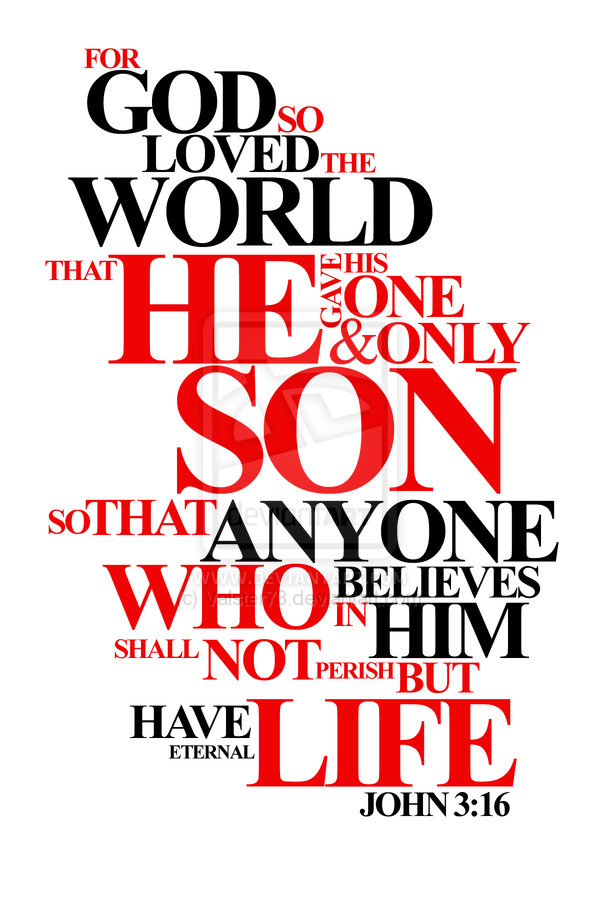
John_3_16_by_Valster73

“For God loved the world in this way: He gave His One and Only Son, so that everyone who believes in Him will not perish but have eternal life. For God did not send His Son into the world that He might condemn the world, but that the world might be saved through Him. Anyone who believes in Him is not condemned, but anyone who does not believe is already condemned, because he has not believed in the name of the One and Only Son of God. “This, then, is the judgment: The light has come into the world, and people loved darkness rather than the light because their deeds were evil. For everyone who practices wicked things hates the light and avoids it, so that his deeds may not be exposed. But anyone who lives by the truth comes to the light, so that his works may be shown to be accomplished by God.” ~ The Gospel of John 3:16-21

Do you believe that Jesus Christ is the Son of God, your Savior? Click here to learn more!

seek-the-truth

The Truth About Jesus

There is a 2,000 year old truth about Jesus that may still need to be discovered in your life. The Bible informs us that we tragically exchange the truth of God for all kinds of substitutes (Romans 1:25). And yet, marvelously, the truth can win us over. It’s the truth about why Jesus came and why he died.

Jesus’ Bold Claim and How He Proved It

Jesus made a bold claim during his days on earth. He said, “I am the way, and the truth, and the life. No one comes to the Father except through me” (John 14:6, ESV).

Did you get that? Jesus says that you can only know God the father through belief in him. That’s a pretty radical statement! But he backed it up by going to the cross, dying in our place, and rising again on the third day. The Bible says that we should have been punished for breaking God’s law, but he took the punishment in our place. Jesus Christ, God’s Son, came to earth to reveal a marvelous message that our offenses can be forgiven and we may become reconciled to God, and have eternal life.

How You Can Know the Truth

Are you wandering, not sure about truth, lost in your search for identity? Do you know yourself to be guilty of unfaithfulness to God? Do you know you need to be saved from moral compromise? Well then, there’s very good news for you. Jesus appeals to you to come to him, to ask him to forgive you and make you a child of God.

For you see, anyone who receives him has the right to become a child of God (John 1:12). This is the message Jesus taught that Peter and Mary believed. Jesus calls you to know the truth so you can be set free (John 8:32).

How You Can Receive the Truth

If you’d like to know the God of truth, lift up the empty hands of faith and trust Him for your salvation. Come to Him on your knees and pray this prayer:

O Lord, I am lost without You. My life is empty without Your truth and your love. I commit my life to You. I turn away from my sinful behaviors and I turn toward You. Forgive me for all my offenses and give me the power to do good. Reconcile me with Yourself. Look at me only through the work of Jesus, and enable me to live for Him. Thank You that You care for someone like me. Thank You that You welcome me into heaven, because Your love knows no bounds. Help me to grow in grace and guide me in all my ways. In Christ’s name, Amen.

How You Can Continue in the Truth

Now that you have committed your life to the Lord, it is important that you identify yourself to a leader from a Bible-believing church in your area. You have begun an amazing journey. The church is there to ensure that you grow and enjoy the Lord in fellowship, and not alone. The church will help you understand more about all of these things, and will guide you into the life of worship and the celebration of the sacraments.

I can help you. Call 888.492.0285 or Send an email and I will pray with you and/or for you!

God bless you all!