Archive for the ‘Sacramental’ Category

media-press

Evaluating Media Forms in Ministry

I subscribe to a magazine called “Salvo.” It is a publication of The Fellowship of St. James (http://www.fsj.org), Salvo is dedicated to debunking the cultural myths that have undercut human dignity, all but destroyed the notions of virtue and morality, and slowly eroded our appetite for transcendence. It also seeks to promote the Christian worldview. (http://www.salvomag.com)

That being said, I came to the “Book Blip” page, where a book review entitled “Trust Me, I’m Lying: Confessions of a Media Manipulator” was given by Ryan Holiday. This is the review he wrote:

Trust Me, I’m Lying: Confessions of a Media Manipulator is a fast-moving, straight-talking mea culpa (which means “through my fault” and is an acknowledgement of having done wrong) from a marketer, media strategist, and apparent “first defector” from the “unreality” of the blogosphere — a nebulous entity whose very business model “rests on exploiting the difference between perception and reality.” Simultaneously fascinating and disturbing, Trust Me, I’m Lying: Confessions of a Media Manipulator exposes the modus operandi of the internet news “racket” and educates readers in how to be more media-savvy.” (Salvo Magazine, Issue 32, Spring 2015, p. 6)

I share this with you all to establish a thought. The thought is, is the Church, which uses a variety of media forms in ministry actually telling the truth about their ministry? Is what is being marketed, or expressed the exact true representation of what the inquirer will actually find upon visiting the church? What is the intent and purpose of the church’s use of that media form? What is the desired goal from the use of a specific media form?

Here is another thought. I remember one year, receiving in the mail an invitation to go to a local resort hotel, have fun at its water park, and then come Sunday, enjoy the various zoo animals on display after the church service was over. What was the goal of this mailer? I think it was an attraction attention getter for those people with families, who, if so moved, would come to this local evangelical church. Did this church say anything that was untrue? No. They did exactly what they said they would. All you had to do was show the card you got in the mail, and you could play at the water park until you passed out. Then, the pièce de résistance was the various zoo animals on display after the church service. There was free hot dogs, popcorn, and soda for all. What was the intent of all of this engaging marketing? To get people to come to their church. I am sure hundreds went to the resort for a free water park fling, and yet out of the hundreds maybe 1-2% actually visited the church. More than likely those 1-2% were just there for the zoo animals. Instead of sending a card with the Gospel message on it, or a teaser with the answer for all the world’s problems, they spent thousands of dollars on a marketing campaign. Was it the right or wrong way to get people to church?

In our text book OutSpoken, we are told that we should be good stewards regarding how we use the various media forms at the church’s disposal. The goal or intent of using varying media forms, from my understanding, is obedience to the command to GO, make disciples of all nations, baptizing them, and teaching them everything Jesus had commanded the apostles.

When it is our turn to take advantage of the various media forms, which method or means are we going to use, and for what purpose, really?

mtdThere is talk in some church circles about “moralistic therapeutic deism.” We may abbreviate this ungainly phrase as “MTD,” in allusion to the popular cable channel showing music videos. Many teenagers and young adults are familiar with MTV; however, few would recognize “moralistic therapeutic deism” as playing any role in their lives.

Yet the contention we hear is that MTD, rather than classic Christianity, is the predominant religion among today’s teenagers and young adults. They may not recognize the phrase, but it describes the belief system that they actually profess and practice. And what’s more: We, the parents and other adults around them, are the ones who taught them MTD. This is a serious charge and deserves serious consideration.

An Inarticulate Faith

The phrase “moralistic therapeutic deism,” you will not be surprised to learn, was coined by an academic: Notre Dame sociologist Christian Smith. It has been disseminated more widely by Smith’s associates, including Princeton Seminary professor Kenda Creasy Dean. Based on her research with Smith, Dean published a book, Almost Christian: What the Faith of Our Teenagers is Telling the American Church. Dean has become a popular speaker at church events. She delivered a challenging presentation at my local church on a snowy Saturday in February, and I was among the large crowd that came out to hear her.

Smith, Dean, and their colleagues did surveys and in-depth interviews in which they queried thousands of young people about their religious beliefs and practices. Very few, they found, were atheists or hostile toward religion. On the other hand, relatively few were able to articulate and consistently practice a faith that resembled classic Christianity.

The vast majority of the respondents found it difficult to articulate any kind of belief system. They mentioned God, but it was a vague and distant God. They didn’t have much to say about Jesus.

What the respondents did seem to believe, as Smith summarized it, was: God functions as an authority who gives us rules to guide our behavior (this is the “moralistic” part). The main point of these rules is to be a nice person who gets along with other people. If we obey the rules, God makes us feel good about ourselves (this is the “therapeutic” part). But God isn’t involved in a personal or direct way in our daily lives (this is the “deism” part). He may show up in a crisis, to make us feel better about ourselves.

Almost Christian

This set of half-conscious assumptions is what Smith, Dean, and associates call “moralistic therapeutic deism.” It’s not necessarily false. We should seek good relations with the people around us. If we obey God’s commands, we will usually end up happier. God is a refuge in times of trouble.

Yet the Good News of Jesus Christ is so much greater than any of this. Dean, in her talk, showed a side-by-side comparison of MTD and the Apostles’ Creed. The differences were stark. MTD is all about myself and my happiness. The Apostles’ Creed is about the Truine God–Father, Son, and Holy Spirit–and God’s amazing works from the Creation to the Incarnation to the hope of life eternal.

So how did these teenagers and young adults come to settle for so much less than the Gospel? It wasn’t by rebelling against their parents’ religion. On the contrary, survey respondents by and large felt positively toward their parents and shared common values. Many of them reported that their parents had taken them regularly to church and youth group, and they had few complaints about the experience. It’s just that they didn’t emerge with a distinct Christian faith that they could articulate and practice.

Is This What We Teach Our Children?

Dean suggests a disturbing explanation: Perhaps these teenagers and young adults adopted MTD because that’s what they were taught. That’s basically the philosophy of life they have received from and observed in their parents. It’s what they learned in Sunday school and youth group: Be nice to other people and you’ll have a happy life, and God will be there when you need him. All that stuff about Jesus dying for our sins never really made an impression.

Dean’s presentation provoked some self-examination in me and others at my church: Is MTD what we are teaching our kids? When my wife and I lead Children’s Church, is the message the children are hearing the Gospel of God’s great mercy in Jesus Christ? Or is it something less? Are we preparing them to be nice people or disciples of Jesus Christ?

I must admit that some of the Sunday school curriculum we have used has been very moralistic and therapeutic. We read Bible stories, but the takeaway at the end of the lesson often seems to be that everyone is special to God and kids should be kind to their classmates. There isn’t much said about our being sinners to whom God sent a Savior. I have seen this failing not only in old line Protestant curricula, but also in curricula from publishers that have an evangelical reputation.

How would your congregation fare under this kind of self-examination? Maybe you intend to communicate the Gospel–as my wife and I do–but are you sure that’s what the children are hearing? It’s a question worth asking. The consequences go far into the future–indeed, into eternity.

Taken from “Theology Matters” http://www.theologymatters.com/

Written by: Alan F.H. Wisdom

ted-logo

Talking about TED

As the Communication in Ministry course glides midway in its third week, I remember the theme is, “what role do you believe story plays in ministry communication and how might you build stories into your ministry’s communication strategy?” The emphasis is storytelling.

The chapter we are reading in our text, Outspoken, by Shraeder & Hendricks, pp. 90-115 is entitled “Words and Stories.”

Everyone has a story. There is a story about just about everything. There are stories about food, drinks, cars, trucks, and M&M’s. I’m on the path toward a degree in Christian Ministry, and there is a story behind that, but I’m not going to tell it right now. Teased yet?

I get emails from a source called churchjobs.tv and at the bottom of the email there are some links to different resources. One of the links was to an article about TED. A gentleman named Todd Rhoades wrote an article asking the question, “What if our sermons were like TED talks?” Here’s the link: http://toddrhoades.com/what-if-your-sermon-was-like-a-ted-talk

Todd got the idea to blog out this question from another gentleman by the name of Eric Dye. Here’s his link:  http://bit.ly/1D7GKX0  “If Sermons were like TED talks”

Have you ever watched a TED talk on YouTube? I have. I have watched several, and honestly they were all very interesting.

What is TED? TED is a nonprofit devoted to spreading ideas, usually in the form of short, powerful talks (18 minutes or less). TED began in 1984 as a conference where Technology, Entertainment and Design converged, and today covers almost all topics — from science to business to global issues — in more than 100 languages. Meanwhile, independently run TEDx events help share ideas in communities around the world. http://www.ted.com/

TED is a platform for ideas worth spreading. TED today shares ideas from a broad spectrum. Meanwhile, independent TEDx events help share ideas in communities around the world. http://www.ted.com/about/our-organization

Think about the rules of a TED talk:

  1. No talk can exceed 18 minutes in length.
  2. Speakers must tell a story or argue for an idea. They may not use the TED stage to sell products, promote themselves or businesses. Every talk’s content must be original and give credit where appropriate. Speakers cannot plagiarize or impersonate other persons, living or dead.
  3. Speakers must be able to confirm the claims presented in every talk.

What about this? Can we truly expound the Word of God in 18 minutes? I know there are many ways to preach or proclaim the Word of God, by topic, by subject, by Bible book, etc. Can you say everything about a passage of Scripture in 18 minutes? You may well be able to tell a story in 18 minutes, however, would we truly be feeding our flock on a diet of short bread? Should we feed growing disciples of Christ only the milk of the Word? What about the solid food of the Word? Check out what St. Paul has to say about it, “For though by this time you ought to be teachers, you need someone to teach you again the basic elements of the oracles of God. You need milk, not solid food; for everyone who lives on milk, being still an infant, is unskilled in the word of righteousness. But solid food is for the mature, for those whose faculties have been trained by practice to distinguish good from evil.” Hebrews 5:12-14 (NRSV)

Ok, don’t get me wrong, I believe in short stories. There are a lot of great short stories in literature. Maybe it would be good every now and then to give a short story, or short sermon, or a short message to get our point across. Maybe our message could best be told condensed or in a more concise manner?

Matthew 28:11-15 tells a short story of how the Roman soldiers were given money to keep their mouths shut about the resurrection of Jesus Christ. However, the short story had an ending that said, “So they took the money and did as they were directed. And this story is still told among the Jews to this day.” Matthew 28:15 (NRSV) The short story ended up being a story that is now told through the Scriptures, and we live in 2015 AD. Matthew was written at least in 60 AD. So, a short story can have lasting effects. Does this still give credence to an 18 minute sermon, homily, message, or word from the Lord? Well, I must admit it, yes. How could it be accomplished? I think the 18 minute sermon would have to be a story.

What about the Gospel story? Here is an example of short story. The Gospel in a little more than four (4) minutes:

Elijah

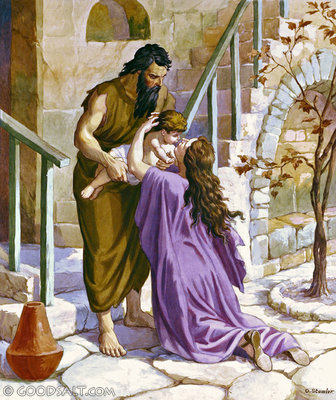
The Miracles of Zarephath

God sent Elijah to Zarephath, a small town outside Sidon, on the Phoenician coast, which is now the Mediterranean Sea. Prior to this journey, Elijah was miraculously fed by a raven, and drank from the Brook Cherith, which streamed down the east side of the mountains and flowed into the Jordan River. When the brook dried up, God told Elijah to move. He moved to hide from King Ahab, because Elijah prophesied, “As the LORD, the God of Israel, lives, before whom I stand, there shall be neither dew nor rain these years, except by my word.”

Therefore, God tells Elijah, “Arise, go to Zarephath, which belongs to Sidon, and dwell there. Behold, I have commanded a widow there to feed you.”

King Ahab had been eagerly seeking to apprehend Elijah in order to find some way to convince him to end the drought. However, it is not God’s will for that to occur, and what happens next in Zarephath turns out to be very miraculous itself.

It was apparently very hot and dry, even on the coastline; I am sure these people knew of some humidity during their lifetime living in a coastal town. It sure was dry enough to gather sticks for a fire, her last fire she thought, as she mused as to how she would use the last little bit of flour left in the jar. She had all but given up, and as the good mother, she was, and also a father to her son since her husband died; she would prepare their last meal, and wait to starve to death.

Oh, how many times have we come to the point in our lives where it just seemed so dry and lifeless? As Christians, we are bearing no fruit in our lives worth mentioning. We seem to be just gathering kindling for our last fire, thinking up ways to make it happen one last time, one last fire, one last reason to be a witness for Christ! We become sullen, looking down at the ground, crunching underneath our feet; they burn to remind us of the fire that once was aflame in our hearts for God!

She stands at the gate of the city. Why did she wander out? Were there no trees left in the city? Had everyone cut down the trees for firewood? Now, this widow has to go outside her city to find sticks, not a log or two, but just sticks, the remnant of what used to be flourishing. Why is it important to look at this widow gathering sticks at the gate? The Kingdom of God has a gate, and the Bible tells us that the only entrance into the Kingdom of God, or as St. Augustine said in his book, The City of God, is through Jesus Christ. If you are a Christian, you are part of the Kingdom of God, the Rule, and Reign of God through Jesus Christ, Who is King of Kings and Lord of Lords. However, if you are not a Christian, or maybe even doubt that you are, you stand outside the gate. The city is behind you. Maybe, in your Christian life past, you flourished in your faith; you bore the fruit of righteousness. You may have walked through the gate into the city, but since you were a widow, without a husband, you have been outcast, alone, with no one to identify with, no one to care for you. Sometimes, I am sure we can feel widowed because we feel our faith died. The Bible says we can taste of the heavenly gift, we can see the Holy Spirit working in the lives of others. We can even be witnesses to the miraculous and still never experience faith for ourselves. I can confidently tell you, that even if you were baptized as an infant, you may not be saved. Do you stand outside the gate of the city? Do you stand outside the Kingdom of God?

The Bible tells us that God has already spoken to this widow woman to help Elijah. That adds a new twist to our story this morning. This place, this city, on the Phoenician coast, away from Israel, is a place where God is not worshiped. It is a pagan land, a land of idolatry. Yet, God spoke to her, commanding her to help the prophet. Therefore, Elijah sees this widow woman; I believe he knew her to be the one God told him about. Elijah asks her for some water. Remember, there is a massive drought going on in the land. Perhaps there was a well where fresh water was retrieved. As the widow woman goes for the water, he yells at her something like, “Oh, and by the way, bring me morsel of bread, I’m hungry!”

Brothers and sisters, have you ever had God tell you to bring him a morsel? Morsel is an interesting word the author of First Kings uses to describe what Elijah is requesting. Morsel – a crumb, as if it is rubbed off an actual piece of bread. Maybe a mouthful and that is a relative statement because I know some people that can put a bunch of bread in their mouths! So let us just stay with what it really means, a crumb, a little piece of bread. What was it that God asked you to do? Was it something very minute? Was it something so small, yet so demanding of you that you would say, “I have nothing baked, only a handful of flour in a jar and a little oil in a jug. And now I am gathering a couple of sticks that I may go in and prepare it for myself and my son that we may eat it and die.” The point here is that God does not command us to do something that He cannot provide us with the means or the ability to do it. She had already had her mind made up, that God could not use her anymore because she just does not have what it takes. There is only a handful of faith, or she can barely sense the anointing of the Holy Spirit in her life. She is just trying to find enough kindling to keep those fires burning in her heart – but she is ready to die because of the despair she has fallen into. She feels there is no hope. God, how can you call upon me to help others when I just do not have the ingredients anymore?

Then Elijah tests her obedience saying, “Do not fear; go and do as you have said. First, make me a little cake of it and bring it to me, and afterward make something for yourself and your son. For thus says the LORD, the God of Israel, ‘The jar of flour shall not be spent, and the jug of oil shall not be empty, until the day that the LORD sends rain upon the earth.”

First, when God calls you to Himself, He says fear not! When God calls you to do something for Him, He says fear not! Why? Do not be afraid! Do not despair! God is in control! Brothers and sisters, God is there when the crops do not grow! God is there when a pestilence destroys your crops! God is there when the rain does not come. God is there when the ground dries up. God is there when the flood waters rage. God is there when your husband or wife dies! God is there when you lose a loved one! God is there when your tractor breaks down! What did Elijah tell the widow woman? Fear not. Go, make me a little piece of bread, and bring it to me with what you have already in your jar of flour and oil. Do you remember the parable of the mustard seed that Jesus taught? How such a very small seed was able to grow in a huge tree that looks like a gigantic bush? God tells us even the smallest amount of faith can get us through. We must learn to trust in Jesus, we must learn to trust in God with the little bit of flour and oil in our jar.

But wait, there is more! God just did not leave the poor widow woman with nothing after she makes Elijah something to eat. Elijah tells her that God says her flour will not be spent! God says that her jug of oil shall not be empty!

Brothers and sisters, God is not done with you yet! God is telling you that your flour jar is not empty. The bread of life is Jesus Christ and you should feast on Him. Get your nourishment from Jesus Christ. He is the Bread that gives life. His life is the light of men. He is your portion and your provision. You still have something to give! God is telling you this morning with what is still within you, you have what can feed multitudes.

Brothers and sisters, God says your jug of oil shall not be empty. In the Bible, oil is used to describe the substance used to anoint someone, or pour over someone who is being consecrated for a specific office or task. Oil in both the Old and New Testament represents the Holy Spirit. If you are a Christian, the blessed Holy Trinity of God dwells within you in the Person of the Holy Spirit! What joy! What solace! What a relief! God is within us, not just with us! His anointing teaches us all things, gives us wisdom, gives us power, love, and a sound mind. The oil of God gives us strength to resist temptation. The anointing of God sanctifies us by His Truth; His Word is Truth, hallelujah! Your jug of oil shall not be empty! It will remain full until you each go home to be with the Lord or He comes back in glory! Either way, His Holy Spirit has taken up residence within you; He has regenerated you, declared you righteous in God’s eyes, sets you apart as holy unto the Lord, and gives you His gifts, and enables you to bear fruit unto Christ-likeness. You do not have to be a barren tree! You can bear the fruit of a holy and righteous life. Jesus said, “I will not leave you as orphans! I will not leave you fatherless, comfortless, parentless, and bereaved, I am coming to you!” Jesus also assures us by saying, “But the Advocate, the Holy Spirit, whom the Father will send in My name, will teach you everything, and remind you of all that I have said to you. Peace I leave with you; My peace I give to you. I do not give to you as the world gives. Do not let your hearts be troubled, and do not let them be afraid.” Fear not, for the Holy Spirit is your oil of gladness!

Dear friends, as the Holy Scriptures attest, God accomplished what He said He would do. Elijah, the widow woman and her children ate for many days. In verse 16 it says, “The jar of meal was not emptied, neither did the jug of oil fail, according to the word of the LORD that he spoke by Elijah.” God is not like a human being, who will lie, cheat, steal, and not keep the promises they make. No, God is God, Who cannot lie, and He cannot contradict Himself, nor go back on His Word, because His Word is Truth, for He is Holy, Just, and Righteous.

Consequently, there comes a time as we go through our Christian lives, our flour jar full to overflowing, and our jug of oil never fails, then something catastrophic or tragic happens. We get the diagnosis, or the telephone call, or the report of an accident. What happens then? What happens when we, full of faith and hope for the days ahead hear the news of the sudden death of a loved one?

For this widow woman, one of her children, a son, comes down so sick that he dies. The first thing that we do is tell God, “What have I done to deserve this?” Why is it that we come to the immediate conclusion that God has something against us when tragedy strikes? On the other hand, like when our home is hit by a tornado.  Do we realize that we hold on to our loved ones? Do we realize that we hold on to our homes, our tractors, our pickup trucks, our snowmobiles, our sports cars? Do we realize that we idolize things in our lives, or maybe we even idolize experiences in our lives? Elijah says to the widow woman, “Give me your son.” We must give all that we are, all that we possess, all who we love, to God. God has given us many great gifts, some of which you are sitting next to right now. Nevertheless, we must surrender them to God. We must put God above all of them. We must put God on the throne of our lives. He is Lord. Jesus is Lord. God is King. We serve in His Kingdom. God is on the throne of His Kingdom. We must love God so much, that it would seem that we would hate these things or father, mother, sister, brother, wife, husband, and child. God says, “Give Me all of you – so I can give you all of Me that you can contain.” The Bible does not say much of the widow woman’s faith or trust in God through the words of Elijah. However, she did trust in God, but blamed Elijah for some reason.

What does God say when this happens? Sometimes He will test us and try us as the Refiner of gold and silver. Seeking to view Himself in us, He heats up the gold or silver to a temperature that separates the dross, the dirt, the sin, that has mingled with the new creation in Christ Jesus that we are. Once the dross has reached the surface, God skims it off, gently, to not push down, or mingle again the dross with the pure gold or silver. When the process is finished, the Refiner can see His own image in the gold or silver. The Bible tells us that we will be transformed into the image and likeness of God’s Son, Jesus Christ, by the renewing of our minds in the power of the Holy Spirit.

God hears the cry of the widow woman, her heart saddened that her son, probably because of malnutrition has succumbed to a disease that took his life. We say to ourselves in cases like this, “if only I did thus, and so.” If only. If only. Nevertheless, God says, wait, there is more!

Elijah took the child into his arms and took him up to his room. The number three has significance in the Bible. The Trinity is one example for God, the Three in One, and the One in Three. Then Elijah, it says in verse 21, “stretched himself upon the child three times.” The Hebrew word for stretched is “madad” which means to stretch or to measure. The Greek text for 1 Kings 17, to me, gives us a bit more insight into what Elijah did. The Greek word is emphusaō, and this is a word that means to puff, blow on, or breathe on. I believe that Elijah breathed on or breathed into the child three times and he was resuscitated. Sounds like Elijah gave the child artificial respiration. I do not think that was the case though, for man did not know of this life saving technique at this time in history. What this scene does represent is Elijah, the prophet, representing God breathing life back into the child. That is just what happened. The Bible says in verse 22 that “the soul of the child came into him again.”

God can infuse life back into us again, when we think there is no life left in us. God can breathe newness into our lives when we believe that we have grown stale. God tells us this, even when we go through very hard times, with words that mean, “see, your son lives.” The son can represent an area of your life that you consider dead or dying. It could be a sinful behavior that you cannot seem to shake. On the other hand, it could be you are ill, and you are having a hard time reconciling your condition. In any situation, God comes to us, He carries us through, or He delivers us from it, all based upon His sovereign will. God can prove to you that His Word is Truth. God sent His Son Jesus Christ to provide for the redemption of our souls. Jesus Christ paid the ultimate price to redeem us from bondage to sin and death. Jesus Christ was the atonement for our sins, once and for all.

God can infuse His life into you today. The Bible says that anyone who calls upon the Name of the Lord will be saved. Have you entrusted your life to God? Do you truly believe that Jesus Christ is the Son of God, the Word of God, our Savior, and Lord, that God has raised Him from the dead, and that He now is at the right hand of the Father in heaven? Believe on the Lord Jesus Christ, and you shall be saved. Can it be any more plain? Can you say like the widow woman, “Now I know that you are the Son of God Who has taken away the sins of the world.”

Brothers and sisters in Christ, receive what the Word of God is giving you today. Charles H. Spurgeon once wrote, “The word of God will repay searching. God does not bid us to sift a mountain of chaff and only find one grain of wheat in it, but the Bible is winnowed corn – we have but to open the granary door and there it is. Scripture grows upon the student. It is full of surprises. Under the teaching of the Holy Spirit, to the searching eye it glows with splendor of revelation, as if a vast temple paved with wrought gold, and roofed with rubies, emeralds, and all manner of gems. There are no goods like the merchandise of Scripture truth.” Lastly, the Scriptures reveal Jesus: “They are they which testify of me.” No more powerful motive can be urged upon you than this: he who finds Jesus finds life, heaven, all things. Happy is he who, searching his Bible, discovers his Savior.

In the Name of the Father, and of the Son, and of the Holy Spirit. Amen.

Strategies

Communication Strategies in Ministry

I graduated from Crown College with a BS degree in Christian Ministry.  I have learned the essential skills necessary for the communication of the Gospel and biblical truths through a variety of available mediums (this one included). I am studying current mediums for communication, using the basic principles of exegesis and hermeneutics, strategies for effective communication, and preaching. I hope to be further equipped to formulate an effective communication philosophy and strategy for ministry.

Finding a mentor, to me, was like looking for the holy grail. I know what I was looking for, but the search was not uncovering my mentor. You see, I live 70 miles from the church I attend. My wife and I minister there. She plays piano for worship sometimes, teaches children’s church, and I have supplied the pulpit several times. Our pastor left to take another church, so I could not use him as my mentor resource. I visited several churches in the town where I live. I got to know two of the pastors and haven’t really been in communication with them for a while. I was afraid to ask them for their help. Who likes rejection? I did not even consider dropping this course on account of this hunt for my holy mentor. I prayed and agonized about what to do. So, I am sitting here in my office, and the Lord prompted me to send an email to both of the pastors. What have I got to lose? My grade, my GPA, all my effort! Thanks be to God! He does provide and He does supply all our needs. I found a holy mentor! We had our meeting, and he signed the agreement! So, onward, and upward. Whew.

I believe, like Luther and Calvin, that my salvation is totally monergistic. All God, and none of me! However, when I became a Christian, born again, regenerated, transformed by the Holy Spirit, my interaction with God became synergistic. God tells me what to do, and I am supposed to do it! However, even if that is the case, God’s Word tells me that “it is God who is at work in you, enabling you both to will and to work for His good pleasure.” Philippians 2:13 (NRSV) Even though my relationship with God is interactive, He still helps me. He doesn’t leave me without what I need to live in union and communion with Him. He enables me, He enables my will, and He enables my effort. Why? All for His good pleasure. Our wills and our actions are the very arenas where God’s own power is working. His grace still amazes me.

How does this relate to communication strategies? Well, did you get a picture while reading this story? Did you see me as one of Monty Python’s characters riding a stick pony along the wooded landscape? Did you picture me going along hill and dale until I finally came upon that glorious email sent from above saying, “sure I’d be glad to sit down and talk with you about this?” If you did, that’s awesome. If you didn’t, was my communication strategy working? Did you get another picture in your mind while reading this? Either way, the point is that there are many means to communicate – and this blog is one of the means that I use to present the Gospel to a lost and dying world. It works for me.

Application? Always trust in the Lord. Always trust Him for anything and everything. Jesus said that if we ask anything according to God’s will, our prayers will be answered. God will provide the means to accomplish the task He has assigned to you. That says a lot about the content of our prayer…. but hey, that’s another sermon!

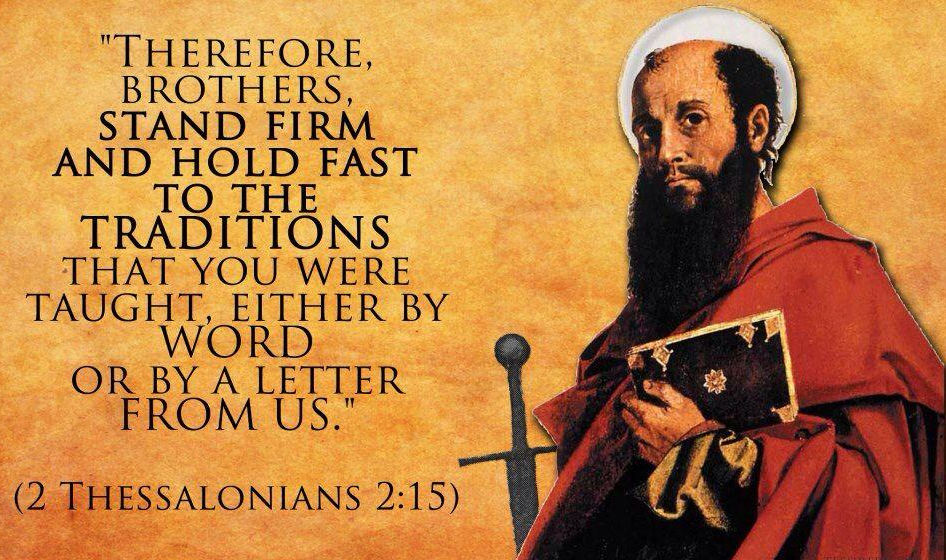
Tradtions

When it comes to church tradition, is it something you respect or suspect? Is it something you even think about at all? Hear from a church history professor, Brian Litfin, about the value of digging into tradition.

Ever since the 1500s, we Protestants have been Traditionphobes. In some circles, we would rather hear a cuss word than the T word. Bringing “tradition” to your ministry is surely some kind of regressive move that will stifle church growth. For many of us, embracing the past seems like the opposite of being a visionary pastor.

But times are changing. The rising generation looks backward in order to find the way forward. I see this all the time in today’s college students—and at Moody, where I teach, that means future ministry leaders. Tradition isn’t as scary to the Millennials as it is to their parents or grandparents. In fact, these rootless young people know intuitively how much they need it.

While church traditions can’t supplant the Bible, they can certainly round out the story that the Bible presents. Take the apostle Peter, for example. He just disappears in Acts 15, never to be heard from again. We have two of his letters, of course. But do they tell us anything about his life?

As it turns out, there are a whole lot of ancient church traditions that tell us about Peter. Some of these are likely to be accurate; others are historically dubious. Which of the following assertions do you think is true?

Peter traveled widely on evangelistic missions outside of Israel.
He ministered in Rome and provided leadership for the early Christians.
He died by crucifixion in Nero’s circus.
He was crucified upside-down.
He was buried in a grave now located beneath the altar of St. Peter’s Basilica in Rome
The [Roman] Catholic Church has recovered his actual bones.
He considered himself the founding bishop of Rome.

Although sorting through the historical evidence isn’t easy for busy pastors to do, the bigger problem is that we hardly think it’s worth our time. We’re Traditionphobes. That kind of stuff is for superstitious saint worshipers to worry about. Really? Maybe it’s time to reclaim our heritage in the faith—starting with the original generation of believers. You just might find a few nuggets amid the rubble of tradition. And when you see how spiritually rich some of this stuff is… who knows? You might even become a Traditionphile.

~ Brian Litfin

For I am not ashamed of the gospel, for it is the power of God for salvation to everyone who believes, to the Jew first and also to the Greek. Romans 1:16 (ESV)

The Story (Symphony Ministries).

Lent2

Lent

How should I prepare myself for Pascha?

“Examine yourselves, to see whether you are in the faith. Test yourselves. Or do you not realize this about yourselves, that Jesus Christ is in you?—unless indeed you fail to meet the test!”  2 Corinthians 13:5 (ESV)

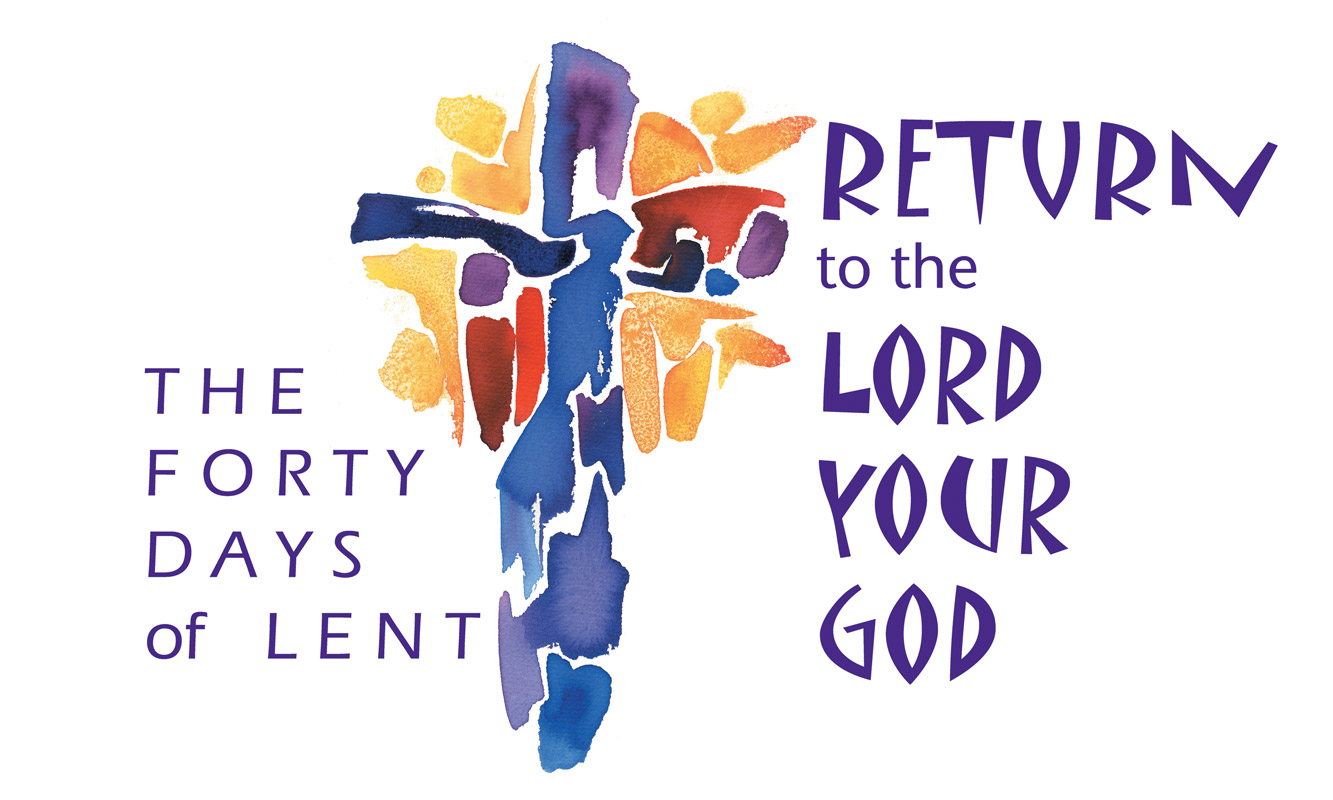
What is Lent?

Lent is a season of forty weekdays and six Sundays for the church to journey with Christ to Holy Week and Pascha. It is an opportunity for of self-examination, repentance, purgation, and spiritual renewal.

Why may we struggle with Lent?

  1. Thanksgiving and Christmas are so ensconced in secular American culture that a period of preparation during Advent makes sense to us. Most Christians are attracted to this season as a way to rise above the materialism and commercialization of Christmas.
  2. Pascha is so foreign to secular American culture that a period of preparation during Lent just seems weird, threatening, out of place.

I. Lent seems like a dark, foreboding ritualism to some Christians – candles, ashes, fasting, prayer, works, and pilgrimage. Haven’t we been saved from empty, meaningless religion?

  1. Perhaps we struggle with Lent in the same way we struggle with the Psalms of lament, which make up two-thirds of the Psalter. Grieving over our lives (i.e. Lenten repentance and Psalms of lamentation) is foreign from our American way of living and our spiritual experience. We often subconsciously screen out what is dark, awkward, and uncomfortable.
  2. We need a season to prepare for Pascha. Most people think of Pascha as a weekend event, and the main preparation is the purchase of new clothes and a carefully planned Pascha egg hunt. However, Pascha is a forty-day season of feasting and celebration in response to the resurrection and new creation. If we prepare for a wedding, an anniversary, a birthday, a graduation, a vacation, an athletic competition, or any other special occasion in our lives, how much more do we need to prepare for Pascha? The forty days of Lent gets us ready for the forty days of Pascha.

The journey to Paschal joy

  1. Lent is a spiritual journey and its destination is Pascha, “the Feast of feasts.”
  2. Pascha celebrates the death of Death, the annihilation of Hell, the beginning of new and everlasting life.
  3. Pascha celebrates Christ’s resurrection as something that happened to him, is happening, and will happen to us.
  4. God has granted us the gift of new life. The resurrection alters our attitude toward everything, including death. In his death, Christ changed the nature of death from the inside out, transforming the tragedy of tragedies into ultimate victory. “O death, where is thy sting?” God made us partakers of Christ’s resurrection.
  5. We live as if Christ never came, never died, never rose again from the dead, is not the Lord of the world, and will not come again to judge the living and the dead.
  6. This is the real sin, the sin of all sins, the bottomless sadness, and tragedy of our Christian life.
  7. We may acknowledge and confess our various sins, yet we fail to refer our life to that new life which Christ revealed and gave to us. We continually lose and betray the “new life” we received as a gift from God.
  8. We are weak. We forget, we get busy; we become immersed in our daily preoccupations. We focus our material possessions – on what we have or what we do not have. We focus on our experiences – on where we are or where we want to go. We think only of ourselves. We live as if Christ did not rise from the dead, as if that unique event in human history has no meaning for us, as if we will not also rise from the dead. We fail to live constantly by “faith, hope, and love.” We fail to “seek first the Kingdom of God and his righteousness.”
  9. Through our failure and sin, our life becomes “old” again – petty, dark, meaningless – a meaningless journey to a meaningless end.

II. Lent is a journey of repentance and return to Pascha.

  1. Lent helps us recover the vision and taste of that new Pascha life which we so easily lose and betray.
  2. The aim of Lent is precisely the remembrance of Christ, a longing for a relationship with God that has been lost. Lent offers the time and place for lamentation of our alienation and the recovery of relationship with God.
  3. The mood of Lent is “bright sadness.” The darkness of Lent allows the flame of the Holy Spirit to burn within our hearts until we are led to the mysterious and radiant brilliance of the resurrection.

Lent begins on Ash Wednesday

  1. The Service (Book of Common Prayer, 264-269)
  2. Prayer and invitation to repentance, both now and over the season of Lent
  3. Imposition of ashes
  4. Psalm 51: the prayer of the penitent
  5. Litany of penitence: a template for self-examination and confession during Lent
  6. The peace and Eucharist: Christ saves us from narcissistic self-absorption knowing that Good Friday means forgiveness and Pascha means joy.
  1. Why ashes?
  2. A sign of our Adamic identity, is that we are “of the earth”

“Then the Lord God formed a man from the dust of the ground and breathed into his nostrils the breath of life, and the man became a living being.” (Genesis 2:7)

  1. A sign of our finitude, brokenness, and mortality

“Dust you are and to dust you shall return.” (Genesis 3:19)

“Abraham said, ‘I am nothing but dust and ashes.’” (Genesis 18)

  1. A sign of mourning and lamentation, often because of our or another’s rebellion and alienation from God

“But David continued up the Mount of Olives, weeping as he went; his head was covered and he was barefoot. All the people with him covered their heads too and were weeping as they went up…When David arrived at the summit, where people used to worship God, Hushai the Arkite was there to meet him, his robe torn and dust on his head.” (2 Samuel 15:32-34)

“On the twenty-fourth day of the same month, the Israelites gathered together, fasting, and wearing sackcloth and putting dust on their heads.” (Nehemiah 9:1)

“Therefore, I despise myself and repent in dust and ashes.” (Job 42:6)

“When Mordecai learned of all that had been done, he tore his clothes, put on sackcloth and ashes, and went out into the city, wailing loudly and bitterly… In every province to which the edict and order of the king came, there was great mourning among the Jews, with fasting, weeping, and wailing. Many lay in sackcloth and ashes.” (Esther 4:1-3)

  1. In the third century, the church began the custom of burning the branches used on Palm Sunday, saving the ashes for the following year, and marking notorious and penitent sinners, such as robbers and murderers, with these ashes. Out of sympathy and solidarity, family and friends of these “marked” persons began using the ashes also, which is consistent with the gospel message that all of us are in need of God’s grace and in need of repentance and restoration.
  2. A Christian vision of the world
  3. Dualism – The radical separation between matter and spirit, profane and sacred, earthly and heavenly.
  4. Sacramentalism – The whole creation is of a piece; physical elements signify deep spiritual realities (i.e. water, bread, and wine; also oil, candles, ashes, palm branches, laying on hands, rings, etc.). We do damage to ourselves, to Jesus, and to the Bible when we try to separate the physical and spiritual, the human and divine, the earthy and the heavenly.

Repent

“Repent, and believe the good news.” (Mark 1:15)

  1. Repent: change, turn your life around, move in another direction.
  2. The first of Martin Luther’s 95 theses was, “Our Lord and Master Jesus Christ, when He said Poenitentiam agite (Repent ye!), willed that the whole life of believers should be repentance.”

III. Repentance is the beginning and continuation of a truly Christian life. Repentance, especially focused during Lent, is a long and sustained spiritual effort.

  1. Lent reminds us (in the words of the Heidelberg Catechism, question and answer #88) that two things are involved in genuine repentance: “the dying of the old self and the coming to life of the new.” New life with Christ involves a daily surrendering of the old life.
  2. “It is not easy, indeed, to reject a petty ideal of life made up of daily cares, of search for material goods, security, and pleasure, for an ideal of life in which nothing short of perfection is the goal: ‘be ye perfect as your Father in heaven is perfect.’ This world through all its ‘media’ says: be happy, take it easy, and follow the broad way. Christ in the Gospel says: choose the narrow way, fight and suffer, for this is the road to the only genuine happiness. In addition, unless the Church helps, how can we make that awful choice, how can we repent and return to the glorious promise given us each year at Pascha? This is where Great Lent comes in. This is the help extended to us by the Church, the school of repentance, which alone will make it possible to receive Pascha not as a mere permission to eat, to drink, and to relax, but indeed as the end of the ‘old’ in us, as our entrance into the ‘new.’” (Alexander Schmemann, Great Lent: Journey to Pascha)

Turn from sin toward Jesus via remembering your baptism

“Live in your baptism.” (Martin Luther)

  1. Listen to the Father’s voice in baptism: “You are my child whom I love; with you I am well pleased.” (Matthew 3)
  2. Review the baptismal vows and prayers before God (Book of Common Prayer, 302-307)

IV. Remember the practice of baptism in the early church

  1. The baptized turned their backs on the west (the symbolic direction of the evil one and sin), saying, “I renounce the devil and all his works,” and spitting in the face of Satan as a sign of ending that relationship.
  2. The main purpose of Lent was to prepare the catechumen (the newly converted Christian) for baptism, which was performed during the Pascha liturgy. Even though we are baptized, what we constantly lose and betray is precisely that which we received at baptism. Therefore, Lent and Pascha is our return every year to our own baptism, our identity in Christ, our death in him, our life in him. Pascha is the rediscovery and the recovery by us of what we were made through our own baptismal death and resurrection.

Turn from sin toward Jesus

  1. Remember that life with God is a loving, engaging, and demanding relationship. Sanctification (becoming increasingly righteous like God) is a subtle and gradual process rather than dramatic and instant moment.
  2. In the Sermon on the Mount, Jesus addresses the three primary acts of Jewish piety: fasting, – prayer, and almsgiving. He did not reject these practices, but sought to correct and deepen them. Jesus promoted an embodied, lived out piety in order to establish, maintain, repair, and transform our relationship with God, neighbor, and self. Be sure to meditate on Matthew 6:1-18 before Lent.

Fasting: turning away from self

  1. A commemoration of the wilderness experiences of Israel and Jesus and a spiritual reminder that “People do not live on bread alone, but on every word that comes from the mouth of God” (Deuteronomy 8:3; Matthew 4:4).
  2. A reminder that your body is holy and belongs to God – made by the Father, redeemed by the Son, and filled by the Holy Spirit. “Do you not know that your bodies are temples of the Holy Spirit, who is in you, whom you have received from God? You are not your own; you were bought at a price. Therefore honor God with your bodies.” (1 Corinthians 6:19-20)

V. We are a psychosomatic unity. Our souls affect our bodies; our bodies affect our souls (i.e. kneeling, folding, or lifting hands, bowing head, etc.).

  1. To what are we saying “no”?
  2. Food – Saying no to my hunger that is often disproportionate to my hunger for God; saying no to what I enjoy in order to enjoy God more; anticipating the Eucharist (i.e. single day fast, multi-day fast, or extended fast – sweets, meat, caffeine, alcohol, etc.).
  3. Time – Saying no to my busyness, distraction, and noise in order to have extended solitude and silence or time to listen to God through is Word or his people (i.e. limit your extracurricular

Activities and commitments, take a true Sabbath).

  1. Money – Saying no to my greed, my urge to acquire, accumulate, hoard, compare (i.e. no advertising, no new purchases for myself, pursue extravagant generosity).
  2. Words – Saying no to my pride, envy, jealousy, anger, dishonesty, my insecure ego that needs more power, attention, pity, gratitude, approval (i.e. not defending myself, not dominating conversation or talking about myself, not gossiping or slandering, using my tongue, my lips, my words to encourage and affirm).
  3. Sex – Saying no to lust, my unfulfilled desires for pleasure (i.e. look people in the eyes, recognize their personhood and dignity as the image of God, delight in their beauty, mourn for their brokenness).
  4. Are these things inherently evil? Does God not want us to enjoy food, time, money, words, and sex? God made all these things good. In addition, we often enjoy them in sacred and redemptive ways. However, we also have a tendency to forget that these are gifts from God. We may become overly comfortable or bored with them. We may become ungrateful. We may distort and pervert them to self-serving ends. We may use them to advantage ourselves and disadvantage others. We may use them for evil. So one way to sanctify or redeem them as God’s good gifts is to go without them for a time to recalibrate our relationship with God and our relationship with these material goods.
  5. The all-day fasts during Lent are Ash Wednesday and Good Friday. We do not fast on Sundays, the day of resurrection and Eucharist.

VI. When you fast you are vulnerable. Do not plan to turn away from self if you do not also have a plan in place to turn toward God (prayer) and toward your neighbor (almsgiving).

Prayer: turning toward God

“Evening, morning, and noon I cry out to the Lord” (Psalm 55:17).

  1. The prayer of St. Ephraim the Syrian (306-373)
  2. “O Lord and Master of my life! Take from me the spirit of sloth, faint-heartedness, lust of power, and idle talk. Nevertheless, give rather the spirit of chastity, humility, patience, and love to Thy servant. Yea, O Lord and King! Grant me to see my own errors and not to judge my brother; For Thou art blessed unto ages of ages. Amen.”
  3. Pray it in the morning, afternoon, and evening. In the morning, meditate on the four powers from which you seek to be delivered – sloth, faint-heartedness, lust of power, and idle talk. In the afternoon, meditate on the four virtues you desire to experience in your daily life – chastity, humility, patience, and love. In the evening, review the events of the day, confessing where you failed, giving thanks where you have succeeded, and praising Jesus Christ for his righteousness and grace.
  4. “Faith… is the art of holding on to things your reason has once accepted, in spite of your changing moods. For moods will change, whatever view your reason takes. I know that by experience. Now that I am a Christian, I do have moods in which the whole thing looks very improbable: but when I was an atheist, I had moods in which Christianity looked terribly probable. This rebellion of your moods against your real self is going to come anyway. That is why Faith is such a necessary virtue: unless you teach your moods ‘where they get off’, you can never be either a sound Christian or even a sound atheist, but just a creature dithering to and fro, with your beliefs really dependent on the weather and the state of your digestion. Consequently, one must train the habit of faith. The first step is to recognize the fact that your moods change. The next step is to make sure that, if you have once accepted Christianity, the sum of its main doctrines shall be deliberately held before your mind for some time every day. That is why daily prayers and religious readings and churchgoing are necessary parts of the Christian life. We have to be continually reminded of what we believe. Neither this belief nor any other will automatically remain alive in the mind. It must be fed. Moreover, in fact, if you examined a hundred people who had lost their faith in Christianity, I wonder how many of them would turn out to have been reasoned out of it by honest argument? Do not most people simply drift away?” (C.S. Lewis, The Business of Heaven)

Almsgiving: turning toward our neighbors

  1. Combine God-focused prayer and neighbor-focused almsgiving by praying for your apartment complex or your street or the block where you work.
  2. Serve via Project Peace.

VII. Brainstorm simple acts of compassion toward known and unknown neighbors.

  1. Save money during Lent to give to the Pascha diaconal offering, which goes to meet financial and other tangible needs within and beyond the community.

Personal reflection and group discussion

  1. Have you ever practiced Lent? If so, what was your experience? If not, what do you hope to gain from the Lenten journey?
  2. How would you apply the Lenten themes to your life and spiritual journey in the coming season?

What do you need to put off and what do you need to put on?

VIII. Fasting – Could we each commit to giving up something we enjoy on a daily or regular basis in order to deepen our desire for God? What? Could we all commit to fasting the entire day on Ash Wednesday and Good Friday? How about fasting from lunch on Wednesdays during Lent?

  1. Prayer – Could we each commit to at least morning or evening prayer each day during Lent?

Could we spend 15 extra minutes on Sundays praying for the life and mission of the church?

  1. Almsgiving – Could we give up a luxury item during the week (i.e. lunch on Wednesdays) and give the money to a friend in need or the diaconal fund or a social service provider? Could we donate a portion of our weekend to do extra volunteering?

Adapted from Lent at Christ Church, edited by Rev. Gary DeSha

Psalm111

Psalm 111 Observations:

Verse 1:
1. Glory and honor are due unto God
2. Not just ordinary praise, but high praise given to God
3. This high praise comes from all of our being
4. Those who have been made righteous give this praise
5. God’s work in creation, providence, & redemption is exceptional

Verses 2-4:
6. God’s workings are so marvelous they cannot be forgotten
7. Those who love God delight in and seek out His wondrous works
8. The nature and character of God is justice and holiness
9. Memorials: eternal covenant, Law, Passover (Pascha), the Lord’s Supper, Baptism
10. God has tender mercy and is actively compassionate toward us

Verse 5:
11. The Psalmist reminds the people of God’s goodness
12. The God of peace, Who through the blood of the eternal covenant

Verse 6:
13. God’s powerful working is seen in the regeneration of our souls

Verses 7-8
14. God has always had a purpose and design for His works

Verse 9:
15. There is a transition from…
15. The Psalmist declaring the mighty works that Jehovah has done for His people
16. To Mt. Sinai and the commandments that He has given to them
17. “For the entire law is fulfilled in keeping this one command: “Love your neighbor as yourself.”(Galatians 5:14)
18. “Jesus replied: “‘Love the Lord your God with all your heart and with all your soul and with all your mind.’ This is the first and greatest commandment. And the second is like it: ‘Love your neighbor as yourself.’ All the Law and the Prophets hang on these two commandments.” (Matthew 22:37-40)
19. “but he became a priest with an oath when God said to Him: “The Lord has sworn and will not change His mind: ‘You are a priest forever.'” Because of this oath, Jesus has become the guarantor of a better covenant.” (Hebrews 7:21-22)
20. Jesus Christ is the surety, the guarantee, the insurer of the eternal covenant

Verse 10:
21. Holy and terrifying is His Name – Yahweh, Jehovah, THE LORD!
22. In vs. 9 awesome or fearful = to stand in awe, to be afraid, to fear, to inspire reverence
23. In vs. 10 The fear of the Lord, = fear, terror, a terrifying thing, to stand in awe
24. “For the wisdom of this world is foolishness in God’s sight. As it is written: “He catches the wise in their craftiness”; and again, “The Lord knows that the thoughts of the wise are futile.” (1 Corinthians 3:19-20)
25. Psalm 111 speaks of God’s divine attributes: power, wisdom, faithfulness, and goodness
26. Psalm 111 issues the need for our response to God by: deep inquiry into communion with Him, being in awe of God that He is God, obedience in trusting in and relying upon God, and that true praise and worship flow from our inner most being in the gatherings of the local church, in our special personal times of devotion, and at all times in our hearts

Download the message here.