Posts Tagged ‘death’

moses1

“For in bringing many sons to glory, it was entirely appropriate that God —all things exist for Him and through Him —should make the source of their salvation perfect through sufferings. For the One who sanctifies and those who are sanctified all have one Father. That is why Jesus is not ashamed to call them brothers, saying: I will proclaim Your name to My brothers; I will sing hymns to You in the congregation. Again, I will trust in Him. And again, Here I am with the children God gave Me. Now since the children have flesh and blood in common, Jesus also shared in these, so that through His death He might destroy the one holding the power of death —that is, the Devil and free those who were held in slavery all their lives by the fear of death. For it is clear that He does not reach out to help angels, but to help Abraham’s offspring. Therefore, He had to be like His brothers in every way, so that He could become a merciful and faithful high priest in service to God, to make propitiation for the sins of the people. For since He Himself was tested and has suffered, He is able to help those who are tested.” Hebrews 2:10-18 (HCSB)

What Does It Mean To Be In Egypt?

For Israel it was for a good reason; it was for their survival to stay in Egypt for food, grazing for their animals and safety. Joseph, as the Pharaoh’s governor, took care of his family, even after his brothers had betrayed him.
For Mary, Joseph, and the baby Jesus, it was for safety, because King Herod was out to kill the King of Kings! Jesus was born roughly around 5BC, Herod died around 4BC, and Herod’s son, Archelaus, took over the throne.

A not so good reason to be in Egypt is that Egypt can be described as captivity. Egypt can be described as slavery, as it was for Israel after Joseph died. A new Pharaoh, Raamses II, came into power, who never knew about Joseph and his relationship with the previous Pharaoh. He feared Israel and decided to deal treacherously with Israel by holding them captive and making them his slaves because they were prosperous, fruitful and had grown to a large population.

Egypt can be described as captivity or slavery to unbelief, disobedience, sin and idolatry.

How do we know we are in Egypt? We know we’re in Egypt because:

We are slaves to sin – SIN rules over us

We are enemies of God – REBELLION dominates our life

We do not believe in God through Jesus Christ – UNBELIEF casts its shadow upon us

We acknowledge created things as gods instead of the One and Only True God – IDOLATRY says there is no god but that which I create

We continue in Egypt as slaves to sin because there is no repentance of our sins and faith in God through Jesus Christ.

Sometimes we think we have left the captivity and slavery of Egypt, and have yet to get the Egypt out of us!

Listen to what God told the prophet Hosea when He saw that even though Israel was “out of Egypt,” Egypt remained in them still. “When Israel was a child, I loved him, and out of Egypt I called my son. The more they were called, the more they went away; they kept sacrificing to the Baals and burning offerings to idols.” Hosea 11:1-2 (ESV)

“For you did not receive the spirit of slavery to fall back into fear, but you have received the Spirit of adoption as sons, by whom we cry, “Abba! Father!” Romans 8:15 (ESV)

How then am I released from this captivity and freed from slavery?

Jesus was the means to the atonement for our sin. Because of Jesus shed blood and death on the Cross at Calvary, we are freed from slavery to sin and released from the bondage of sin and its penalty, which is death. Through Jesus Christ, we have been reconciled to God. Jesus was the perfect sacrifice acceptable unto God to take upon Himself the punishment for sin on our behalf.

God calls us out of Egypt through the finished work of Jesus Christ

Romans 3:21-26 declares “But now the righteousness of God has been manifested apart from the law, although the Law and the Prophets bear witness to it— the righteousness of God through faith in Jesus Christ for all who believe. For there is no distinction: for all have sinned and fall short of the glory of God, and are justified by His grace as a gift, through the redemption that is in Christ Jesus, whom God put forward as a propitiation by his blood, to be received by faith. This was to show God’s righteousness, because in His divine forbearance He had passed over former sins. It was to show His righteousness at the present time, so that He might be just and the justifier of the one who has faith in Jesus.”

This brings me to the next question:

Why Was Jesus Born?

The Incarnation

The Incarnation, God becoming a human being, is the assumption of human nature into the Person of the Son of God, Who is the Word of God, and depicts God humiliating Himself to procure our salvation.

The humiliation connected with the Incarnation consists in the mode, or manner, of the Incarnation. The Son of God did not become man by uniting with Himself a fully developed human nature, by an immediate creative act, as, for example, Adam was a mature and perfect man in the beginning. The Scriptures, both of the Old and New Testament, rather point out very emphatically the peculiar mode, or manner, of the Word’s Incarnation, by which the Son of God became a partaker of the flesh and blood of the children of men. He was “made of a woman” (Gal. 4:4) and so, as the “fruit of the womb of Mary” (Luke 1:42), He took upon Himself human lowliness and weakness. Jesus’ conception and birth belong to His humiliation, inasmuch as they constitute a lowly mode of becoming man. Jesus said of Himself in Matthew 11:29, “I am meek and lowly in heart.”

This lowly mode is characteristic of the official work that the Son of God was to perform as the Redeemer of humanity. Let me explain what this lowly mode means. The word “lowly” in the Greek means humiliated, base, cast down, humble, of low degree or estate. God humiliated Himself to become a human being; He became one of His own creations.

Early in His life, our Lord had to begin His redemptive work as our Savior. The goal to be attained was the substitutional presentation to God of a human life that was perfect from the very beginning. Even though Jesus took upon Himself human lowliness and weakness, He did not commit a single sin. For this reason, the Mediator between God and man had to share our common human development. This causal relation of Christ’s lowly Incarnation to the redemption of humanity is clearly attested to by Scripture, which tells us that God sent forth His Son into the world by having Him born of a woman and made under the Law to redeem sinful humanity, which was under the Law (Gal. 4:4-5).

Therefore, in His human nature He must be the pattern of all humility, of all creaturely dependence, of having nothing, and it is only as a man that Jesus thus claims to be lowly; His human life was a constant living on the fullness of the Father’s love; He evermore, as man, took the place which beseemed the creature in the presence of its Creator. (W. R. Vincent)

To become a merciful and faithful High Priest

Hebrews 2:17-18 says, “Therefore, he had to be made like his brothers in every respect, so that he might become a merciful and faithful high priest in the service of God, to make propitiation for the sins of the people. For because he himself has suffered when tempted, he is able to help those who are being tempted.”

To destroy the power of sin, death, and the devil

1 John 3:8 tells us “Whoever makes a practice of sinning is of the devil, for the devil has been sinning from the beginning. The reason the Son of God appeared was to destroy the works of the devil.”

Hebrews 2:14-15 explains, “Since therefore the children share in flesh and blood, he himself likewise partook of the same things, that through death he might destroy the one who has the power of death, that is, the devil, and deliver all those who through fear of death were subject to lifelong slavery.”

The Gospel of John 1:29 says, “The next day he saw Jesus coming toward him, and said, “Behold, the Lamb of God, who takes away the sin of the world!”

To Make Propitiation for the sins of humanity

For your understanding, I wish to give the biblical definition for the words “propitiation” and “atonement.” The word “propitiation” in the Greek is “hilaskomai” which means to atone for sin, to be merciful, make reconciliation for, therefore propitiation conveys the sense of an atoning sacrifice that puts away sin and satisfies God’s wrath.

The word “atonement” is not used anywhere in the New Testament of the Holy Scriptures. Atonement is used only in the Old Testament. The word in the Hebrew is “kapar” which means to cover, cancel, cleanse, forgive, pardon, and purge concerning sin.

There awaits certain judgment for those who continue in rebellion and sin

For Jude 1:4-7 says “For certain people have crept in unnoticed who long ago were designated for this condemnation, ungodly people, who pervert the grace of our God into sensuality and deny our only Master and Lord, Jesus Christ. Now I want to remind you, although you once fully knew it, that Jesus, who saved a people out of the land of Egypt, afterward destroyed those who did not believe. And the angels who did not stay within their own position of authority, but left their proper dwelling, He has kept in eternal chains under gloomy darkness until the judgment of the great day— just as Sodom and Gomorrah and the surrounding cities, which likewise indulged in sexual immorality and pursued unnatural desire, serve as an example by undergoing a punishment of eternal fire.”

God calls us out of Egypt unto salvation!

Romans 10:9-13 promises, “…if you confess with your mouth that Jesus is Lord and believe in your heart that God raised him from the dead, you will be saved. For with the heart one believes and is justified, and with the mouth one confesses and is saved. For the Scripture says, “Everyone who believes in him will not be put to shame.” For there is no distinction between Jew and Greek; for the same Lord is Lord of all, bestowing His riches on all who call on Him. For “everyone who calls on the name of the Lord will be saved.”

Hebrews 3:7-8 says, “Therefore, as the Holy Spirit says, “Today, if you hear His voice, do not harden your hearts as in the rebellion, on the day of testing in the wilderness…”

Today, Jesus is calling you out of Egypt. Luke 19:9 says, “Today salvation has come to this house…for the Son of Man came to seek and to save the lost.” Answer His call, now. Do not wait another moment. Do not put God off. Repent of your sin, place your faith, and trust in Jesus Christ the Lord!

?????????????????????

“If you are yet unsaved, our heart yearns over you: and we would fain say a word which may be blessed to you. Open your Bible, and read the story of the lepers, and mark their position, which was much the same as yours. If you remain where you are you must perish; if you go to Jesus you can but die. “Nothing venture, nothing win,” is the old proverb, and in your case the venture is no great one. If you sit still in sullen despair, no one can pity you when your ruin comes; but if you die with mercy sought, if such a thing were possible, you would be the object of universal sympathy. None escape who refuse to look to Jesus; but you know that, at any rate, some are saved who believe in Him, for certain of your own acquaintances have received mercy: then why not you? The Ninevites said, “Who can tell?” Act upon the same hope, and try the Lord’s mercy. To perish is so awful, that if there were but a straw to catch at, the instinct of self-preservation should lead you to stretch out your hand. We have thus been talking to you on your own unbelieving ground, we would now assure you, as from the Lord, that if you seek Him He will be found of you. Jesus casts out none who come unto Him. You shall not perish if you trust Him; on the contrary, you shall find treasure far richer than the poor lepers gathered in Syria’s deserted camp. May the Holy Spirit embolden you to go at once, and you shall not believe in vain. When you are saved yourself, publish the good news to others. Hold not your peace; tell the King’s household first, and unite with them in fellowship; let the porter of the city, the minister, be informed of your discovery, and then proclaim the good news in every place. The Lord save thee ere the sun goes down this day.”  ~ C. H. Spurgeon

lawgracefreedom

Some recent observations about Law & Grace…

If we attend Christian instruction/Catechism before we are born again, what happens then is we are trained on the treadmill of merit (Law). Our orientation is backwards. Law comes before Grace. The same thing can happen when you become a Christian and are not instructed in the Christian faith — you end up on the treadmill running away from the fear of not “performing” up to what you think are God’s standards. The Law was given as a teacher – “this is how your relationship with God must be; this is how your relationship to others should be.” It teaches us that we are sinners, and there is no way that we can “keep” this Law on our own. Grace says, Here is God’s mercy. Here is God’s love for you, in that while you were yet sinners, My beloved Son died in your place, Jesus paid the price for your redemption from sin, sickness and death. He took upon Himself God’s wrath – our punishment was upon Him.

It is by means of God’s mercy do we perceive that the Law says I’m a sinner, and then in God’s mercy His Grace touches our hearts, He delivers us through “the bath of regeneration and renewal of the Holy Spirit. (Titus 3:5)

“The one trusting in the Son has eternal life; but the one resisting the Son shall not see the life, but the anger of God remains upon him.” ~ John 3:36

Therefore, it is “…by grace you are saved, through faith, and this not of yourselves; it is the gift of God; not of works, that not anyone should boast; for we are His workmanship, created in Christ Jesus unto good works, which God before prepared that we should walk in them.” (Ephesians 2:8-10)

Now, we live the Law, because God has written it upon our hearts, and being empowered by the Holy Spirit, we are enabled to observe our relationship to God and others as the Law requires. We are made free from vain effort, but none the less do we put forth effort, because God is behind us encouraging us in our abundant life. And, if we fail, if we sin, God is faithful to forgive us, because He promised that to us in Christ. At the same time, God is righteous and holy. Therefore, He promised, because of the shed blood of Christ on Calvary to cleanse us from all our unrighteousness. This is conditional though, because we are told to confess our sin, and turn from it back toward God.

“If we should say that we do not have sin, we mislead ourselves, and the truth is not in us. If we should acknowledge our sins, He is trustworthy and just that He should have forgiven us the sins and should have cleansed us from all iniquity.” ~ 1 John 1:8-9

Jesus Christ is our salvation, our redemption, our righteousness, our sanctification, and our glorification. He is our ALL in ALL. The life I live, is Christ Jesus my Lord.

thubfire

troubled times
and hearts
swing to the beat
of yesterday
some days
blood covers a multitude
of yesterdays
that must be remembered every day

TheStory_Cover

READ “THE STORY”

lawcup

I know someone, who claims they are a believer in Christ and that grace rendered the Old Testament Scriptures outdated and the Biblical moral law irrelevant. They believe a false teaching that is called “antinomianism” which is a doctrine of demons straight from the pit of Hades.

Antinomian means “anti = against + nomian = law” against law or in opposition to the law

“The Gospel proclaims liberty from the ceremonial law: but binds you still faster under the moral law. To be freed from the ceremonial law is the Gospel liberty; to pretend freedom from the moral law is Antinomianism.” ~ Adam Clarke

The contemporary evangelical theologian J. I. Packer defines five strains of antinomianism:

1. Dualistic Antinomianism (Gnostic): This view sees salvation as for the soul only and bodily behavior as irrelevant both to God’s interest and the soul’s health…

2. Spirit-centered Antinomianism: …puts such trust in the Holy Spirit’s inward prompting as to deny any need to be taught by the law how to live. Freedom from the law as a way of salvation is assumed to bring with it freedom from the law as a guide to conduct.

3. Christ-centered Antinomianism: …argues that God sees no sin in believers, because they are in Christ, who kept the law for them, and therefore what they actually do makes no difference, if they keep believing.

4. Dispensational Antinomianism: …denies that biblical law is God’s direct command and affirms that the Bible’s imperative statements trigger the Word of the Spirit, which when it comes may or may not correspond exactly to what is written.

5. Situationist Antinomianism: …says that a motive and intention of love is all that God now requires of Christians, and the commands of the Decalogue and other ethical parts of scripture, for all that they are ascribed to God directly, are rules of thumb for loving, rules that love may at times disregard. ~ J. I. Packer (from Concise Theology pp 178-180)

Here is a short list of the errors of antinomianism:

1. How the antinomians view justification:

a. That the justification of sinners is an imminent and eternal act of God, not only preceding all acts of sin, but the very existence of the sinner himself, and so perfectly abolishing sin in our persons, that we are as clean from sin as Christ himself.

b. That justification by faith is no more but a manifestation to us of what God did before we were created. That because God laid His iniquities upon Christ, God cannot charge one sin upon a man who believes this teaching.

2. That men ought not to doubt of their faith, or question, whether we believe, or not: That we ought no more to question our faith than to question Christ.

3. That believers are not bound to confess sin, mourn for it, or pray for the forgiveness of it; because it was pardoned before it was committed; and pardoned sin is no sin.

4. That God sees no sin in believers, whatsoever sins they commit. That God can see no adultery, no lying, no blasphemy, and no deceit in believers for though believers do fall into such transgressions, yet all their sins being pardoned from eternity, they are no sins in them.

5. That God does not get angry with the elect, nor does he discipline them for their sins; and to say that he does so is an injurious reflection upon the justice of God.

6. That by God’s laying our iniquities upon Christ; he became as completely sinful as we, and we as completely righteous as Christ.

7. That believers need not fear either their own sins, or the sins of others for that neither their own, nor any other men’s sins can do them any harm, nor must they be concerned for their own salvation.

8. They will not allow the new covenant to be made properly with us, but with Christ for us; and that this covenant is all a promise, having no condition on our part. They do not absolutely deny that faith, repentance, and obedience are conditions in the new covenant; however, they say that the conditions are not on our part, but upon Christ; and that He repented, believed, and obeyed for us.

How the Word of God answers the antinomian:

Rom. 3.23-25

“For all have sinned and fall short of the glory of God, and are justified by his grace as a gift, through the redemption that is in Christ Jesus, whom God put forward as propitiation by his blood, to be received by faith. This was to show God’s righteousness, because in his divine forbearance he had passed over former sins.”

Rom. 8.3-4, 30

“For God has done what the law, weakened by the flesh, could not do. By sending his own Son in the likeness of sinful flesh and for sin, he condemned sin in the flesh, in order that the righteous requirement of the law might be fulfilled in us, who walk not according to the flesh but according to the Spirit.” “And those whom he predestined he also called, and those whom he called he also justified, and those whom he justified he also glorified.”

2 Cor. 5.19-20

“That is, in Christ God was reconciling the world to himself, not counting their trespasses against them, and entrusting to us the message of reconciliation. Therefore, we are ambassadors for Christ, God making his appeal through us. We implore you on behalf of Christ, be reconciled to God.”

Gal. 3.13-14

“Christ redeemed us from the curse of the law by becoming a curse for us—for it is written, “Cursed is everyone who is hanged on a tree”— so that in Christ Jesus the blessing of Abraham might come to the Gentiles, so that we might receive the promised Spirit[a] through faith.”

Eph. 1.17

“That the God of our Lord Jesus Christ, the Father of glory, may give you the Spirit of wisdom and of revelation in the knowledge of him”

2 Cor. 13:5

“Examine yourselves, to see whether you are in the faith. Test yourselves. Or do you not realize this about yourselves, that Jesus Christ is in you?—unless indeed you fail to meet the test!”

2 Peter 1:10

“Therefore, brothers, be all the more diligent to confirm your calling and election, for if you practice these qualities you will never fall.”

Titus 1:16

“They profess to know God, but they deny him by their works. They are detestable, disobedient, unfit for any good work.”

1 Cor. 10:12

“Therefore let anyone who thinks that he stands take heed lest he fall.”

1 John 1: 7-10

“But if we walk in the light, as he is in the light, we have fellowship with one another, and the blood of Jesus his Son cleanses us from all sin. 8 If we say we have no sin, we deceive ourselves, and the truth is not in us. If we confess our sins, he is faithful and just to forgive us our sins and to cleanse us from all unrighteousness. If we say we have not sinned, we make him a liar, and his word is not in us.”

James 3:2

“For we all stumble in many ways. And if anyone does not stumble in what he says, he is a perfect man, able also to bridle his whole body.”

Psalm 51:1-6

“Have mercy on me, O God,
according to your steadfast love;
according to your abundant mercy
blot out my transgressions.
Wash me thoroughly from my iniquity,
and cleanse me from my sin!
For I know my transgressions,
and my sin is ever before me.
Against you, you only, have I sinned
and done what is evil in your sight,
so that you may be justified in your words
and blameless in your judgment.
Behold, I was brought forth in iniquity,
and in sin did my mother conceive me.
Behold, you delight in truth in the inward being,
and you teach me wisdom in the secret heart.”

Romans 7:21

“So I find it to be a law that when I want to do right, evil lies close at hand.”

Ephesians 4:30

“And do not grieve the Holy Spirit of God, by whom you were sealed for the day of redemption.”
1 Timothy 1:13

St. Paul said, “though formerly I was a blasphemer, persecutor, and insolent opponent. But I received mercy because I had acted ignorantly in unbelief, and the grace of our Lord overflowed for me with the faith and love that are in Christ Jesus.”

1 Cor. 11:32

“But when we are judged by the Lord, we are disciplined so that we may not be condemned along with the world.”

Hebrews 12:8

“If you are left without discipline, in which all have participated, then you are illegitimate children and not sons.”

2 Cor. 5:21

“For our sake he made him to be sin who knew no sin, so that in him we might become the righteousness of God.”

Jeremiah 23:6

“In his days Judah will be saved, and Israel will dwell securely. And this is the name by which he will be called: ‘The Lord is our righteousness.”

1 Cor. 5:12-13

For what have I to do with judging outsiders? Is it not those inside the church whom you are to judge? God judges those outside. “Purge the evil person from among you.”

1 John 3:4

“Everyone who makes a practice of sinning also practices lawlessness; sin is lawlessness.”

Romans 4:6, 22-23

“Just as David also speaks of the blessing of the one to whom God counts righteousness apart from works: But the words “That is why his faith was “counted to him as righteousness. It was counted to him” were not written for his sake alone.”

Romans 2:8

“But for those who are self-seeking and do not obey the truth, but obey unrighteousness, there will be wrath and fury.”

1 Peter 4:17

“For it is time for judgment to begin at the household of God; and if it begins with us, what will be the outcome for those who do not obey the Gospel of God?”

Luke 13:3

Jesus says, “No, I tell you; but unless you repent, you will all likewise perish.”

Luke 29:47

“And that repentance and forgiveness of sins should be proclaimed in His name to all nations, beginning from Jerusalem.”

Acts 3:19

“Repent therefore, and turn back, that your sins may be blotted out.”

John 3:36

“Whoever believes in the Son has eternal life; whoever does not obey the Son shall not see life, but the wrath of God remains on him.”

Hebrews 8:10-12

“For this is the covenant that I will make with the house of Israel after those days, declares the Lord: I will put my laws into their minds, and write them on their hearts, and I will be their God, and they shall be my people. And they shall not teach, each one his neighbor and each one his brother, saying, ‘Know the Lord,’ for they shall all know me, from the least of them to the greatest. For I will be merciful toward their iniquities, and I will remember their sins no more.”

The covenant of redemption was made between the Holy Triune God, Father, Son, and Holy Spirit. The covenant of grace, into which believers are taken, there is a Mediator, and this Mediator is Christ Himself.

In conclusion*,

Paul’s seventh argument against the Judaizers is this: If the law is kept as a way of salvation, it produces only death and destruction because of its curse. Thus, the Judaizers really destroy the law by misusing it. On the other hand, on the basis of grace we keep the law. Thus, the way to magnify the law is to use it properly, not as a way of salvation but as a guide to holy living. The Spirit, not the law, gives life, and life yields obedience to the law (Galatians 5:13ff.).

Paul begins by saying that we are free from the law as a slave-master, but not free to sin (5:13). True moral freedom means loving God and loving one’s neighbor as oneself. Those who do not love show that they are not free and are still slaves of sin (vv. 14–15).

Paul goes on to say that if we live by the Spirit, we will not gratify the desires of the sinful nature. This sounds at first as if Paul is saying something mystical: Just yield to the Spirit and you will float along doing good and never sinning. This is not at all what he means. Being led by the Spirit means doing certain things and not doing other things, and it is the law that shows us what these are. It is the law that shows what loving our neighbor entails. Thus, the Spirit-led person is the person who studies the Bible and obeys it, not as a means of salvation but in a spirit of gratitude and out of a desire for holiness.

One of the major problems in Christianity has always been “antinomianism.” It is still a great problem today. We hear from some teachers that it is possible to have Christ as Savior but not as Lord, as if we could chop God in half and have a relationship with only half of Jesus. The outer fringe of this heresy teaches that it does not matter how you live so long as you claim the promise of salvation. This is not the teaching of the New Testament. Paul lists a whole catalogue of sins in Galatians 5:19–21, and then says, “Those who live like this will not inherit the kingdom of God.”

A mere profession of faith does not get you into heaven. What is required is a continuing relationship with God, the sovereign Savior of men. That relationship means bowing the knee and serving Him because He has saved you.

Some nominal “believers” are professors of faith only. All who claim to be in Christ must also be possessors of faith. Read slowly and carefully the two lists of Galatians 5:19–23. Where do you need help? Pray through each of the sins and blessings listed. Examine yourself, and ask God to grant His Spirit to transform your life.

*Concluding remarks taken from Ligonier Ministries devotional “Grace Fulfills the Law.”

doubtingGod

For those who question the existence of God, or scoff at Christianity, or faith in God.

“Behold, you trust for yourself on lying words without being of use. Will you steal, murder, and commit adultery, and swear falsely, and burn incense to Baal, and walk after other gods whom you do not know? And will you then come and stand before Me in this house on which My name is called, and say, We are delivered in order to do all those detestable things. Has this house on which My name is called become a den of violent ones in your eyes? Behold, even I have seen, declares Jehovah.” ~ Jeremiah 7:8-11

in-gods-hands-matthew-odegard

“Then Job arose and tore his robe and shaved his head and fell on the ground and worshiped. And he said, “Naked I came from my mother’s womb, and naked shall I return. The LORD gave, and the LORD has taken away; blessed be the name of the LORD.”  In all this Job did not sin or charge God with wrong.”  Job 1:20-22

1.  When Adversity comes to us:

a. How do we react?

b. What do we do?

2.  The Heidelberg Catechism asks in question 28: “What advantage is it to us to know that God has created, and by his providence does still uphold all things?”

Answer: “That we may be patient in adversity; thankful in prosperity; and that in all things, which may hereafter befall us, we place our firm trust in our faithful God and Father, that nothing shall separate us from His love; since all creatures are so in His hand, that without His will they cannot so much as move.”

3.  Acts 17:23-31 says, “For as I passed along and observed the objects of your worship, I found also an altar with this inscription, ‘To the unknown god.’ What therefore you worship as unknown, this I proclaim to you. The God who made the world and everything in it, being Lord of heaven and earth, does not live in temples made by man, nor is he served by human hands, as though he needed anything, since he himself gives to all mankind life and breath and everything. And he made from one man every nation of mankind to live on all the face of the earth, having determined allotted periods and the boundaries of their dwelling place, that they should seek God, and perhaps feel their way toward him and find him. Yet he is actually not far from each one of us, for “‘In him we live and move and have our being’; as even some of your own poets have said, “‘For we are indeed his offspring.’ Being then God’s offspring, we ought not to think that the divine being is like gold or silver or stone, an image formed by the art and imagination of man. The times of ignorance God overlooked, but now He commands all people everywhere to repent, because He has fixed a day on which He will judge the world in righteousness by a man whom He has appointed; and of this He has given assurance to all by raising Him from the dead.”

4. If we have the spiritual knowledge of God’s sovereign providence that enables us to be thankful when things are well or if adversity befalls us, we will know this, not because of the pain in and of itself, but because we know the Lord is working in it for His glory and our good.

Romans 8:28-30 declares, “And we know that for those who love God all things work together for good, for those who are called according to his purpose. For those whom he foreknew he also predestined to be conformed to the image of his Son, in order that he might be the firstborn among many brothers. And those whom he predestined he also called, and those whom he called he also justified, and those whom he justified he also glorified.”

How many times have you asked why? Is there something missing in your life? Does the guilt of your sinful behavior weigh mightily upon you? Would you like to experience God’s love, mercy, and forgiveness? Jesus said I have come so that they may have life and have it in abundance.” John 10:10b The Bible says to believe on the Lord Jesus Christ and you will be saved. Here is how:

5. We must Repent – It is a command

6. We must believe on the Lord Jesus Christ – this is how we obtain eternal life

7.  Why?

a. We are sinners – we are born that way

b. We are due punishment for our sin – “for the wages of sin is death.”

c. We face inevitable judgment – because of our disobedience

7.  There is hope! God, through His Son, Jesus Christ is calling you today; completely trust Him with the life He gave to you.  Repent, that is, turn away from your sin and unbelief, and believe on the Lord Jesus Christ with all of your heart….and you shall be saved.

Rest assured, everything IS in God’s hands!

“For the preaching of the cross is to them that perish foolishness; but unto us which are saved it is the power of God.” ~ 1 Corinthians 1:18

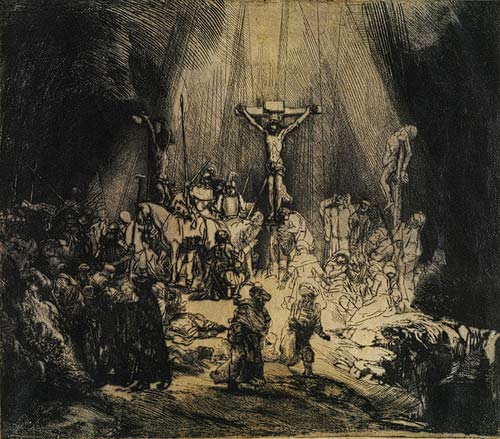
Let us set fully before our eyes the doctrine of Christ dying in our place – His substituted death, and rest our souls on it. Let us hold on firmly to the mighty truth, that Christ on the cross:

Christ on the cross: Stood in the place of His people

Christ on the cross: Died for His people

Christ on the cross: Suffered for His people

Christ on the cross: Was counted a curse and sin for His people

Christ on the cross: Paid the debts of His People

Christ on the cross: Made restitution for His people

Christ on the cross: Became the guarantee of His people

Christ on the cross: Became the representative of His people

In this way Christ obtained His people’s freedom. Let us understand this clearly, and then we will see what a mighty privilege it is to be made free by Christ. This is freedom which, above all others is worth having.

~ J. C. Ryle