This IS the day the Lord has made, I WILL rejoice and be glad in it! Praise His most Holy Name, for He is worthy of all honor and praise!
 Does existence precede our essence? Does what you experience define who you are as a Christian? How has God fashioned us as human beings?
God created us in His image and His likeness, which is our essence. Our essence therefore precedes our existence and our experiences. Who we are as Christians should define what we do. God is the God of experience and He is the God of emotion. Our emotions and our existential experience are vital to us in the eyes of God. God reminds us that the definition of experience is neither true nor false; it is only descriptions or propositions that are true or false. Words are true or false. Experiences are either enjoyable or not enjoyable; anytime your experience comes into conflict with the written revealed word of God, you have to go with the written revelation over that existential experience which can be false.
Here is why: The Apostle Peter, with James and John experienced the Transfiguration of Jesus Christ. His body glowed extreme white and they saw how Moses and Elijah descend from heaven and spoke with Jesus. They were Hebrews and probably wanted to speak with Moses and Elijah too. God said, “This is My beloved Son, My Chosen One, in Whom I am well pleased, listen to Him.” The Apostles asked Jesus if they should build tents there after the experience. Jesus said, no, we must leave.
In Peter’s epistles, he described that experience, but even after that, Peter establishes a greater certainty than experience when he said in 2 Peter 1:16-21, “For we were not following cleverly devised stories when we made known to you the power and coming of our Lord Jesus Christ (the Messiah), but we were eyewitnesses of His majesty (grandeur, authority of sovereign power). For when He was invested with honor and glory from God the Father and a voice was borne to Him by the [splendid] Majestic Glory [in the bright cloud that overshadowed Him, saying], This is My beloved Son in Whom I am well pleased and delight, We [actually] heard this voice borne out of heaven, for we were together with Him on the holy mountain. And we have the prophetic word [made] firmer still. You will do well to pay close attention to it as to a lamp shining in a dismal (squalid and dark) place, until the day breaks through [the gloom] and the Morning Star rises (comes into being) in your hearts. [Yet] first [you must] understand this, that no prophecy of Scripture is [a matter] of any personal or private or special interpretation (loosening, solving). For no prophecy ever originated because some man willed it [to do so–it never came by human impulse], but men spoke from God who were borne along (moved and impelled) by the Holy Spirit.” (Amplified Bible)
Peter is not speaking of prophecy given to a person by revelation of the Holy Spirit (like the gift of prophecy); rather he is speaking of the revealed, written, inerrant word of God, the Holy Scriptures. He established this point in his first epistle where he stated in 1 Peter 1:22-25, “Since by your obedience to the Truth through the [Holy] Spirit you have purified your hearts for the sincere affection of the brethren, [see that you] love one another fervently from a pure heart. You have been regenerated (born again), not from a mortal origin (seed, sperm), but from one that is immortal by the ever living and lasting Word of God. For all flesh (mankind) is like grass, and all its glory (honor) like [the] flower of grass. The grass withers and the flower drops off, but the Word of the Lord (divine instruction, the Gospel) endures forever. And this Word is the good news which was preached to you.” (Amplified Bible)
Peter understood with a greater certainty that the written word of God transcends experience, even the Transfiguration experience he had on that Holy Mountain.
Peter proclaims in the book of Acts 1:16, “Brethren, he said, it was necessary that the Scripture be fulfilled which the Holy Spirit foretold by the lips of David, about Judas who acted as guide to those who arrested Jesus.”
God word is sure. The Holy Scriptures are certain. Jesus Himself states this in John 10:35, “So men are called gods [by the Law], men to whom God’s message came–and the Scripture cannot be set aside or cancelled or broken or annulled–”
Therefore, our Christian experiences are important and vital, and we may “know” God in our experiences, but the truthfulness or the falsehood of those experiences is measured by the objective revealed written word of God. The word of God is the authority by which we measure the truthfulness or the falsehood of our experiences. For this reason, God sent us the written word of God.
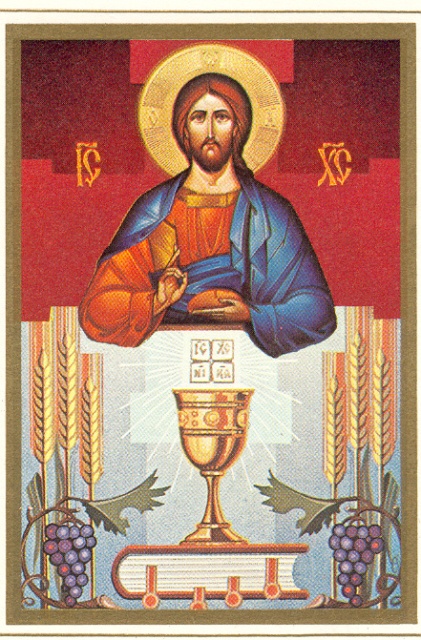
The Lord's Supper Blessing
There will be no end to the Church, no matter what happens within the visible Body of Christ. The Church will be presented without spot or blemish at His coming! Praise God! This is still a great article, and not to be understood only from a “Lutheran” perspective, but from the perspective of the total, whole Body of Christ, the Church.
“And I tell you, you are Peter, and on this rock I will build my church, and the gates of hell shall not prevail against it.” Matthew 16:18 (ESV)
“Husbands, love your wives, as Christ loved the church and gave himself up for her, that he might sanctify her, having cleansed her by the washing of water with the word, so that he might present the church to himself in splendor, without spot or wrinkle or any such thing, that she might be holy and without blemish. Ephesians 5:25-27 (ESV)
For no one ever hated his own flesh, but nourishes and cherishes it, just as Christ does the church, because we are members of his body. “Therefore a man shall leave his father and mother and hold fast to his wife, and the two shall become one flesh.” This mystery is profound, and I am saying that it refers to Christ and the church. Ephesians 5:29-32 (ESV)
Around the Lord’s Table is gathered the church. At the Table of the Lord the church knows what it most profoundly is: the body of Christ. No doubt of this since the days of the apostles. Where the Table of the Lord is deserted, where the Lord’s Supper is no longer known or celebrated, there the church dies beyond rescue.
Inaccessible to rational explanation is the fact of this connection between the church and the Lord’s Supper, between the body of Christ which we are given at the altar and the body of Christ which is the church. All along their journey through nineteen centuries Christians have been enlivened by this fact. Here we may find a clue why in our days the Sacrament of the Altar has become a matter of such burning urgency. So it was also in the second third of last century, and perhaps not so again since the time of the Reformation.
Where this connection between the church and the Lord’s Supper still holds, then the question of what the church is cannot be faced without the question what is the Lord’s Supper? Whether the church has a future is bound up with whether the Lord’s Supper lives on enliveningly. These are questions which Christians of all churches cannot but face as we move toward the end of the second thousand years. The question of the Lord’s Supper is not something we may just sit and think about; in all churches theology has again earnestly engaged the question of the Lord’s Supper.
When these questions are thus put, then they are surely also put to the Evangelical Lutheran Church. We have indeed ever and again maintained that we have Scriptural dimensions of what the Lord’s Supper is which in other churches have been blurred or forgotten. For us then the question of the Lord’s Supper probes to the bottom of our integrity whether we have held true to the Scriptural Doctrine of the Lord’s Supper, faithfully confessing, without admixture, what our Lord has given us to confess. Or have we exchanged this for the mess of potage offered by the Enlightenment in the way of sacramental theorizing.
“You say, ‘I am rich, full up, and have need of nothing,’ and do not know that you are wretched, pitiable, poor, blind, and naked.” These are the words of him who is the Lord and judge of all Churches. If we do not know ourselves to be struck by them we have ceased to be a Lutheran Church, a church of daily contrition and repentance. Before the judgment of these words we can only confess how poverty-stricken we have become. When first our Church made public confession of the faith, it was bold to say in Article 24 of the Augsburg Confession: “Without boasting it is plain for all to see that the Mass is celebrated among us with greater devotion and more earnestness than among our opponents.” Could we still say such a thing? Has not our Church participated in the grievous decline of the Sacrament which now for two hundred years has been spreading through the world of Protestantism? In many places the Sacrament has already departed.
We are then confronted with the question what has become of the Doctrine of the Sacrament of the Altar? For our fathers inextricably bound up with the Doctrine was the celebration and administration of the Sacrament. Here doctrine is not some theoretical doctrinalizing, but the quickening message given the church to proclaim. Still today there are many pastors in the Evangelical Churches of Germany who confess the Doctrine of the Lord’s Supper as Luther did. And there are many Christian people who go to the Lord’s Table confessing the Sixth Chief Part of the Small Catechism. However, we may not deceive ourselves by supposing that this is true of anything more than a minority among our Evangelical people. We recognize this fact without laying any judgment on anybody else.
There is no denying that this situation is the outcome of a long historical development. This observation does not relieve us of responsibility. A generation ago who could have imagined that the question of the Sacrament could again become so fateful a matter for theology and church? If such a change is possible, then a later generation may perhaps marvel at how it was possible at such a time for there still to be even learned theologians who could go on talking about the Doctrine of the Lord’s Supper as confessed by Luther in such a shallow and dilettantist way? Still today along the highways and byways of theology you can hear talk of not being bogged down in the exegesis of the sixteenth century. If Luther had the benefit of the last generation’s advances in exegesis, he would certainly no longer teach of the Lord’s Supper as he did back then. When the recognition of what is going on here is joined with the basic respect due to a great man now departed, and so one who can no longer defend himself, there may then be a stirring of effort to take seriously and to understand what he said as he faced the Last Judgement.
If any one shall say after my death, “If Luther were living now, he would teach or hold this or that article differently, for he did not consider it sufficiently,” etc., let me say once and for all that by the grace of God I have most diligently traced all these articles through the Scriptures, have examined them again and again in the light thereof, and have wanted to defend all of them as certainly as I have now defended the sacrament of the altar…I know what I am saying, and I well realize what this will mean for me before the Last Judgment at the coming of the Lord Jesus Christ. (LW 37, 360f.)
If we grasp the import of these words, it follows that what Luther confesses as the freight of the Words of Institute can no more be relativized as outmoded exegesis than can that which he confesses with the Doctrine of Justification. This recognition carries within it what could bring in the day — God grant it may come before it is too late — the day of repentance, the day when we Evangelical theologians in Germany finally recognize what it is perilous not to recognize: the misuse of freedom in the Gospel. This may be recognized when any one of us claims it as his right to follow his own opinion, and put to the Christian congregation some personal view which has won his approval, which he recently read somewhere or other, and was much impressed by. This instead of proclaiming what we were pledged before God to proclaim in that most solemn hour of our lives at our ordination. Such misuse of “freedom in the Gospel” hastens the end of the Church of the Reformation.
~ Hermann Sasse

Dear Friends:
As American Christians, we are confronted by a grim, undeniable fact: our nation has come under the judgment of God. For this there are many reasons, but they can be summed up in one simple statement: We have committed the sin for which Esau was rejected—we have despised our birthright (Heb. 12:15–17).
God judges us according to the measure of light we have received. Jesus told the Jews of His day that their judgment would be much more severe than that of Sodom and Gomorrah, because they had received a much greater revelation of the truth (Matt. 11:20–24).
The same applies to America in this century. No other nation has had the same access to the Word of God that has been granted to the American people. Through culture and tradition, through churches and evangelists, through radio and television, and through the printed word, America has been blessed above all other nations with the knowledge of God’s truth. Our judgment for rejecting it will be correspondingly severe.
Many Christians do not realize that God’s judgment does not begin with the people of the world, but with the people of God. Peter told the Christians of his day, “For the time has come for judgment to begin at the house of God; and if it begins with us first, what will be the end of those who do not obey the gospel of God?” (1 Peter 4:17). These words apply equally to the church in America today. Of all the sins that could be charged against the contemporary church, it is sufficient to focus on two: materialism and compromise.
In Luke 17:26–30 Jesus predicted that the period before His return would be like the days of Noah and Lot. He mentioned specifically eight activities characteristic of those days: eating, drinking, marrying, giving in marriage, buying, selling, building, planting. Yet there is nothing specifically sinful in any of these activities. What, then, was the problem?
The problem was materialism. The people of those days had become so engrossed in these materialistic activities that they were unaware of the impending judgment of God on their carnal lifestyle. When judgment came, they were totally unprepared.
The same is true today of most professing Christians in America. If the final judgments of God should suddenly usher in the return of Christ, they would be totally unprepared.
Like materialism, the sin of compromise often goes unrecognized. About two years ago, while praying, I had a mental picture of the interior of a typical church building with rows of pews, a platform, a pulpit, a piano and so on. But the whole building was permeated with some kind of fog. The outlines of objects could be discerned, but nothing was sharply defined. While I was wondering what the fog represented, God gave me one clear word: compromise. In the contemporary church, most of the main moral and doctrinal truths, so clearly enunciated in the New Testament, have become blurred and ineffective. In 1 Corinthians 6:9–10 Paul wrote: “Do not be deceived. Neither fornicators, nor idolaters, nor adulterers, nor homosexuals, nor sodomites, nor thieves, nor covetous, nor drunkards, nor revilers, nor extortioners will inherit the kingdom of God.” Yet the church today is full of people who commit these sins, but remain totally unconcerned. In fact, they often boast of such sins. A church member lay in a hospital, dying of AIDS, which he had contracted through homosexuality. Then he received Christ and was given a New Testament. After reading some way in the New Testament, he sent an urgent message to the person who had led him to Christ: “Come and pray for me. I need deliverance. I never knew there was anything wrong with my lifestyle.”
About seven years ago, at the Christmas season, our staff had committed Ruth and me to appear on two television presentations of PTL. Since we do not watch television, we had no idea what to expect. I was supposed to be the “main speaker.” Out of the first hour, I was given ten minutes, and out of the second hour, twenty minutes. Most of the time was given to appealing for money and selling Tammy dolls. As far as I can recall, Ruth and I were the only people who even mentioned Jesus.
Shortly afterwards there was a public exposure of the scandals that have now become notorious. But for me personally the most shocking thing was not any sexual or financial misdoing, grievous as that was. What shocked me then, and still shocks me today, is the realization that millions of Americans were being continually confronted with a totally false picture of Christianity—one that had no room for the cross, with its demands for humility, for holiness and for sacrificial living. How terrible to realize that people who have been seduced by such a presentation may never hear the real truth of the gospel!
The PTL scandal is now history, but it has left us with a question we need to answer: was it simply an isolated phenomenon, or was it a symptom of a disease that affects the Body of Christ throughout America?
Yet within the church there is still a remnant of sincere, devoted followers of Jesus. If we are among that number, how does God require us to respond to the present crises?
One clear answer is given in 2 Chronicles 7:14: “If My people who are called by My name will humble themselves, and pray and seek My face, and turn from their wicked ways, then I will hear from heaven, and will forgive their sin and heal their land.” The phrase, “My people who are called by My name,” applies to all Christians who take the name of Christ upon themselves.
For at least 30 years I have been teaching on this Scripture, but recently I was confronted by a shocking realization! God’s people in our day have never fulfilled the first condition. We have never truly humbled ourselves. Our pride—both religious and racial—remains as a barrier that holds back the answer to our prayers for ourselves and for our nation.
Through the severe dealings of God in my own life, I have learned the most effective way for us to humble ourselves. Very simply, it is by confessing our sins. If we regularly and sincerely confess our sins to God, it is impossible to approach Him with an attitude of pride.
Furthermore, I have seen that God has only committed Himself to forgive the sins we confess. “If we confess our sins, He is faithful and just to forgive us our sins and to cleanse us from all unrighteousness” (1 John 1:9). Unconfessed sins are unforgiven sins. Thus the barrier of pride builds up a second barrier of unforgiven sin.
The Bible exhorts us to confess our sins not merely to God, but also to one another. “Confess your sins to one another, and pray for one another, that you may be healed” (James 5:16). Confessing our sins to God deals with vertical pride; confessing to one another deals with horizontal pride. We can hardly maintain an attitude of pride towards someone to whom we have just confessed our personal sins.
This applies especially to the relationship between husbands and wives. Those who regularly confess their sins to one another are not kept apart by a barrier of pride.
Furthermore, confession of sin is an essential prerequisite to effective intercession. Daniel was one of the most righteous characters in the Bible, but when he set out to intercede for his people Israel, he began by acknowledging his own share in their sin (Dan. 9:3–13). I believe that God is waiting for us as American Christians to humble ourselves before Him and one another by confessing our sins. Only after we have done that, can we move on to claim the healing of our land.
But I must add a word of warning. Do not begin to indulge in morbid introspection! The Holy Spirit is “the finger of God” (Matt. 12:28; Luke 11:20). Ask God to place His finger on the sins you need to confess. He will do it with unerring accuracy, probably bringing to light sins which you never recognized!
I have confined this analysis to the situation in the United States. Much of what I have said, however, applies to other nations who are heirs to the Judeo-Christian inheritance and to the church worldwide. May God help each of us to accept our personal responsibility!
Yours in the Master’s service,
Derek Prince
From a correct biblical understanding of the nature of man, we must not accept the idea that we are guilty of Adam’s sin. No, Adam alone was guilty of his sin. However, we do share the consequences of his sin. We are born into corruption, and with an inherited tendency or inclination toward sin. All of us sin, and so we deserve the consequences of sin: spiritual and physical death, and eternal separation from God in hades.
Between the time of Adam’s fall and the coming of Christ, there were many righteous men and women, whom we read about in the Old Testament. But they, even through their godly lives, were unable to reverse the consequences of the Fall. Grace could act on them from the outside, as it did on the Prophet Moses, so much so that he had to cover his radiant face as he descended from Mount Sinai. However, this was only a temporary radiance, as the Holy Scriptures and Fathers say. He and all the Old Testament prophets did not have the Grace of the Holy Spirit abiding within them, as their personal strength and power. And after death, everyone, even the most righteous, went down into hades, being cut off from Paradise and heaven.
During the Old Testament period, God gave laws to the Hebrews to help them live righteous lives. He instituted animal sacrifices, which the Hebrew’s were to make as offerings for sin. These sacrifices were a prefiguration of Christ’s sacrifice, to prepare the people of God to understand and accept the meaning of Christ’s death on the Cross. But neither the sacrifices nor the laws were able to restore mankind to the state he had lost at the Fall.
A perfect, blameless sacrifice was needed—a man who was without sin—in order to destroy the consequences of sin. That was why Christ came. The first Adam fell from his original designation, bringing everything into ruin. Therefore Christ, Who is called the Second Adam or the New Adam, came into the world to fulfill man’s original designation and restore what was lost. But Christ did even more than that. He not only restored man to what Adam was before the Fall: He gave man the possibility to become that which Adam was supposed to become, what Adam could have become had he not fallen.
Now, having looked at the pre-Fall state and the consequences of the Fall, let us look more closely at how Christ restores man to the pre-Fall state and in fact beyond and above this state.
The how of the redemption, like the nature of God the Holy Trinity, is ultimately a mystery. And yet the Holy Scriptures and the Holy Fathers help us to approach this mystery. They enable us to understand and believe in our redemption by Jesus Christ in such a way that, believing, we can receive the gift of salvation.
Our redemption by Jesus Christ began with His incarnation. When He took flesh, He became like us in everything except sin (cf. Heb. 4:15). In assuming human nature, He deified it. Since human nature is one, this gave us the potential of being deified as well: not deified by nature and Sonship, as Christ was, but deified by Grace and adoption.
But with Christ’s incarnation, man was still not able to actualize the potential for deification. Because of his spiritual corruption, man was an impure vessel. Because of the barrier of sin, man could not receive and keep the Grace of the Holy Spirit within himself. So Christ, having overcome the barrier of nature at His incarnation, now had to break down the barrier of sin. He would do this through his death. As St. Nicholas Cabasilas says, “Christ broke down the three barriers that separated man from God: the barrier of nature by His incarnation, the barrier of sin by His death, and the barrier of death by His Resurrection.”
As God, Christ knew He had come to earth to die for man, and in dying to rise from the grave. On the day before His crucifixion, He said: Now is My soul troubled; and what shall I say? Father, save Me from this hour. But for this cause came I unto this hour (John 12:27).
Through his single spiritual death (at the Fall), Adam brought a twofold death into the world—spiritual death and bodily death. St. Gregory goes on to say, "The good Lord healed this twofold death of ours through His single bodily death, and through the one Resurrection of His body He gave us a twofold resurrection. By means of His bodily death He destroyed him who had the power over our souls and bodies in death, and rescued us from his tyranny over both."
This, again, is because human nature is one. St. Paul writes: If by one man’s offence death reigned by one [that is, Adam], much more they which receive abundance of Grace and of the gift of righteousness shall reign by one, Jesus Christ (Rom. 5:17).
Following the words of Christ and St. Paul in the Scriptures, the Holy Fathers use a juridical or legal model to explain how Christ broke down the barrier of sin separating man from God.
The juridical explanation can be expressed in basic terms as follows: At the Fall, death was the sentence for sin. When He died on the Cross, Christ took upon Himself that sentence, but since He was without sin and thus undeserving of the sentence, the sentence was abolished for all mankind, and mankind was freed from the consequences of the primal transgression.
The word "redemption," of course, comes from this juridical explanation. As Vladimir Lossky points out: "The very idea of redemption assumes a plainly legal aspect: it is the atonement of a slave, the debt paid for those who remained in prison because they could not discharge it. By His death Christ ransomed man out of servitude to sin, and redeemed man from the eternal consequences of sin which had been incurred at the Fall. Christ Himself spoke of this. He said of Himself: The Son of Man came … to give His life as a ransom for many (Matt. 20:28). In the Epistle to the Hebrews we read: Christ is the mediator of the new testament, that by means of death, for the redemption of the transgressions that were under the first testament, they which are called might receive the promise of eternal inheritance (Heb. 9:15). And in the book of Apocalypse: Thou wast slain, and hast redeemed us to God by Thy Blood (Apoc. 5:9).
Christ paid the debt of sin that man himself could never pay. The Apostle John writes in his first Epistle: He [Christ] is the propitiation for our sins, and not for ours only, but also for the sins of the whole world (I John 2:2). And the Apostle Paul tells us: Ye are bought with a price (I Cor. 6:20, 7:23). St. Paul even says that Christ was made to be sin for us and made a curse for us (II Cor. 5:21, Gal. 3:13). Being totally without sin, He bore the penalty of sin on our behalf, so that we would be forgiven and purified of sin and freed from its curse. St. Gregory Palamas says: "Since Christ gave His Blood, which was sinless and therefore guiltless, as a ransom for us who were liable to punishment because of our sins, He redeemed us from our guilt. He forgave our sins, tore up the record of them on the Cross and delivered us from the devil’s tyranny.”
Out of His infinite love for us, Christ died in place of us, so that we could be given life. St. Paul says: … That He [Christ] by the Grace of God should taste death for every man (Heb. 2:9); and elsewhere he says, God commendeth His own love toward us, in that, while we were yet sinners, Christ died for us (Rom. 5:8). St. Athanasius the Great explains this as follows: "Taking a body like our own, because all our bodies were liable to corruption and death, He surrendered His body to death in place of all, and offered it to the Father. This He did out of sheer love for us, so that in His death all might die and the law of death thereby be abolished.
Together with the juridical model of explaining how we are redeemed by Christ’s death, the Holy Scriptures and Holy Fathers use the model of sacrifice. As mentioned earlier, the Old Testament sacrifices were a prefiguration, a "type" of the one true Sacrifice that would be offered for the whole world: Christ, Who was sacrificed on the Cross. In the first Epistle of St. Peter we hear Christ described as a spotless sacrificial lamb: Ye were redeemed with the precious Blood of Christ, as a lamb without blemish and without spot, Who was foreordained before the foundation of the world (I Peter 1:19–20). And in the Epistle to the Hebrews we read: Now once at the end of the world Christ hath appeared to put away sin by the sacrifice of Himself (Heb. 9:26).
Many of the Holy Fathers wrote on this theme of Christ as sacrifice. Origen (who is not a Holy Father) and, following him, St. Gregory of Nyssa, posited that the sacrifice was offered to the devil. But St. Gregory the Theologian and all the Fathers after him rejected this idea. They often spoke of the sacrifice as being offered to God the Father, and sometimes they spoke of it as being offered to the Holy Trinity, since the Father, Son and the Holy Spirit are One God. St. Symeon the New Theologian writes: "God, Who is incomparably higher than the visible and invisible creation, accepted human nature, which is higher than the whole visible creation, and offered it as a sacrifice to His God and Father.… Honoring the sacrifice, the Father could not leave it in the hands of death. Therefore, He annihilated His sentence.
Why did the Son have to offer Himself in sacrifice to the Father? Why did God sacrifice Himself to God? Here we get at the crux of the mystery of Redemption. St. Gregory the Theologian urges us not to try to conform this mystery to human logic, not apply to it human conceptions that are unworthy of God. He says: "The Father accepts the sacrifice not because He demanded it or felt any need of it, but on account of economy," that is, to fulfill the Divine plan of our salvation in accordance with the Divine ordering of creation.
St. Gregory Palamas sheds more light on this question. He says that God could have found other ways of saving man from sin, mortality and servitude to the devil. But He saved man in the way He did—by coming to earth, dying and resurrecting—because this was according to justice and righteousness. As the Psalmist says: God is righteous and loveth righteousness … and there is no unrighteousness in Him (Ps. 11:7, 92:15). Death was the just penalty for sin, and Christ paid that penalty. But because He was sinless, His death was unjust. Therefore, He justly destroyed death. This was God’s economy, completely in accordance with His righteousness.
The devil thought He could destroy Christ by inciting people to put Him to death. But Christ’s death proved to be the devil’s undoing because, unlike every other person who had ever lived, Christ did not deserve death. St. John Chrysostom offers us a vivid image to highlight this teaching: "It is as if, at a session of a court of justice, the devil should be addressed as follows: ‘Granted that you destroyed all men because you found them guilty of sin; but why did you destroy Christ? Is it not very evident that you did so unjustly? Well then, through Him the whole world will be vindicated."
Christ saved us in the way He did not only to manifest His justice and righteousness, but also to manifest His love. St. Isaac the Syrian writes: "God the Lord surrendered His own Son to death on the Cross for the fervent love of creation. For God so loved the world that He gave His only begotten Son to death for our sake (cf. John 3:16). This was not, however, because He could not have redeemed us in another way, but so that His surpassing love, manifested hereby, might be a teacher unto us. And by the death of His only begotten Son He made us near to Himself. Yea, if He had had anything more precious, He would have given it to us, so that by it our race might be His own."
Through the totality of Christ’s work of redemption, man is spiritually united with God and deified, and man’s body and the entire creation are to be renewed as a spiritual and divine dwelling place.
I feel one must understand his/her true nature and their relationship with and to God. To help understand this relationship, the responsibility to aide in this understanding is upon the leadership of the local church under the guidance of the Holy Spirit.
Without that knowledge, how would any Christian know? Does God allows certain sins? I do not believe so. To say so would oppose everything that He has done and provided for humanity through our Savior and Lord Jesus Christ!
God gives us the grace and the strength to deal with our sins and our sinfulness. I truly do not believe God pulls His grace from us, to and fro, like a yo-yo or like a lure to entice us to be "good" people. God’s grace is ever present in His Holy Spirit, Who is in us and with us. Every time we partake of the most precious Body and Blood of Christ, we obtain the strength and nourishment to move forward toward our complete sanctification, our deification. Once we recognize the sin "which so easily besets us," and that recognition happens only because of His Holy Spirit in us, Who convicts us of our short comings, we pray that God would give us more strength to combat either the wiles of the devil or our own passions.
I do not feel that God "allows" sins to remain a hindrance to us to facilitate our humility. The conviction of the Holy Spirit facilitates plenty of humility! God knows "why" we are sinning! It is a matter of our will, and not His will that we sin. Christians will know how they sin, when they sinned, and its consequence! Just like a person with acid reflux knows all too well that when they eat really spicy food or the wrong food they are in for some serious pain. Sin causes pain. Pain in our hearts. We must learn the Prayer of the Heart to stop the pain, and stop the sin. When you tell a child, "do not put your finger in the socket, it will hurt you…" what happens? The child either heads straight for that socket or turns and crawls away! As Christians, we learn and grow like children. We need the Word of God and His teachers to steer us in the right direction. There may be a little scolding once in a while, but then when we come around and understand that when we avoid the pain, we have avoided sin, we come closer to God. When we obey God, there is no pain. Our hearts do not hurt. People around me don’t get hurt.
Would God "take away" that sin? Does God let this sin or that sin to hang around for a while? NO. Our obedience to the Holy Spirit in us should defeat that sin and put it away. Our stubborn will allows those sins to hang around. God hears our prayers for strength and fortitude. He hears the prayers of the saints on our behalf for the same reason.
God provides everything for us. Just as a parent provides everything their child needs to grow, learn, and mature. It is God’s will that our will become aligned with His will for us. The characteristics of Christ will become more and more apparent in us. We will start to exhibit more of the "likeness" of God; our true nature. There is NO sin that God will not forgive a person who has truly confessed, with true sorrow, and commits to truly repent. God knows this. God knows if that will occur or not; or if the Christian will commit that sin again. The Holy Spirit will convict him again, and again, until he gets it right. That is the compassion of God!
Do you feel guilty when you think adversely of others who have sinned or what they have done? When you mock their situation, or say to yourself, "how could they have done that?" You may say, "what kind of person would do such a thing?" Well, you should feel guilty. Because, potentially you are capable yourself of the same infraction, the same sin. And only you know where you are with God. The point I am making is when you see someone fall or falling, remember your own condition, it could be you that has fallen! The Holy Spirit in us reminds us of that! That is the compassion of God!
The compassion of God is His knowledge of us, His love for us, and His patience with us. I believe God has no sense of belittling a Christian because of his sin. The Christian does that all by himself. He is our Father, He will teach us, discipline us, mold us, form us, and guide us into becoming one with Him, not in essence, but in assimilation, truly in His image and in His likeness. Not my will, but Thy will be done in me.
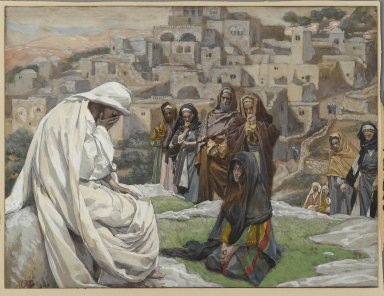
“When He approached Jerusalem, He saw the city and wept over it…” Luke 19:41
The word of the Lord came to me today; my spirit has been humbled and tears have flowed from heart to my eyes; I wondered why I am so emotional while worshiping the Lord this morning. When I sat down in my office and turned my computer on, I started weeping from deep within my spirit. A word from the Lord came to me saying, "Weep, weep for your nation. Rise up true and faithful Church and weep for your Nation. Weep at the depravity, the perverseness, and especially the idolatry. Weep and do not forget the righteous purity and wholesomeness you have come from as a Nation. Feel sorrow and remorse for your Nation! Weep for your country, weep for the leadership in your country, weep and pray that their hearts soften. Arise and proclaim the deliverance which my Gospel brings to all who receive it. Weep as you deliver the message and do not stop weeping until you have been completely faithful. Remember, judgment begins in My house. Weep."
"When they saw Him, they worshiped Him; but some doubted." Matthew 28:17
Our soul possesses the amazing ability to sense God. This sense of God, at times clearly felt although still immature in youth, is strengthened with proper spiritual upbringing and defines itself in a conscious faith–in the conviction that there is one God, the Creator of all, Who is solicitous toward men and all of nature.
If a person’s faith is alive and well, it is not restricted to a cold knowledge that God exists, but finds expression in striving after a relationship with Him. A believing soul is drawn towards God just as a plant is drawn to the sun. In turn, an active relationship with God further strengthens a person’s faith, so that his faith becomes for him a source of guidance, founded on personal experience. In some people, who are particularly gifted, faith grows into an illumining inspiration that transports them from the world of vanity and sin into the transcendent world of eternal truth.
The significance of faith in a person’s development lies in the fact that it gives proper direction to all his powers–to his intellect, his feelings and will; it likewise brings harmony to his inner world, For example, it gives the intellect clarity and the correct world view, it gives the will support and purpose, it cleanses and refines the senses. Faith directs a person away from base earthly interests and leads him into a realm of higher, holy experiences.
Faith and Will
Behold I stand at the door and knock. If any man hears My voice, and opens the door, I will come in to him, and will sup with him, and he with Me (Rev. 3:20). These words of the Savior tell us that God offers each person the gift of faith. Man is free either to accept or to reject this gift.
The Lord pities those people whose doubt stems from spiritual weakness or inexperience rather than obstinacy. He helps those who seek the truth and suffer from doubt to acquire faith. For example, Christ had pity on the despairing father of the possessed youth, who cried out: Lord, I believe, help Thou mine unbelief! (Mark 9:24), and healed his sick son. He likewise had compassion on Apostle Peter who took fright at the storm and began to sink. Giving Apostle Peter His hand, the Lord gently rebuked him, saying: O thou of little faith wherefore didst thou doubt (Matt. 14:31). Nor did the Lord reject "doubting” Thomas, who desired personal assurance of the miracle of the Resurrection. Having satisfied Thomas by His appearance, however, the Lord did not praise him for believing on the basis of this material proof, but said to him, you believe because you have seen; blessed are those who do not see and believe. In other words, faith based on external experience has little value; this is actually not faith but ordinary knowledge. True faith is born of inner experience; it demands responsiveness and effort, and this is why it is worthy of praise.
We see the opposite of this searching faith in the Jewish scribes and Pharisees of Christ’s time. They obstinately refused to believe in Jesus Christ as the God-sent Messiah. Neither the fulfillment in Christ of the ancient prophecies, nor His countless miracles and rising of the dead, nor signs in nature, nor even the miracle of the Resurrection shook their unbelief. On the contrary, with each new miracle they became still more embittered and hostile toward Him.
Even if Christ was unable to inspire faith in those who did not want to believe, is it any wonder that in our time there are conscious and adamant atheists? They claim that they do not believe because they see no miracles. But the real reason for their unbelief lies not in a lack of miracles–these occur daily–but in a negative turning of the will. They simply don’t want God to exist.
The problem of unbelief is closely tied to the sinful spoilage of human nature. The fact is that faith demands a certain kind of behavior, a certain way of life. It puts a check on a person’s greed; it calls him to overcome his egoism, to exercise temperance, to do well, even to sacrifice himself. When a man prefers his passions over the will of God, and places his own good over the good of his neighbor, then he will do everything he can to repudiate whatever is beneficial to faith. The Savior indicated that an evil will is the chief cause of unbelief when He said: For everyone practicing evil hates the light and does not come to the light, lest his deeds should be exposed. (John 3:20).
But if a man is capable of crushing faith in himself, he is also capable of strengthening it. Turning again to the Gospel, we find here striking examples of burning faith. There are the cases of the Roman centurion, the Canaanite woman, the woman with an issue of blood, the blind men of Jericho, and many others. The Lord called His listeners to imitate the faith of these people. Consequently, it lies within our power, with God’s help, to gather and direct our Spiritual powers towards a greater faith. Faith, like every good, demands effort. That is why a reward is promised for it: He who believes and is baptized will be saved; but he who does not believe will be condemned. (Mark 16:16).
Faith–the Key to God’s Treasury
Faith draws a person into a living relationship with God in heartfelt, concentrated prayer. During such prayer a person comes into contact with God’s almighty power, and then, according to the word of the Savior, everything becomes possible to him who believes: And whatever things you ask in prayer, believing, you will receive, and, Because of your unbelief; for assuredly, I say to you, if you have faith as a mustard seed, you will say to this mountain, “Move from here to there, and it will move; and nothing will be impossible for you.” (Matt. 21:22,
17:20). In other words, even the least faith can work wonders, provided it is complete and vigorous, like a seed.
One ought to be careful how one uses the mighty power of faith. In praying one should be less concerned about pressing one’s own desire and more about acquiring wisdom from God to know what to ask. After all, prayer is not only our speaking to God, but a conversation with Him and a conversation requires that one know how to listen. Turning to the Gospel accounts, we see that those people whose faith was particularly outstanding–as, for example, the Roman centurion, the Canaanite, the friends of the paralytic, and others–were strangers to all exaltation or pathos. On the contrary, they were very humble (Matt. 8:10, 13; 22:9). The combination of strong faith and a humble opinion of oneself are not accidental. A deeply believing person feels, more than anyone else, the greatness and almightiness of God. And the more clearly he feels this, the more keenly he is aware of his own poverty. The great wonderworkers as, for example, the prophets Moses and Elisha, the Apostles Peter and Paul and those like them were always distinguished by profound humility.
Faith–Active Love
What correspondence exists between faith and good works? The question is often asked, is faith alone sufficient for salvation, or is good works also necessary? The question is improperly expressed, because it originates in a warped understanding of faith. True faith extends not only over the mind but overall the powers of the soul, including the will. Protestantism has narrowed the understanding of faith, limiting it to a rational acceptance of the Gospel teaching, and declares: "Only believe, and you will be saved!" The error of Protestants, just as the Old Testament Jews, consists in the formal, legalistic understanding of salvation. The Jews taught justification by works of the law independent of faith, while today’s Protestants teach justification by faith alone, independent of good works. Christianity, however, teaches concerning spiritual rebirth: If any man be in Christ, he is a new creature (II Cor. 5:17). Salvation is not only the resettlement of man in paradise, but the grace-filled state of his renewed soul; in the words of the Lord, the Kingdom of God is within a man (Luke 17:21).
Spiritual rebirth is not accomplished instantaneously. Christ’s words to those who believe, Thy faith has saved thee (Matt. 9:22), refer to that crucial inner break made by those who have turned from sin onto the path of salvation. Without this initial break in the way of thinking, any further amendment or spiritual progress is impossible. Naturally, after a person has chosen the right path he must begin walking on it. The New Testament epistles all speak about working on oneself and becoming more like Christ: We are buried with Him by baptism into death: that like as Christ was raised from the dead by the glory of the Father, even so we also should walk in newness of life (Rom. 6:4). What is needed here is not abstract faith but that which acts through love (Gal. 5:6).
Apostle James firmly rises up against those who separate faith from good works, saying: If a brother or sister be naked, and destitute of daily food, And one of you say unto them, Depart in peace, be ye warmed and filled; notwithstanding ye give them not those things which are needful to the body; what doth it profit? Yea, a man may say, Thou hast faith, and I have works: show me thy faith without thy works, and I will show thee my faith by my works. Thou believest that there is one God; thou doest well; the devils also believe, and tremble. Further the Apostle gives examples of righteous men and women of old, who proved their faith by their works, and he draws the following conclusion: Seest thou how faith wrought with his works, and by works was faith made perfect?…For as the body without the spirit is dead, so faith without works is dead also (James 2:14-26).
Apostle Paul likewise does not recognize faith without its fruit: Though I have the gift of prophecy, and understanding all mysteries, and all knowledge, and though I have all faith, so that I could remove mountains, and have not love, I am nothing (I Cor. 13:2). Therefore, a correct understanding of faith dispels all doubt as to which is more important–faith or works. They are inseparable, like light and warmth.
How to Strengthen One’s Faith
We have already said that faith is a most precious gift. It gives us a correct world view, reveals the purpose of life, encourages us in hard times, gladdens the heart, empowers our prayer, and makes accessible God’s infinite mercies.
Sadly, however, a life of sufficiency and well being dispels faith. God’s goodness is forgotten. Active faith departs, and God’s great talent gets buried.
As faith grows dim a man’s inner condition becomes increasingly disordered: he loses clarity of thought and purpose of life, his spiritual strength leaves him, emptiness and ennui (Listlessness and dissatisfaction resulting from lack of interest; boredom) take possession of his heart, he becomes irritable and dissatisfied. After all, the soul cannot live without faith, just as a plant cannot live without light and moisture. No matter how intelligent and talented, in the absence of faith a person descends to the level of a dumb animal, even a beast.
In order to escape such a "shipwreck of faith" (I Tim. 1:19) one must seriously concern oneself with the renewal of one’s soul. How? We know that all talents require exercise: to preserve a sharp mind it must be engaged in mental work; fingers lose their flexibility if they are not exercised on a musical instrument; to remain limber the body requires gymnastic work-outs. If people expend so much energy and money to develop their physical abilities, should not we, Christians, work to acquire living spiritual experience?
To strengthen faith we must begin to live spiritually. Here it is necessary, first of all, to regularly read the Holy Scripture, to think about God, to take an interest in spiritual subjects. Then, one must try to serve God in concentrated heartfelt prayer, and also commune the Body and Blood of Christ Finally, one must try to live not for oneself alone but for the good of one’s neighbor, one’s church. The heart of one who loves is warmed by the grace of the Holy Spirit. Of course, in trying to lead a Christian life one cannot avoid warfare, trials and difficulties. It may even seem that the whole world is armed against the believer. It is important to remember that with God’s help all these trials will work for our spiritual growth.
Let us remember that faith is not only the fruit of our efforts; it is also the gift of the Holy Spirit. Apostle Paul testified to this in saying that the fruit of the Spirit is love, joy, peace, longsuffering, gentleness, kindness, faith (Gal. 5:22). Let us therefore ask God for faith, that great spiritual treasure, remembering the promise: Ask, and it shall be given unto you; seek, and ye shall find, knock, and it shall be opened unto you (Matt. 7:7). Faith will bring us peace of soul, joy, and a foretaste of that already accomplished victory over evil, which gave the Apostles such consolation: this is the victory that overcomes the world, even our faith (I John 5:4).
She is the plan of God on earth; always in her Father’s eye: Cherished, mysterious, beautiful and potent beyond measure: King empowered and life infused. She emerges triumphant; limitless with potential; a harbour for the hopeless and an answer for the ages: The church resplendent – a bride for His Son.
She is the body of Christ on earth; born, like her Head, amidst tribulation, under jealous skies. Cradled in her innocence and guarded for His purpose. She grows in wisdom and stature with victory on her lips and freedom in her hands. Hers is an unstoppable cause. She embraces the world with dignity, honour and compassion; gives vision to the sightless and life to the dying.
She is the family of God on earth. Within her compass, the hungry find sustenance and the weary receive strength. She is a haven for recovering humanity, enthralled by grace. She invites the broken, the vulnerable and the outcast to be immersed in love. She stands imperfect but perfection resides within her. She is flawed but is washed with forgiveness. She has a treasury of faith and a wealth of belonging.
She is the house of heaven on earth: A representative, resolute to reconcile. The Word within her accepts the receptive but challenges the heartless. She is the ecclesia, called out to serve the world: Calling out to welcome in. Blood-washed and armed with testimony, the cross on her lips liberates the chained and offends the unchanging. Like her Master she is pursued and persecuted. Yet she rises with strength in her heart and fire in her soul.
She is the bride of Christ on earth; readying herself for the day when all eyes will be upon her. Prepared and presented before the Lord: The Lamb for whom the world waits, who comes like the rising sun, majestic and magnificent beyond description, while she dazzles with reflected glory. Spotless, perfect and mature, she bows low to cast her crowns and passionately worship Him. Her temporal focus becomes her eternal gaze. She is the church of the Lord Jesus Christ.
– by Robert Fergusson
In Luke 11:33–35, Jesus says, “Your eye is a lamp, lighting up your whole body. If you live in wide-eyed wonder and belief, your body fills up with light. If you live squinty-eyed in greed and distrust, your body is a dank cellar. Keep your eyes open, your lamp burning, so you don’t get musty and murky. Keep your life as well-lighted as your best-lighted room” (The Message).
The Miracle of the Christmas Story
Acts 17:25 says that God “gives all men life and breath.” Job 34:14–15 says that if God were to withdraw his breath from humankind, we would return to dust. In other words, every breath we take is a miracle. Because we’ve heard the Christmas story so many times, we forget the amazing miracle it was. God came to earth in the form of a man. We need to take time to get lost in the wonder of this miracle.
The Mystery of the Christmas Story
The fundamental mistake the religious leaders of Jesus day made was trying to force God to fit into their religious boxes (Matthew 23:23). Instead of being conformed to God’s image, they tried to recreate God in their image. What they ended up with was “God in a box.” Jesus healed people on the Sabbath, and instead of celebrating the amazing miracles, the leaders plotted to kill him. Why? Because he didn’t fit in their box. In his book Rumors of Another World, Philip Yancey says there are two ways of looking at the world.
"One takes the world apart, while the other seeks to connect and put it together.” He goes on to say, “We live in an age that excels at the first and falters at the second.” Similarly, there are two ways of approaching God. One approach takes God apart. We make God manageable and measurable. We reduce God to a set of propositions, seal-tight theologies, or divine formulas. We fall into the trap of reductionism. In the words of A.W. Tozer, we end up with a God who can “never surprise us, never overwhelm us, never astonish us, never transcend us.”
Albert Einstein said, “The most beautiful thing we can experience is the mysterious. It is the source of all true art and science. He to whom this emotion is a stranger, who can no longer pause to wonder and stand rapt in awe, is as good as dead; his eyes are closed.” Experience the mystery of Christmas—the omnipotent, omniscient, omnipresent God of all creation was born as a helpless little baby in Bethlehem.
~ Mark Batterson
 In The Hands of the Refiner