Archive for the ‘universal’ Category

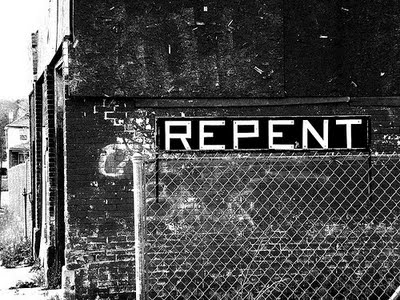
repent-sign

“Yet even now, says the LORD, return to me with all your heart, with fasting, with weeping, and with mourning; rend your hearts and not your clothing. Return to the LORD, your God, for he is gracious and merciful, slow to anger, and abounding in steadfast love, and relents from punishing.” ~ Joel 2:12-13

The Call for Repentance

Joel opens his book by reflecting on God’s judgment in a plague of locusts in ancient Judah and how it anticipated the final day of the Lord, when He would judge even Jerusalem for its evil (Joel 1:1–2:11). This part of his work offers little hope to the people, but that changes in 2:12. Our Creator’s mercy is emphasized, as the Lord calls His people not to sit idle and wait for His wrath, but to repent. The repentance God demands here is not a superficial rending of clothing but rather a true soul conversion—the heart circumcision that the Lord has always demanded (Deut. 10:12–22). This circumcision is finally the gift of God for His elect people (Ezek. 36:22–38; John 3:1–8).

Those who have been gifted with circumcised hearts repent when the Lord, through His prophets and Apostles, calls them to turn from their sin. But the call must go out, for God ordinarily works through the preaching of His Word; thus, Joel calls for deep and thorough repentance in Joel 2:13–17. He grounds this call to repent in God’s revelation of His mercy and willingness to relent over the disasters He has announced (see Ex. 34:6–7; Jer. 18:5–8). At the same time, Joel’s call to repentance lacks any hint of presumption. Although God’s people can always be confident that He will forgive them when they turn to Him in heartfelt repentance (2 Chron. 7:14; Luke 15:11–32), even the healing that He promises does not always mean that we will escape the earthly consequences that flow from our sin. Joel 2:14 reflects this point, as the prophet leaves it up in the air as to whether God’s forgiveness might include other undeserved blessings.

Nothing less than full national repentance would do when Joel called Judah to repent. War was not important enough to conscript new husbands for battle (Deut. 20:1–7). Likewise, women with young children could apparently delay paying their vows or meeting other worship requirements until their little ones were weaned (1 Sam. 1:21–24). But Joel exempts neither group from repentance. The need to avert the coming judgment was so urgent that even newlyweds and young mothers had to participate in national repentance if there were to be any hope of staving off disaster (Joel 2:15–17).

God responds in Joel 2:18–27 to the call to repentance of verses 12–17, pledging to bless His people lavishly upon true and full repentance. Tomorrow we will look at this lavish blessing in greater detail.

Coram Deo

True repentance is confidently grounded in what God says about Himself in His Word, but it expresses itself in humility toward Him. We come before our Creator with confidence that He is faithful and just to forgive our sins (1 John 1:8–9), but we come humbly, refusing to believe or affirm that He owes us forgiveness. Every act of divine forgiveness is an instance of the Lord keeping His promises to pardon His people, but it is at the same time a forgiveness we never deserve.

From Ligonier Ministries, the teaching fellowship of R.C. Sproul. All rights reserved. Website: http://www.ligonier.org | Phone: 1-800-435-4343

cyril-lucaris-patriarch-of-constantinople
Cyril Lucaris (Kyrillos Lukaris), Patriarch of Alexandria (1602-1621) and Patriarch of Constantinople (1612, 1620-1623, 1623-1633, 1633-1634, 1634-1635, 1637-1638) a martyr within the Orthodox Church, occupies a remarkable position in Church history. His treatise “The Confession of Orthodox Faith” is a mere episode, and passed away apparently without permanent effect, but (like the attempted reformations of Wyclif, Huss, and Savonarola) it may have a prophetic meaning for the future, and be resumed by Providence in a subsequent form. He truly desired the Eastern Orthodox Church to experience reformation.

The Confession of Orthodox Faith (1629)

In the name of the Father and of the Son and of the Holy Spirit Cyril, Patriarch of Constantinople, publishes this brief Confession for the benefit of those who inquire about the faith and the religion of the Greeks, that is of the Eastern Church, in witness to God and to men and with a sincere conscience without any dissimulation.

Chapter 1.

We believe in one God, true, Almighty, and in three persons, Father, Son, and Holy Spirit; the Father unbegotten, the Son begotten of the Father before the world, consubstantial with the Father; the Holy Spirit proceeding from the Father by the Son, having the same essence with the Father and the son. We call these three persons in one essence the Holy Trinity, ever to be blessed, glorified, and worshipped by every creature.

Chapter 2.

We believe the Holy Scripture to be given by God, to have no other author but the Holy Spirit. This we ought undoubtedly to believe, for it is written. We have a more sure word of prophecy, to which you do well to take heed, as to light shining in a dark place. We believe the authority of the Holy Scripture to be above the authority of the Church. To be taught by the Holy Spirit is a far different thing from being taught by a man; for man may through ignorance err, deceive and be deceived, but the word of God neither deceives nor is deceived, nor can err, and is infallible and has eternal authority.

Chapter 3.

We believe that the most merciful God has predestined His elect unto glory before the beginning of the world, without any respect of their works and that there was no other impulsive cause to this election, but only the good will and mercy of God. In like manner before the world was made, He rejected whom He would, of which act of reprobation, if you consider the absolute dealing of God, His will is the cause; but if you look upon the laws and principles of good order, which God’s providence is making use of in the government of the world, His justice is the cause, for God is merciful and just.

Chapter 4.

We believe that one God in Trinity, the Father, Son, and Holy Spirit, to be the Creator of all things visible and invisible. Invisible things we call the angels, visible things we call the heavens and all things under them. And because the Creator is good by nature, He has created all things good, and He cannot do any evil; and if there is any evil, it proceeds either from the Devil or from man. For it ought to be a certain rule to us, that God is not the Author of evil, neither can sin by any just reason be imputed to Him.

Chapter 5.

We believe that all things are governed by God’s providence, which we ought rather to adore than to search into. Since it is beyond our capacity, neither can we truly understand the reason of it from the things themselves, in which matter we suppose it better to embrace silence in humility than to speak many things which do not edify.

Chapter 6.

We believe that the first man created by God fell in Paradise, because he neglected the commandment of God and yielded to the deceitful counsel of the serpent. From thence sprung up original sin to his posterity, so that no man is born according to the flesh who does not bear this burden and feel the fruits of it in his life.

Chapter 7.

We believe that Jesus Christ our Lord emptied Himself, that is He assumed man’s nature into His own substance. That He was conceived by the Holy Spirit in the womb of the ever virgin Mary, was born, suffered death, was buried, and risen in glory, that He might bring salvation and glory to all believers, Whom we look for to come to judge both quick and dead.

Chapter 8.

We believe that our Lord Jesus Christ sits on the right hand of His Father and there He makes intercession for us, executing alone the office of a true and lawful high priest and mediator, and from there He cares for His people and governs His Church adorning and enriching her with many blessings.

Chapter 9.

We believe that without faith no man can be saved. And we call faith that which justifies in Christ Jesus, which the life and death of our Lord Jesus Christ procured, the Gospel published, and without which no man can please God.

Chapter 10.

We believe that the Church, which is called catholic, contains all true believers in Christ, those who having departed their country are in heaven and those who live on earth are yet on the way. The Head of that Church (because a mortal man by no means can be) is Jesus Christ alone, and He holds the rudder of the government of the Church in His own hand. Because, however, there are on earth particular visible Churches, every one of them has one chief, who is not properly to be called [head] of that particular Church, but improperly, because he is the principal member of it.

Chapter 11.

We believe that the members of the Catholic Church are saints, chosen unto eternal life, from the number and fellowship of which hypocrites are excluded, though in particular visible churches tares may be found among the wheat.

Chapter 12.

We believe that the Church on earth is sanctified and instructed by the Holy Spirit, for He is the true comforter, whom Christ sends from the Father to teach the truth and to expel darkness form the understanding of the faithful. For it is true and certain that the Church on earth may err, choosing falsehood instead of truth, from which error the light and doctrine of the Holy Spirit alone frees us, not of mortal man, although by mediation of the labors of the faithful ministers of the Church this may be done.

Chapter 13.

We believe that man is justified by faith and not by works. But when we say by faith, we understand the correlative or object of faith, which is the righteousness of Christ, which, as if by hand, faith apprehends and applies unto us for our salvation. This we say without any prejudice to good works, for truth itself teaches us that works must not be neglected, that they are necessary means to testify to our faith and confirm our calling. But that works are sufficient for our salvation, that they can enable one to appear before the tribunal of Christ and that of their own merit they can confer salvation, human frailty witnesses to be false; but the righteousness of Christ being applied to the penitent, alone justifies and saves the faithful.

Chapter 14.

We believe that free will is dead in the unregenerate, because they can do no good thing, and whatsoever they do is sin; but in the regenerate by the grace of the Holy Spirit the will is excited and in deed works but not without the assistance of grace. In order, therefore, that man should be born again and do good, it is necessary that grace should go before; otherwise man is wounded having received as many wounds as that man received who going from Jerusalem down to Jericho fell into the hands of thieves, so that of himself he cannot do anything.

Chapter 15.

We believe that the Evangelical Sacraments in the Church are those that the Lord instituted in the Gospel, and they are two; these only have been delivered unto us and He who instituted them delivered unto us no more. Furthermore, we believe that they consist of the Word and the Element, that they are the seals of the promises of God, and they do confer grace. But that the Sacrament be entire and whole, it is requisite that an earthly substance and an external action concur with the use of that element ordained by Christ our Lord and joined with a true faith, because the defect of faith prejudices the integrity of the Sacrament.

Chapter 16.

We believe that Baptism is a Sacrament instituted by the Lord, and unless a man has received it, he has no communion with Christ, from whose death, burial, and glorious resurrection the whole virtue and efficacy of Baptism proceeds; therefore, we are certain that to those who are baptized in the same form which our Lord commanded in the Gospel, both original and actual sins are pardoned, so that whosoever has been washed in the name of the Father and of the Son and of the Holy Spirit are regenerate, cleansed, and justified. But concerning the repetition of it, we have no command to be rebaptized, therefore we must abstain from this indecent thing.

Chapter 17.

We believe that the other Sacrament which was ordained by the Lord is that which we call Eucharist. For in the night in which the Lord offered up Himself, He took bread and blessed it and He said to the Apostles, “Take ye, eat, this is my body,” and when He had taken the cup, He gave thanks and said, “Drink all of this, this is my blood which was shed for many; this do in remembrance of me.” And Paul adds, “For as often as ye shall eat of this bread and drink of this cup, ye do show the Lord’s death.” This is the pure and lawful institution of this wonderful Sacrament, in the administration of which we profess the true and certain presence of our Lord Jesus Christ; that presence, however, which faith offers to us, not that which the devised doctrine of transubstantiation teaches. For we believe that the faithful eat the body of Christ in the Supper of the Lord, not by breaking it with the teeth of the body, but by perceiving it with the sense and feeling of the soul, since the body of Christ is not that which is visible in the Sacrament, but that which faith spiritually apprehends and offers to us; from whence it is true that, if we believe, we do eat and partake, if we do not believe, we are destitute of all the fruit of it. We believe, consequently, that to drink the cup in the Sacrament is to be partaker of the true blood of our Lord Jesus Christ, in the same manner as we affirmed of the body; for as the Author of it commanded concerning His body, so He did concerning His blood; which commandment ought neither to be disremembered nor maimed, according to the fancy of man’s arbitrament; yea rather the institution ought to be kept as it was delivered to us. When therefore we have been partakers of the body and blood of Christ worthily and have communicated entirely, we acknowledge ourselves to be reconciled, united to our Head of the same body, with certain hope to be co-heirs in the Kingdom to come.

Chapter 18.

We believe that the souls of the dead are either in blessedness or in damnation, according as every one has done, for as soon as they move out of the body they pass either to Christ or into hell; for as a man is found at his death, so he is judged, and after this life there is neither power nor opportunity to repent; in this life there is a time of grace, they therefore who be justified here shall suffer no punishment hereafter; but they who die, being not justified, are appointed for everlasting punishment. By which it is evident that the fiction of Purgatory is not to be admitted but in the truth it is determined that every one ought to repent in this life and to obtain remission of his sins by our Lord Jesus Christ, if he will be saved. And, let this be the end.

This brief Confession of ours we conjecture will be a sign spoken against them who are pleased to slander and persecute us. But we trust in the Lord Jesus Christ and hope that He will not relinquish the cause of His faithful ones, nor let the rod of wickedness lie upon the lost of the righteous.

Dated in Constantinople in the month of March, 1629. Cyril, Patriarch of Constantinople.

council-of-nicaea

While on earth, our Lord confirmed that He and the Father are one (John 10:30). On the other hand, He asked, “Why do you call me good, no one but my Father is good?” (Mark 10:18). Putting those two statements together is not very easy. However, the Bible does not leave only that question to resolve. Jesus could tell the “unknown” inquisitive sinner hiding in a tree that He would have lunch with him while also claiming that no one knows the time or the hour but the Father (Mark 13:32).

There is an inherent tension in these and other biblical passages. To express the tension sharply, the big issue relative to Jesus’ earthly ministry is this: The divine One who turned water into wine, who raised His friend Lazarus from the grave, who walked on water and commanded His friend Peter to do the same, could also die a bloody and shameful death upon the cross.

Truly Jesus is the God-man, but the relationship between the two is not that easy to figure out. The resurrection did not make the situation any simpler. After conquering death, Mary could worship Him and hold onto His feet. His new body still had nail marks that Thomas could see and touch. Jesus could cook a fish breakfast for His depressed fishing disciples. But He could also walk through locked doors, and after talking to some disciples, He could suddenly vanish. At the end of His time on earth, after being seen (He was no apparition) by many, He ascended bodily to heaven and is now seated at the Father’s right hand.

These and other Scripture passages taught the ancient church, and they teach us today, to cry out: “Jesus is God!” Our voices unify with Christians of two thousand years ago and rejoice that we have a great High Priest who “knows” our weaknesses because He is truly man. We confess with them that Jesus of Nazareth, a man born of Mary, is also “Lord.”

While we sing the same song of praise, our world is different from that of Christ’s followers during the first four centuries. We don’t have to worship in catacombs, and, at least here in America, government officials don’t want us dead for our profession of faith. Fortunately, the fourth-century world of Christian persecution came to a screaming stop when the Emperor Constantine rescinded past anti-Christian decrees and elevated Christianity to the official faith of the empire. Suddenly, the church had time and leisure to reflect upon these difficult, and seemingly contradictory, biblical truths.

Facing our task from another direction, we ask: How has the church understood Paul’s teaching, who tells us that Jesus took “the form of a servant” (Phil. 2:7), and the teaching of the beloved disciple who reminds us that we “beheld His glory”? (John 1:14). Granting that Jesus Christ is the God-man, the church had to determine how it was possible for the divine and the human to come together. Those questions were resolved in the fourth century, from the time of the council of Nicaea (325) to the council of Constantinople (381).

The Call For a Meeting at Nicaea

As is so often the case in the church, a controversy arose over these difficult issues. Particular figures became associated with different theological positions. On the one hand there was the theologian named Arius. For him, certain themes of Scripture were very important. For example, in the Jewish synagogues a particular Hebrew phrase, called the “Shema,” was memorized and repeated: “Hear O Israel, the Lord our God, the Lord is One” (Deut. 6:4). This is good and true teaching! Nevertheless, if the Lord is “One,” how does Jesus fit into the equation? The answer for Arius was simple. At the incarnation, Jesus of Nazareth “became” the God-man. Once again, on first reading, this phrase too is correct. Jesus did become the God-man two-thousand years ago when He was born of the virgin.

But lurking behind this correct phrase was an overflowing garbage can of bad ideas. Any orthodox Christian today affirms that Jesus “became” the God-man in the little town of Bethlehem, but we also affirm that the second person of the Trinity existed in full deity before that time. This pre-existence of Christ was the rub for Arius. He did not believe it, and he said, “there was a time when He was not [the eternal Son of God].”

At this point in the debate, orthodoxy’s hero, Athanasius, rightfully raised a shout of alarm. To state the issue clearly and concisely, Arius’ followers had denied the full eternal deity of the Son and the Holy Spirit to the Father. This is heresy.

However, Arius’ position was easy to understand. It supposedly helped to “clarify” the biblical problems. It was an attractive position, but it was wrong! The debate between Athanasius and Arius’ followers rolled like thunder around the empire. To resolve the controversy, the Emperor Constantine called for a giant church meeting.

Amid much debate, the theologians who met in 325 at the council of Nicaea had established the eternal preexistent Godhead of Christ. Their formulations excluded Arianism from the church. Jesus was declared to be “of one substance” with the Father. The Greek word for “of one, or same, substance” is homoousios. It consists of two words smashed together. Most know that the word “homo” means “same” — “ousia” means “substance.”

After 325

With this first great council, grounds for peace in the church had been established. A good theological stance had been taken, and the controversy about Christ’s nature should have come to an end. But we are talking about theologians here! While Arianism was officially condemned, and while Athanasius had won theologically and politically, not everyone was convinced of the orthodox position.

The struggle after 325 surrounds not men, but words. The controversy was between those who held to homoousios and those who proclaimed a new word: homoiousios. If you are reading this for the first time, the different spelling may not even have been noticed. An “i” is inserted in the second word.

Is a little “i” so important? If I evaluate a student’s outstanding paper and intend to give an “A” grade, but forget one little line, there is a big difference in meaning. That “A” would become an “F” on the class records. Theology students can become very concerned over one little line! They can also become concerned about a little “i.” While homoousios means of the “same substance,” homoiousios means that Jesus is of a “like substance.”

However, when we are talking about the very “substance” or “essence” of something, it is either completely of that substance, or it is not. For example, one “apple” can be “like” another “apple.” There could be differences of color or taste, but both would be “apples.” There is room for some differences in details: more sweet or less sweet, red or green in color. But an “apple” cannot taste like a ham sandwich and look like an elephant and still be an “apple”! It has to have all of the qualities of “apple-ness.” It has to be either “apple” in its substance — or it is something else.

After considerable debate, the theologians agreed. When it comes to the substance of divinity or humanity, there is no “almost” divine or “partly” human. God has to be fully God, and a man has to be a man. Homoiousios (with the “i” — “like,” or “similar” substance) was rejected by all, and most gave up their position that Jesus could be “like” God in substance, thus confirming orthodoxy.

But there were still some unconvinced troublemakers. They would not bow their knees to the notion of a full incarnation of the eternally divine Son of God. They pushed the envelope further and said that Jesus was “unlike” the Father in His substance.

This was an extreme position — and everyone now saw that it had to be rejected. Even the homoiousios pushers stood side by side with their former opponents (homoousios) to fight against the new enemy, “unlike.” To finish the controversy, yet another council was called, this time to convene at the city of Constantinople in 381. There a full creed was affirmed, the one that we term the “Nicene Creed.” It is properly called the “Niceno-Constantinopolitan Creed.”

The Chalcedonian Creed (451) wisely does not attempt to explain comprehensively the mystery of how Christ can be fully God and man. It does establish that we can reflect theologically between two boundaries, that His divine nature must be full, and that His human nature must be complete. It also warns against a false relationship between the two natures.

There are two natures in Christ’s one unified person. Yet, He had one undivided self-consciousness. The Chalcedonian Creed affirmed that even after the incarnation, and through all eternity, the distinction between the two natures continues. While they are distinct, without confusion or conversion, yet they are also without separation or division. In terms of Christ’s will, the divine will remains divine, and the human will remains human. In Christ, the God-man, the two have one common life and interpenetrate each other. This is also similar to the relationship between the three persons of the Trinity.

One final note as it relates to the glorious doctrine of the person of Jesus Christ, we would be impoverished were it not for the arduous labors of the theologians of the fourth century.

~ Dr. Rick Gamble (Professor of systematic theology at Reformed Presbyterian Theological Seminary and is senior pastor of College Hill Reformed Presbyterian Church in Beaver Falls, PA)

seek-the-truth

The Truth About Jesus

There is a 2,000 year old truth about Jesus that may still need to be discovered in your life. The Bible informs us that we tragically exchange the truth of God for all kinds of substitutes (Romans 1:25). And yet, marvelously, the truth can win us over. It’s the truth about why Jesus came and why he died.

Jesus’ Bold Claim and How He Proved It

Jesus made a bold claim during his days on earth. He said, “I am the way, and the truth, and the life. No one comes to the Father except through me” (John 14:6, ESV).

Did you get that? Jesus says that you can only know God the father through belief in him. That’s a pretty radical statement! But he backed it up by going to the cross, dying in our place, and rising again on the third day. The Bible says that we should have been punished for breaking God’s law, but he took the punishment in our place. Jesus Christ, God’s Son, came to earth to reveal a marvelous message that our offenses can be forgiven and we may become reconciled to God, and have eternal life.

How You Can Know the Truth

Are you wandering, not sure about truth, lost in your search for identity? Do you know yourself to be guilty of unfaithfulness to God? Do you know you need to be saved from moral compromise? Well then, there’s very good news for you. Jesus appeals to you to come to him, to ask him to forgive you and make you a child of God.

For you see, anyone who receives him has the right to become a child of God (John 1:12). This is the message Jesus taught that Peter and Mary believed. Jesus calls you to know the truth so you can be set free (John 8:32).

How You Can Receive the Truth

If you’d like to know the God of truth, lift up the empty hands of faith and trust Him for your salvation. Come to Him on your knees and pray this prayer:

O Lord, I am lost without You. My life is empty without Your truth and your love. I commit my life to You. I turn away from my sinful behaviors and I turn toward You. Forgive me for all my offenses and give me the power to do good. Reconcile me with Yourself. Look at me only through the work of Jesus, and enable me to live for Him. Thank You that You care for someone like me. Thank You that You welcome me into heaven, because Your love knows no bounds. Help me to grow in grace and guide me in all my ways. In Christ’s name, Amen.

How You Can Continue in the Truth

Now that you have committed your life to the Lord, it is important that you identify yourself to a leader from a Bible-believing church in your area. You have begun an amazing journey. The church is there to ensure that you grow and enjoy the Lord in fellowship, and not alone. The church will help you understand more about all of these things, and will guide you into the life of worship and the celebration of the sacraments.

I can help you. Call 888.492.0285 or Send an email and I will pray with you and/or for you!

God bless you all!

enemy

“Take no part in the unfruitful works of darkness, but instead expose them.” ~ Ephesians 5:11

“But false prophets also arose among the people, just as there will be false teachers among you, who will secretly bring in destructive heresies, even denying the Master who bought them, bringing upon themselves swift destruction. And many will follow their licentiousness, and because of them the way of truth will be reviled. And in their greed they will exploit you with false words; from of old their condemnation has not been idle, and their destruction has not been asleep. For if God did not spare the angels when they sinned, but cast them into hell and committed them to pits of nether gloom to be kept until the judgment; if he did not spare the ancient world, but preserved Noah, a herald of righteousness, with seven other persons, when he brought a flood upon the world of the ungodly; if by turning the cities of Sodom and Gomorrah to ashes he condemned them to extinction and made them an example to those who were to be ungodly; and if he rescued righteous Lot, greatly distressed by the licentiousness of the wicked (for by what that righteous man saw and heard as he lived among them, he was vexed in his righteous soul day after day with their lawless deeds), then the Lord knows how to rescue the godly from trial, and to keep the unrighteous under punishment until the day of judgment, and especially those who indulge in the lust of defiling passion and despise authority. Bold and willful, they are not afraid to revile the glorious ones, whereas angels, though greater in might and power, do not pronounce a reviling judgment upon them before the Lord. But these, like irrational animals, creatures of instinct, born to be caught and killed, reviling in matters of which they are ignorant, will be destroyed in the same destruction with them, suffering wrong for their wrongdoing. They count it pleasure to revel in the daytime. They are blots and blemishes, reveling in their dissipation, carousing with you. They have eyes full of adultery, insatiable for sin. They entice unsteady souls. They have hearts trained in greed. Accursed children! Forsaking the right way they have gone astray; they have followed the way of Balaam, the son of Beor, who loved gain from wrongdoing, but was rebuked for his own transgression; a dumb ass spoke with human voice and restrained the prophet’s madness. These are waterless springs and mists driven by a storm; for them the nether gloom of darkness has been reserved. For, uttering loud boasts of folly, they entice with licentious passions of the flesh men who have barely escaped from those who live in error. They promise them freedom, but they themselves are slaves of corruption; for whatever overcomes a man, to that he is enslaved. For if, after they have escaped the defilements of the world through the knowledge of our Lord and Savior Jesus Christ, they are again entangled in them and overpowered, the last state has become worse for them than the first. For it would have been better for them never to have known the way of righteousness than after knowing it to turn back from the holy commandment delivered to them. It has happened to them according to the true proverb, The dog turns back to his own vomit, and the sow is washed only to wallow in the mire.” ~ 2 Peter 2:1-22

“Therefore, beloved, since you wait for these, be zealous to be found by him without spot or blemish, and at peace. And count the forbearance of our Lord as salvation. So also our beloved brother Paul wrote to you according to the wisdom given him, speaking of this as he does in all his letters. There are some things in them hard to understand, which the ignorant and unstable twist to their own destruction, as they do the other scriptures.” ~ 2 Peter 3:14-16

“You therefore, beloved, knowing this beforehand, beware lest you be carried away with the error of lawless men and lose your own stability. But grow in the grace and knowledge of our Lord and Savior Jesus Christ. To him be the glory both now and to the day of eternity. Amen.” ~ 2 Peter 3:17-18

The enemy has invaded our camp. The enemy has invaded, entered, slipped in unnoticed, stealthfully crept into the Church! I am issuing a WARNING to the Body of Christ, the Church. I am issuing a WARNING to those faithful true believers of God through Jesus Christ, who believe the faith “once and for all delivered unto the saints.” BEWARE for the enemy has entered into our camp!

The enemy has disguised himself as an angel of light. The enemy has disguised himself as someone who is well versed in the Bible, but twists the Word of God. The enemy has disguised himself who teaches another Gospel other than the one received from Jesus Christ and deposited to His disciples for He ascended into heaven. The enemy has disguised himself as someone who teaches that we do not need to repent of our sins, or that sin is NOT the problem! The enemy has disguised himself as someone who teaches that we must believe in Jesus Christ PLUS we have to do the works of the Law. The enemy has disguised himself as someone who teaches that because of the grace of God that we don’t have to worry about our behavior as Christians…we can sin freely without condemnation! The enemy has disguised himself as someone who teaches that the moral Law of God has been abolished and that the only Law is the so-called Law of Christ (which is a perversion of what Jesus taught). The enemy has disguised himself as someone who claims to be a prophet from God who teaches against the Church of God, who teaches that sin doesn’t matter in God’s eyes, and that there is no wrath in God, whose prophecies have not come to fruition, who claims to have encounters with so-called angels, who claims to have received revelation from God on another planet, who preach and teach a twisted, and convoluted understanding of God’s Word in the Bible. The enemy has disguised himself as someone who teaches that everyone has been saved, that everyone has been elected of God unto salvation, that there is no need to repent of our sin, and that the whole cosmos has been reconciled unto God (understand the past tense?). The enemy has disguised himself as someone who teaches that we don’t need the Word of God, but that the “Holy Spirit” will teach us; that we don’t need gifted and anointed preachers or teachers of God’s Word; that we don’t need to study God’s Word, or need to understand Who God is through His Word (theology). The enemy has disguised himself teaching that our bodies don’t matter (with regard to sin) the only thing that matters is our soul and spirit (Gnosticism). And I am sure the enemy has entered into our camp with other falsehoods that I cannot call to mind at this moment.

The enemy has entered our camp with “nothing new under the sun.” There is no new heresy or false teaching or false prophecies. He has entered into the camp with the same old heresies and false doctrine that the early Church fought vehemently against. And so we must do now. And so I sound the ALARM! BEWARE! BE WARNED this day as St. Peter says:

May grace and peace be multiplied to you in the knowledge of God and of Jesus our Lord. His divine power has granted to us all things that pertain to life and godliness, through the knowledge of him who called us to his own glory and excellence, by which he has granted to us his precious and very great promises, that through these you may escape from the corruption that is in the world because of passion, and become partakers of the divine nature. For this very reason make every effort to supplement your faith with virtue, and virtue with knowledge, and knowledge with self-control, and self-control with steadfastness, and steadfastness with godliness, and godliness with brotherly affection, and brotherly affection with love. For if these things are yours and abound, they keep you from being ineffective or unfruitful in the knowledge of our Lord Jesus Christ. For whoever lacks these things is blind and shortsighted and has forgotten that he was cleansed from his old sins. ~ 2 Peter 1:2-9

And then St. Peter exhorts us:

Therefore, brethren, be the more ZEALOUS TO CONFIRM YOUR CALL AND ELECTION, for if you do this you will never fall; so there will be richly provided for you an entrance into the eternal kingdom of our Lord and Savior Jesus Christ. ~ 2 Peter 1:10-11

Now to Him who is able to keep you from falling and to present you without blemish before the presence of His glory with rejoicing, to the only God, our Savior through Jesus Christ our Lord, be glory, majesty, dominion, and authority, before all time and now and for ever. Amen. ~ Jude 1:24-25

May the Lord Jesus Christ, God our Father, and the most Holy Spirit have mercy upon us!

drawing-of-christ-and-cross2

Salvation is the grace gift of God to man, received by faith alone in the Lord Jesus Christ (John 3:16). No one ever earns or deserves anything from God. But in His infinite love and grace, God freely provides everything for us to have an eternal relationship with Him.

For by grace you have been saved through faith; and that [salvation] not of yourselves, it is the gift of God; not as a result of works, that no one should boast. (Ephesians 2:8–9)

God’s plan of “grace and truth is realized through Jesus Christ” (John 1:17), the uniquely born Son of God. Jesus Christ became true humanity to be our substitute and pay the penalty for our sins. When our Lord Jesus Christ was on the cross, He was judged for the sins of the world. Every sin that has ever been committed in the history of the human race was imputed to Him on the cross and judged.

He Himself bore our sins in His body on the cross. (1 Peter 2:24a)

He made Him who knew no sin to be sin on our behalf [as our substitute], that we might become the righteousness of God in Him. (2 Corinthians 5:21)

Because of the work of Jesus Christ, salvation is available to everyone.

For God so loved the world, that He gave His only begotten [uniquely born] Son, that whoever believes in Him should not perish, but have eternal life. (John 3:16)

Jesus says, “No, I tell you; but unless you repent, you will all likewise perish.” Luke 13:3

And Peter said to them, “Repent and be baptized every one of you in the name of Jesus Christ for the forgiveness of your sins, and you will receive the gift of the Holy Spirit. Acts 2:38

And Peter said again, “Repent therefore, and turn again, that your sins may be blotted out…” Acts 3:19

And they said, “Believe in the Lord Jesus, and you shall be saved.” (Acts 16:31a)

Believing in Christ means you receive as true the fact that He died as your personal substitute. In the moment you believe, God gives you eternal life and guarantees your salvation. Instantly, you are brought into an eternal relationship with God forever.

Your heart attitude toward Jesus Christ determines your eternal future. You can either believe in Christ for eternal life or reject Him for eternal condemnation.

Repent, believe, and be baptized. Turn from sin to God. Turn 180 degrees around to God. Trust in, rely upon, believe in your heart that Jesus Christ is the Son of God, our Savior, Who died on the Cross for your sins, Who is risen from the dead, and now sits at the right hand of the Father in glory. Follow the example of Jesus Christ, as an answer of a clear conscience toward God by the declaration of your faith, be baptized.

He who believes in the Son has eternal life; but he who does not obey [believe] the Son shall not see life, but the wrath of God abides on him. (John 3:36)

God bless you all!

the-four-gospels

When it comes to basic facts about the NT canon that Christians should memorize, one of the most critical is the statement by Irenaeus, bishop of Lyons, around A.D. 180: “It is not possible that the gospels can be either more or fewer than the number they are. For, since there are four zones of the world in which we live and four principle winds… [and] the cherubim, too, were four-faced.”[1]

Here Irenaeus not only affirms the canonicity the four gospels, but is keen to point out that only these four gospels are recognized by the church. Indeed, Irenaeus is so certain that the canon of the gospels is closed that he can argue that it is entrenched in the very structure of creation—four zones of the world, four principle winds, etc.

In an effort to minimize the implications of Irenaeus’ statement, some scholars have suggested that only Irenaeus held this view. He is thus portrayed as lonely, isolated, innovator who is trying to break into new and uncharted territory. This whole idea of a fourfold gospel, we are told, was invented by Irenaeus.

But, does this Irenaeus-as-innovator approach fit the facts? Not really. There are several considerations that raise doubts about it:

1. Irenaeus’ own writings. When Irenaeus talks about the fourfold gospel in his writings, he gives no indication that he is presenting a new idea, or that he is asking the reader to consider a new concept. On the contrary, he speaks in a manner that assumes the reader knows and follows these same gospels. He speaks of them naturally and unapologetically. In short, Irenaeus does not write like a person advocating the scriptural status of these books for the first time.

2. Irenaeus’ contemporaries. The idea that Irenaeus was alone runs into a serious challenge, namely that there were other writers at the end of the second century that affirmed these same four gospels as exclusive. The Muratorian fragment, Clement of Alexandria, and Theophilus of Antioch are examples. Apparently, Irenaeus was not the only one under the impression that the church had four gospels.

In addition, one should consider Tatian’s Diatesseron—a harmony of the four gospels written c.170. The Diatesseron not only tells us that these four gospels were known and used, but it tells us that they were seen as authoritative enough to warrant harmonization. After all, why would one bother harmonizing books that were not authoritative? If they weren’t authoritative, then it wouldn’t matter if they contradicted each other.

3. Irenaeus’ Predecessors. Although the evidence prior to Irenaeus is less clear, we can still see a commitment to the fourfold gospel. For instance, Justin Martyr, writing c.150, refers to plural “gospels”[2] and at one point provides an indication of how many he has in mind when he describes these gospels as “drawn up by His apostles and those who followed them.”[3] Since such language indicates (at least) two gospels written by apostles, and (at least) two written by apostolic companions, it is most naturally understood as reference to our four canonical gospels.[4]

This is confirmed by the fact that Justin cites from all three Synoptic Gospels,[5] and even seems to cite the gospel of John directly, “For Christ also said, ‘Except ye be born again, ye shall not enter into the kingdom of heaven’” (cf. John 3:3).[6] The fact that Justin was the mentor for Tatian (who produced a harmony of the four gospels) provides yet another reason to think that he had a fourfold gospel.

In the end, there are ample reasons to reject the idea that Irenaeus was the inventor of the fourfold gospel canon. Not only did his contemporaries have this same view, but this view was even shared by those before him. Thus, we must consider the possibility that Irenaeus was actually telling the truth when he says that the fourfold gospel was something that was “handed down”[7] to him.

——————————————————————————–

[1] Haer. 3.11.8.

[2] 1 Apol. 66.3.

[3] Dial. 103.

[4] G. Stanton, “The Fourfold Gospel,” NTS 43 (1997): 317–346.

[5] E.g., Dial 100.1; 103.8; 106.3-4. Koester, Ancient Christian Gospels, 38, declares that the citations in Justin “derive from written gospels, usually from Matthew and Luke, in one instance from Mark.”

[6] 1 Apol. 61.4.

[7] Haer 3.1.1.

by Michael Kruger

WordonFire

“I came to cast fire upon the earth; and would that it were already kindled! I have a baptism to be baptized with; and how I am constrained until it is accomplished! Do you think that I have come to give peace on earth? No, I tell you, but rather division; for henceforth in one house there will be five divided, three against two and two against three; they will be divided, father against son and son against father, mother against daughter and daughter against her mother, mother-in-law against her daughter-in-law and daughter-in-law against her mother-in-law.” He also said to the multitudes, “When you see a cloud rising in the west, you say at once, ‘A shower is coming’; and so it happens. And when you see the south wind blowing, you say, ‘There will be scorching heat’; and it happens. You hypocrites! You know how to interpret the appearance of earth and sky; but why do you not know how to interpret the present time? “And why do you not judge for yourselves what is right? As you go with your accuser before the magistrate, make an effort to settle with him on the way, lest he drag you to the judge, and the judge hand you over to the officer, and the officer put you in prison. I tell you, you will never get out till you have paid the very last copper.”  Luke 12:49-59

These passages from the Gospel of Luke are very important for these days and times in which we live.

 In the Gospel of Luke 12:49 Jesus says that He came to cast fire to the earth!

The word “cast” in the original Greek “balein” means “to violently or intensely throw or cast.

What does this verse mean?

Jeremiah 23:29 says, “Is not My Word like fire, and like a hammer that breaks the rock into pieces?”

I believe that the fire that Jesus casts to the earth is the fire of the Holy Spirit in the proclamation of the Gospel.

God’s Word is like fire!

Let me qualify this: The baptism Jesus mentions to His disciples in our Gospel lesson is one which begins with His blood.

Jesus bloody baptism occurs in His death, burial, then in His resurrection and ascension. All this must occur before Jesus casts the fire.

In Matthew 3:11 John the Baptist prophesied that Jesus would baptize Christians with the Holy Spirit and with fire.

This baptism of Jesus must take place before He sends the Holy Spirit – before Jesus baptizes Christians with the Holy Spirit and with fire.

When Jesus sends the Holy Spirit, the Fire, the Holy Spirit comes into Christians to enable them to proclaim the Gospel of His Kingdom.

The Holy Spirit is the higher element of our spiritual life we need; we need His holy Fire!

We need the preaching of the Gospel!

What happened when the Holy Spirit came? The Holy Spirit descended with tongues as of fire!

What happened after the Holy Spirit came on the disciples and those with them?

The Gospel message was preached and 3000 people were saved through Peter’s message!

The preaching of the Gospel will bring down God’s Fire to burn the dross off His people!

The preaching of the Gospel is going to divide people – even families!

Here are some results of Gospel preaching:

Some will oppose the Gospel – opposition

Some will persecute those who proclaim the Gospel – persecution

There is a disturbance in the world today, a shaking as it were of the things in this world and there is a shaking going on in the Church!

Why? Some are preaching the Gospel faithfully!

There is no peace in this world and in the Church!

There is no peace in the world and in the Church because the Gospel is not being proclaimed!

Do you see the paradox? The Gospel IS being preached and it is not!

The only peace we have is the peace God sheds upon our hearts by the Holy Spirit.

Jesus says where the Gospel is preached there will be division and no peace!

Jesus was to suffer a baptism and be in anguish until it was completed.

Jesus was immersed into the ultimate sacrifice; His body broken for our redemption; He suffered for our forgiveness; He suffered for the remission of our sin and to cleanse us of all our unrighteousness!

Preaching the Gospel will give occasion for discord among all humanity, even in our own families!

HEAR ME NOW!

Standing for the TRUE Gospel will also give occasion for discord to those who do not believe it within the Church!

Unbelief will be provoked by the TRUTH of the Gospel!

Now, more than even before, people will start becoming uncomfortable in their pews or chairs upon hearing the Gospel.

God is calling for our faith and obedience to the Gospel.

Now let me share something prophetic with you:

“The Holy Spirit is expressing His heart now for the Church. God desires true repentance in the hearts of the leaders of the Church; the gatekeepers, the ordained members of the clergy and board members (those who have authority within Christianity). God is primarily concerned with the sincerity and humility of the “fathers” because what they do affects their wives and children…both in the natural realm and in the spiritual realm. We must not be deceived into judging the homosexual sins of “others,” this is in the open, while hiding from our own secret sexual immorality and idolatry!

We must examine our hearts, thoughts, words, and deeds first! Taking the log out of our own eye and allowing the Holy Spirit to break our hearts over our own sin before daring to examine, correct and judge others, lest we find ourselves in the desolate graves of Pharisees and heartless hypocrites!”

People, we need to be stirred up about the Gospel!

We need to obtain the boldness of the Holy Spirit to share the Gospel with others!

The Messiah has come and He has brought His Kingdom with Him!

He has sent His power to enable us to share the Gospel of His Kingdom.

What is your interest in the Kingdom of God?

The Jews could not even see the fact plainly that God’s Kingdom had come to them in Jesus, the Son of God, the prophesied Messiah, right before their eyes!

They could not interpret or discern the signs of their own times – right in front of them…what’s happening?

Let’s look at verse 56, “You hypocrites! You know how to interpret the appearance of earth and sky, but why do you not know how to interpret the present time?

What does Jesus mean here? Is this verse, time – “kairos” in the original Greek means “what time brings; the state of the times; the things and events of time.”

In Greek, there are two words for time “Chronos” and “Kairos.”

Chronos marks the quantity of time while kairos marks the quality of time.

The word we are looking at “kairos” means “a season, a time, a period possessed of certain characteristics.”

This is what Jesus was trying to make these people understand.

Today, there is a “quality” to the times or season we are in right now!

This is the “quality” of our own times:

There are those who pretend or are so deluded as to think they are wise – and cannot see what’s going on in this world, or in their own churches!

They can determine how the weather will change by looking at the sky; or if the south wind will blow in a dry heat – but they cannot even determine the condition of their own hearts or the heart of the church?

Oh, pray that the Holy Spirit speaks to your hearts, and leads you to true repentance and faith toward God!

Oh, pray that you will stand for the TRUE Gospel, by the power of the Holy Spirit and shun the deluded and deceptive other “gospel” which condones unbelief and sinful behavior!

God is ready with His fire…to rain down on us…to purge and purify our hearts by His Holy Fire, as the Refiner to purge the dross off our lives, to destroy the sin that remains in our hearts!

God send Your Fire down upon us!

Come Holy Spirit; rain down your Holy Fire!

Matthew 16:2-3 says, “He answered them, “When it is evening, you say, ‘It will be fair weather, for the sky is red.’ And in the morning, ‘It will be stormy today, for the sky is red and threatening.’ You know how to interpret the appearance of the sky, but you cannot interpret the signs of the times. An evil and adulterous generation seeks for a sign, but no sign will be given to it except the sign of Jonah.”

Jesus says an evil and adulterous generation seeks signs! What is our present generation like?

Jesus says no sign will be given except the sign of Jonah.

What was the sign of Jonah? It was Jonah preaching repentance!

Look at the signs of the times/or season when Jesus preached the Good News of the Kingdom of God.

Now, we have been given the task in the power of the Holy Spirit to preach the Gospel of Jesus Christ and His Kingdom!

Remember what Jesus said about casting fire to the earth?

Malachi 3:2-3 says, “…For he is like a refiner’s fire and like fullers’ soap. He will sit as a refiner and purifier of silver, and he will purify the sons of Levi and refine them like gold and silver, and they will bring offerings in righteousness to the LORD.”

Now look at Matthew 3:11-12, “I baptize you with water for repentance, but He who is coming after me is mightier than I, whose sandals I am not worthy to carry. He will baptize you with the Holy Spirit and fire. His winnowing fork is in His hand, and He will clear his threshing floor and gather His wheat into the barn, but the chaff He will burn with unquenchable fire.”

You know you cannot tell the difference between wheat and tares?

The tare, or the bearded darnel, is a species of rye grass, the seeds of which are a strong soporific poison, i.e., it has the power to put you to sleep. It bears the closest resemblance to wheat only until the ear appears, and only then, the difference is discovered – in Jesus day it grew plentifully in Syria and in Palestine.

You cannot tell the difference until the ear appears…

What is Jesus telling us?

You cannot tell the difference until the fruit appears – the grain – when the truth about our lives appears – either the fruit of the Spirit or the fruit of the flesh, our sinful unregenerate self, meaning a life without Christ.

St. Paul talks about the fruit of the Spirit or the works of the flesh.

The “works” of the flesh means our effort or occupation in being sinful!

The works of the flesh are the result of sinful behavior that is our way of life.

Is your life producing the fruit of the Spirit or the works of the flesh?

Can we tell if you are the wheat or the tare?

Hear me, Christian! People HAVE to be able to tell the difference between you, the believer (the wheat), and the unbeliever, those of the world (the tares)!

If not, we are truly hypocrites!

Either you are for Jesus Christ or you are against Him.

Jesus has violently and intensely thrown fire to the earth! The Holy Spirit has come, His Kingdom is here, and we have been tasked and enabled to proclaim the Gospel to every Nation, baptizing them in the Name of the Father, and of the Son, and of the Holy Spirit.

Fire either purifies or destroys. The signs of the times here and now are those which bring us to the cross road of decision.

Do you choose unbelief, death, and eternal separation from God?

Do you choose Christ, His Kingdom, and eternal life?

What is your decision today?